The personal stories lived by the Uncle, the Father and the Son, respectively, form a tragic experience that is drawn along a line in time. This line is comparable to a crease in the pages of the family album, but also to a crack in the walls of the paternal house. It resembles the open wound created when drilling into a mountain, but also a scar in the collective imaginary of a society, where the idea of salvation finds its tragic destiny in the political struggle. What is at the end of that line? Will old war songs be enough to circumvent that destiny?
The conflict between Dole Food Company and Swedish filmmaker Fredrik Gertten unfolds dramatically in the documentary "BIG BOYS GONE BANANAS!" as the corporation attempts to suppress Gertten's earlier film, "BANANAS!"—chronicling Nicaraguan workers' lawsuit against Dole. Initially selected for the 2009 Los Angeles Film Festival, "BANANAS!" was abruptly removed from competition, followed by a negative article in the Los Angeles Business Journal and legal threats from Dole's attorneys. Gertten captures this saga of corporate intimidation, media manipulation, and legal challenges in his documentary, showcasing the struggles documentary filmmakers face and highlighting the threat to freedom of speech posed by powerful corporations protecting their reputations.
Swanee River is a 1940 American biopic about Stephen Foster, a songwriter from Pittsburgh who falls in love with the South, marries a Southern girl, then is accused of sympathizing when the Civil War breaks out. Typical of 20th Century Fox biopics of the time, the film is more fictional than factual biography.
This biopic follows the story of Shakespearean actor Edwin Booth and his rise to fame. Edwin's career begins when he replaces his alcoholic father, the great actor Junius Brutus Booth, in a production of "Richard III" after Junius forgets his lines. As an adult, Edwin performs many lead roles and sparks a rivalry with his brother, John Wilkes. But after his brief time as a celebrity, Edwin's career is cut short by family tragedy.
When David Smallbone's successful music company collapses, he moves his family from Australia to the United States in search of a brighter future. With nothing more than their six children, their suitcases, and their love of music, David and his pregnant wife Helen set out to rebuild their lives from the ground up. Based on a remarkable true story, a mum's faith stands against all odds; and inspires her husband and children to hold onto theirs.
Scenes from the life of composer Zdeněk Fibich accompanied by excerpts from his work in a poetic documentary... The story of the Czech artist is embodied in a single day in the life of his collaborator and lover Anežka Schulzová (Iveta Rálková). Between waking up in the morning and falling asleep at night, she brings fragments of her beloved man's life experiences to life in her memories. It is a drama of emotions that draws her into its trap. Fibich left the safe haven of his family for her love, seeking inspiration in passion and eroticism. This clearly tense human situation is complicated by Anežka's rival and Fibich's wife Betty.
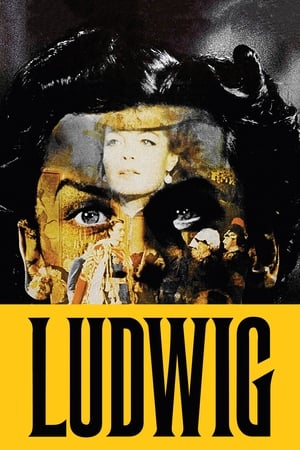
From her on-screen triumphs to her off-screen tribulations, this biopic focuses on the captivating life and career of actress Romy Schneider.
A biopic of Indonesian group band God Bless.
After losing sight in 1983, John Hull began keeping an audio diary, a unique testimony of loss, rebirth and renewal, excavating the interior world of blindness. Following on from the Emmy Award-winning short film of the same name, Notes on Blindness is an ambitious and groundbreaking work, both affecting and innovative.
Liverpool, 1978: What starts as a vibrant affair between a legendary femme-fatale, the eccentric Academy Award-winning actress Gloria Grahame, and her young lover, British actor Peter Turner, quickly grows into a deeper relationship, with Turner being the person Gloria turns to for comfort.
Noc pastýřů
An original television production based on the life of Slovak writer Jozef Gregor Tajovský.
A coming-of-age tale centered on Modigliani's youth. Amedeo moves to Paris in his early 20s, dies while still young, and all his artist friends, immersed in Bohemian madness, are his contemporaries. "Telling the story of Modigliani also means celebrating the culture of a united Europe," Longoni explains, "Paris, in the years around World War I, brought together the leading artists of the century. The French capital was a place where borders and barriers were not built but where people reflected on the future and on art beyond conflict."
The year 1901, a psychiatric hospital in the Russian partition. One of the patients is a political prisoner - Józef Piłsudski. The Polish underground independence movement is preparing their mission to rescue the famous activist. Piłsudski is freed, but he will not get back his idyll family life that he once knew. Uncertain years are coming, marked by revolutionary events, violence and betrayal. Pilsudski must find a way to man oeuvre on the boggy ground - between the conservative passivity of the Polish Socialist Party and the aggression against the invaders, resulting in retaliation. The year 1914 is coming, and the chance for restoring an independent country, independent Poland, is now or never.
From the series "The Modern World: Ten Great Writers", this playful documentary introduces James Joyce's most famous work "Ulysses". It includes fantastic adaptations to film from passages of the novel. It also includes excerpts from a book written by Joyce's friend, the artist Frank Budgen, entitled "James Joyce and the making of Ulysses". Amongst those interviewed is author Anthony Burgess.
The brief life of Jean Michel Basquiat, a world renowned New York street artist struggling with fame, drugs and his identity.
A true story about Frank Abagnale Jr. who, before his 19th birthday, successfully conned millions of dollars worth of checks as a Pan Am pilot, doctor, and legal prosecutor. An FBI agent makes it his mission to put him behind bars. But Frank not only eludes capture, he revels in the pursuit.
Retired farmer and widower Alvin Straight learns one day that his estranged brother Lyle has suffered a severe stroke. Alvin is determined to make things right with Lyle while he still can, but his brother lives in Wisconsin, while Alvin is stuck in Iowa with no car and no driver's license. He then has the idea of making the trip on his old lawnmower, thus beginning a picturesque and at times deeply spiritual odyssey.
The true story of pianist Władysław Szpilman's experiences in Warsaw during the Nazi occupation. When the Jews of the city find themselves forced into a ghetto, Szpilman finds work playing in a café; and when his family is deported in 1942, he stays behind, works for a while as a laborer, and eventually goes into hiding in the ruins of the war-torn city.
The young Bavarian princess Elisabeth, who all call Sissi, goes with her mother and older sister Néné to Austria where Néné will be wed to an emperor named Franz Joseph, Yet unexpectedly Franz runs into Sissi while out fishing and they fall in love.