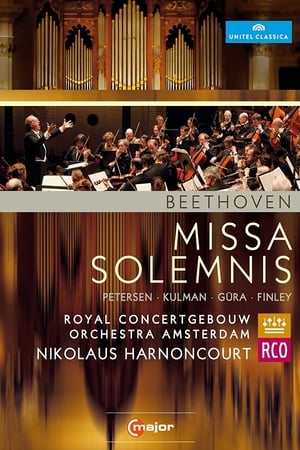
With this performance of the Missa solemnis Nikolaus Harnoncourt, Honorary Guest Conductor of the Royal Concertgebouw Orchestra, once more attained the status of a living legend, due mostly to his wide-ranging expertise of music from the Baroque and Classical era. The highly acclaimed soloists are Marlis Petersen (Soprano), twice the singer of the year by the renowned Opernwelt magazine, Elisabeth Kulman (Alto), Werner Güra (Tenor), winner of the BBC Music Magazine Award for the best vocal performance, and Gerald Finley (Bass), Grammy-Awardwinner for the best opera recording. They are accompanied by the famous Netherlands Radio Choir.
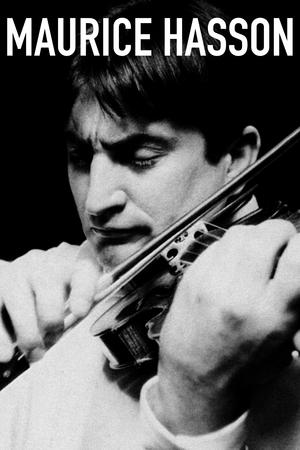
In this short film, made on the occasion of a visit by Maurice Hasson to Mérida to perform in concert, he evokes in a warm conversation his indelible memories and deeply human experiences of his life in Mérida.
Jenny is young. Her life is over. She killed someone. And she would do it again. When an 80-year-old piano teacher discovers the girl’s secret, her brutality and her dreams, she decides to transform her pupil into the musical wunderkind she once was.
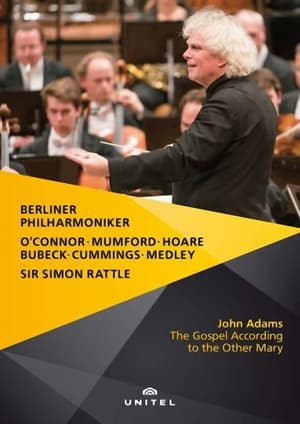
Sir Simon Rattle, the Berliner Philharmoniker and the Rundfunkchor Berlin give an impeccable performance of the powerful biblical oratorio “The Gospel According to the Other Mary” by John Adams, one of the most renowned contemporary composers. The sophisticated score with a libretto by acclaimed theatre director Peter Sellars comes to life thanks to the Berliner Philharmoniker, whose intimate knowledge of Adams’s music stems from the composer himself: He attended the orchestra’s rehearsals. In the role of the Evangelist, Bubeck, Cummings and Medley lead through the narrative. A stunning highlight is Lazarus’s aria, sung by tenor Peter Hoare. But at the heart of the piece are Mary Magdalene and her sister Martha during the last days before Jesus’s death, impressively performed by mezzo-sopranos Kelley O’Connor and Tamara Mumford.
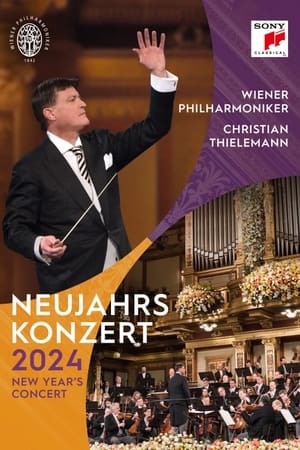
New Year's Concert 2024
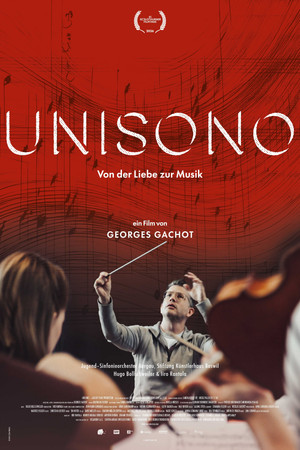
When young musicians come together to play classical music, they send out a strong signal to our today’s world. The film follows talented young Swiss musicians as they work, search for inspiration, but also expose their thought how to play nowadays the “old” Classical music.
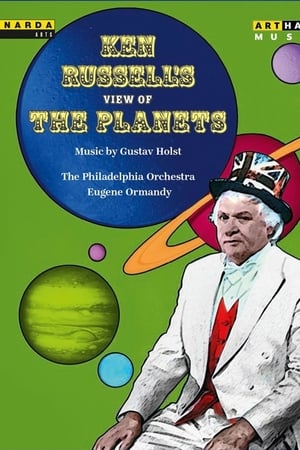
Based on the famous Gustav Holst musical suite, Ken Russell's musical delight takes viewers on a magnificent journey of the planets of the Solar System.
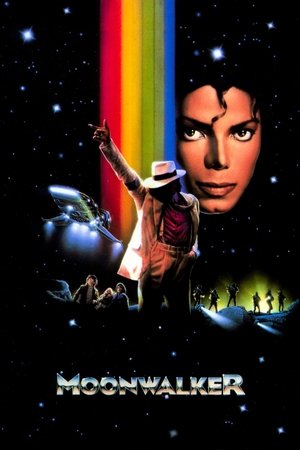
This fantastical movie inspired by the music of Michael Jackson features imaginative interpretations of hit tracks from the iconic 1987 album “Bad”.
Emma, a talented conductor and rising star on the Montreal scene, has a complicated relationship with her father and agent Patrick. She has to face up to her emotions and decide whether she wants to successfully combine her career with her love affair with Naëlle, a recently separated cellist and mother of a young son.
The Nutcracker is Mikhail Baryshnikov's breathtaking and critically acclaimed Emmy-nominated production. This spectacular performance is danced by the magnificent team of Baryshnikov, one of the greatest classical dancers of the century, and Gelsey Kirkland, both showcased at the peak of their careers, with members of the American Ballet Theatre.
Every year, the Berliner Philharmoniker hold a kind of classical-music fête with a bright, cheerful concert to end the season. In 2009 about 22,000 people had come together at the Berlin Waldbühne to enjoy the traditional summer picnic concert. The theme of the evening was “Russian rhythms”, and star conductor Sir Simon Rattle, the Berliner Philharmoniker and Yefim Bronfman, one of the most famous pianists in the world today, presented a superb selection of Russian music. Repertoire Tchaikovsky: The Nutcracker, op. 71, Overture, The Christmas Tree, March, Pas de deux (Intrada) Rachmaninoff: Piano Concerto No.3 in D minor, op. 30 Stravinsky: Le Sacre du printemps Lincke: Berliner Luft
Repertoire Modest Mussorgsky: Night on Bald Mountain; Antonín Dvořák: Song to the Moon from “Rusalka”, Op. 114; Aram Chatschaturjan: Adagio from “Spartacus”; Richard Strauss: Final Scene from “Capriccio”, Op. 85; Richard Wagner: Overture to “Rienzi, der Letzte der Tribunen”; E. W. Korngold: Mariettas Lied from “Die tote Stadt”; Richard Strauss: Zueignung, Op. 10 No. 1; Sir Edward Elgar: Salut d’amour; Giacomo Puccini: Donde lieta uscì from “La bohème”; Tu che di gel sei cinta from “Turandot”; Ruggero Leoncavallo: Musette svaria sulla bocca viva from “La bohème”; Mimì Pinson, la biondinetta from “La bohème”; Piotr Tchaikovsky: “Romeo and Juliet” (Fantasy Overture)
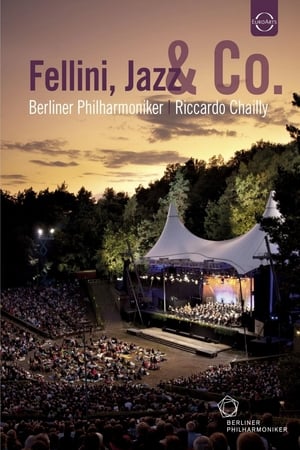
The Waldbühne in Berlin, one of the most appealing outdoor amphitheatres on the European continent, is the home of the Berliner Philharmoniker’s summer concerts. With audiences of more than 20,000, these are some of the most popular classical music concerts in the world. Riccardo Chailly is famous for having one of the broadest and most eclectic repertoires. Here, under his baton, the orchestra presents perennial favourites by Shostakovich, Rota and Respighi. Live recording from the Waldbühne, Berlin, 23 August 2011, directed by Kasten Henning, produced by Jan Bremme. TV Producer: Dorothea Diekmann, RBB. Repertoire Dmitry Shostakovich: Suite No. 2 for Jazz Orchestra (Suite for Variety Orchestra), Lady Macbeth of Mtsensk Suite – Allegretto; Nino Rota: ‘La Strada’ Ballet Suite; Ottorino Respighi: Fountains of Rome • Pines of Rome • Danza gueresca ‘Belkis’; Paul Lincke: Berliner Luft
The Third Part of the Third Measure creates an encounter with the militant minimalism of black avant-garde queer composer, pianist and vocalist Julius Eastman. The film focuses on what The Otolith Group describe as ‘an experience of watching in the key of listening’, invoking political feelings of defiance and the collective practice of movement building that participates in the global struggles against neoreactionary authoritarianism. The Third Part of the Third Measure invites viewers to attend to exemplary ecstatic aesthetics of black radicalism that Eastman himself once described as ‘full of honour, integrity and boundless courage’.
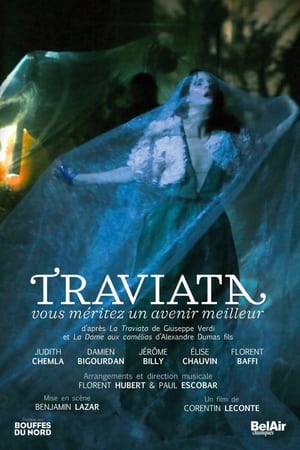
The audience is invited into Violetta’s privacy to have a close look at the fire to which she abandons herself among the guests of this musical and phantasmagorical celebration that blends theatre and opera, voices that speak and sing, and where the distinction between the instrumentalists and the singers becomes blurred, where Charles Baudelaire is seated next to Christophe Tarkos, and where the phantoms of this Paris in full industrial boom whose future we are living at present, sing and die.
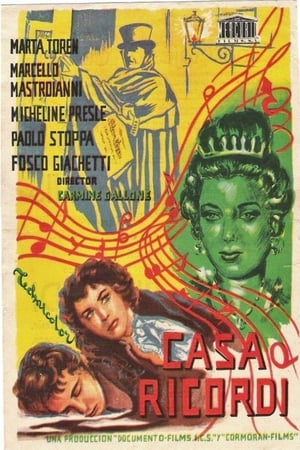
The film covers a hundred years in the lives of the Ricordi family, the Milan publishing house of the title, and the various composers and other historic personalities, whose careers intersected with the growth of the Ricordi house. It beautifully draws the parallel between the great music of the composers, the historic and social upheavals of their times, as well as the "smaller stories" of the successive generations of Ricordi.
Emil Gilels is well known as a Beethoven interpreter. His approach is characterized by a full bodied sound throughout a wide dynamic range, complete virtuosity and a structural sense that gives clarity to both local and global musical events. His tempo choices make sense within a complete movement or entire sonata (he doesn't need to slow down dramatically for the second subject in Op.53's first movement) and he will mostly maintain a tempo with only slight fluctuations.
This video depicts Tanglewood in its very early years. It contains very rare footage of Serge Koussevitzky and Aaron Copland.
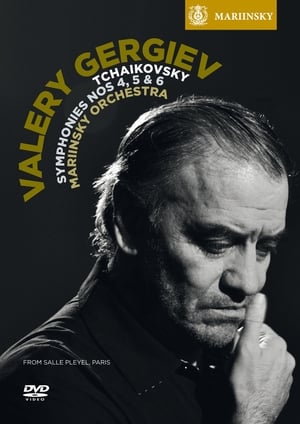
Valery Gergiev is widely recognised as the greatest modern interpreter of Tchaikovsky’s music and the Mariinsky holds a peerless reputation in the repertoire. Together they deliver definitive interpretations of Tchaikovsky’s most popular symphonies. These acclaimed performances were filmed at Salle Pleyel in Paris during January 2010, directed by Andy Sommer. The themes of fate and death pervade Tchaikovsky’s final symphonies. The composition of the Fourth Symphony coincided with the breakdown of Tchaikovsky’s marriage and a failed suicide attempt, yet he considered it to be his greatest. In contrast he believed his Fifth to be flawed and uninviting, yet today this heartfelt work is widely regarded as one of his finest. The subject of fate is further instilled in the Sixth Symphony, premiered shortly before Tchaikovsky’s death. It was posthumously entitled ‘Pathétique’ by his brother and is a deeply melancholic work, full of dynamic extremes and an inherent sense of finality.
Pierre Boulez conducts the BBC Symphony Orchestra and Chorus in a special concert from the Barbican, as part of the composer's 80th birthday celebrations. The programme contains two compositions by Debussy; Jeux and Trois ballades de Villon, as well as Daphnis et Chloé by Ravel, featuring soprano Elizabeth Atherton as soloist.Presenter Charles Hazlewood interviews Boulez and discusses the concert with guest Sir Peter Maxwell Davies.