"Every August, while Europe's bankers, lawyers, and other desk jockeys shut off their phones and head to the beach, the junkies of Prague set up camp in the poppy fields outside the city for a vacation of their own" (Vice).
This film is about Japanese traditional bamboo craft.
Virar a Página
A documentary featuring the clash between the two cultures: Polish and Japanese. The filmmakers’ efforts to shoot the film are challenged by numerous obstacles they come across, that is cultural, linguistic, age and personality barriers and differences. Here is what Marcin Koszałka said about the film himself: “There are two jerks coming from Poland. They sit at some Japanese woman’s house, who is either busy or absent generally speaking, and they strive to shoot the film about her.
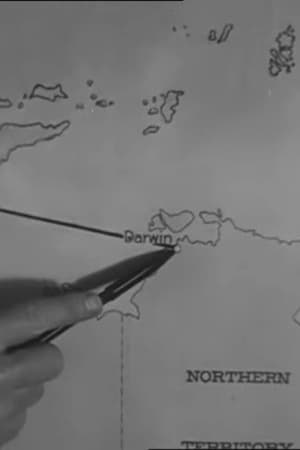
Original archival synopsis: The Japanese bombed Darwin many times during World War II because it was strategically important target number one in their attack on the Australian mainland. Before the war, Darwin was little known except to the crews of pearling luggers and cattlemen. During the war it become an important air base which contributed much to the success of General MacArthur's island-hopping campaign against Japan. Today Darwin is an aerial port of call for all planes travelling either from Europe or the Far East to Australia. The Darwin touchdown is, in fact, for many travellers the first sight of the Australian continent. The film shows Darwin as it is today (1949), much ravaged by Japanese attack during World War II, but already showing signs of building activity and general recovery. The film indicates the general life of the town and also explains the plan which will make Darwin a model city of which Australia will be very proud.
The siren call of the ivory-billed woodpecker lures a New York based tantra and sex educator into the swamps of the American South on a 17-year journey to prove the iconic bird still exists. Along the way, he finds a tendril of hope in the face of climate change.
A multimedia short created for the U.S. millennium celebrations, The Unfinished Journey reflects on America’s history and spirit through six chapters—immigration, war, culture, civil rights, and innovation. Commissioned by President Bill Clinton and premiered at the Lincoln Memorial on New Year’s Eve 1999, the film features an original orchestral score by John Williams titled American Journey.
'Part One: Where There Is a Joyous Mood, There a Comrade Will Appear to Share a Glass of Wine' concerns affective relations and community building. The film is like a spell or a promise for a new and more liberating type of family structure. The film has a non-linear narrative that weaves various intimate settings, some within shared domestic spaces, others in outdoor environments. Shot in Lithuania, London, and Edinburgh, the film features the artist and her children, as well as close friends, which she considers extended family.
A documentary of classified military footage released by WikiLeaks showing an attack by the US military in the Iraqi suburb of New Baghdad. This attack left 12 dead including two Reuters staff.
The inhabitants of a lobstering village in Maine all have one thing on their minds: their impending deaths.
From the streets of Japan, where stance cars caught their name, to the rustic roads of Montana, OUTSIDE explores the layered world of stance culture and the car enthusiasts behind it all.
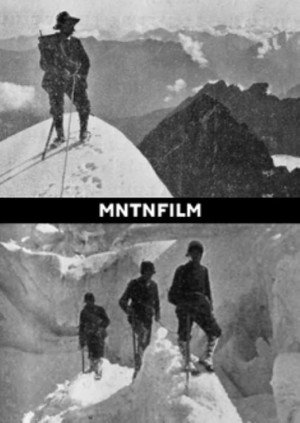
The ascent of the Wetterhorn by Frank Ormiston-Smith accompanied by the guide Christian Bergener, Rev. H. J. Heard, Mr. E Burchell-Rodway from the Alpine Club, and the hotelier Herr Fritz Boss from Grindelwald. The film consists of 24 scenes including a final scene of the team on the summit. The film starts with the climbers and the guide leaving the Bear Hotel, at Grindelwald. Later the party arrives at the Wetterhorn Hotel, at the mountain base. They climb the Milchbach Ladders to gain the top of the glacier, cross the Seebach Platte and the upper glacier, and pass the night at the Mountain Inn. Next morning they overcome the Great Coulvu and gain the arete to finally reach the summit. Sections of the film are tinted to give the effects of dawn, sunset and rose-glow actually experienced during the climb.
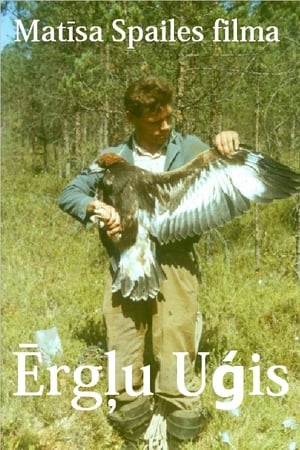
Latvia is home to almost one fifth of the world’s population of the lesser spotted eagle, yet their number is endangered. Uģis Bergmanis is one of Latvia’s best-known ornithologists, and he does his best to save the eagles in Latvia. He also has another passion – he hunts wolves. He can sit for hours in freezing temperatures until meeting his prey eye to eye. There are many stories in this man. And some of them are going to be told.
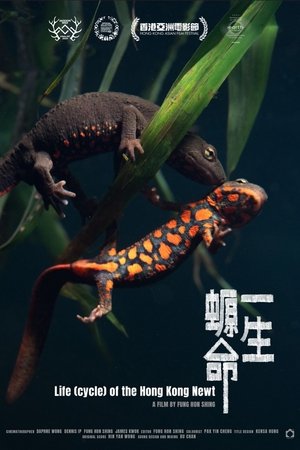
A Hong Kong Newt once resided in a narrow irrigation channel, believing it would be confined there forever. However, an unexpected flood swept it away, carrying it through a dark passage until it arrived in a serene, azure pond. The newt found companionship among its kind and thrived in the aquatic haven. But as it ventured back onto land after the breeding season, it encountered unforeseen threats.
What is it like to be HIV-positive in Russia? The authors of the film spent several days with the HIV-infected characters Alexandra and Olesem and made a film about how they live. This is a kind of chronicle - the characters in the frame live their lives. Moments of sadness, moments of joy. They live as they know how and as they really live.
Menhaden: The Most Important Fish in the Bay examines the role of a little-known, oily, little fish in the Chesapeake Bay. From its original concept as a classic man-versus-environment story, the film evolved to reflect the complexity of sustaining a menhaden fishery that many diverse interests depend on. The outcome: a story that seamlessly weaves together different perspectives on the menhaden fishing industry and its culture utilizing engaging personal vignettes, scientific data and creative visual storytelling techniques. Techniques include archival footage blended with cinematic live-action footage, musical performances and original, handmade animations.
I'm afraid of planes and even living next to an airport, I couldn't film almost any flying around here. I have to fly in a few months and the film is a kind of tool to pretend that I have control over whatever happens. I'm already talking about myself, I'm sorry.
1902, cinematography by Frank Ormiston-Smith