In 2001, China joined the World Trade Organization with the strong support of a Democratic President and Republican Congress. Before the ink was dry on this free trade agreement, China began flooding U.S. markets with illegally subsidized exports while the big multinational companies that had lobbied heavily for the agreement rapidly accelerated the off shoring of American jobs to China. Today, as a result of the biggest shell game in American history, China has stolen millions of our jobs, corporate profits are soaring, and we now owe over $3 trillion to the world's largest totalitarian nation. This film is about how that happened... and why the best jobs program for America is trade reform with China.
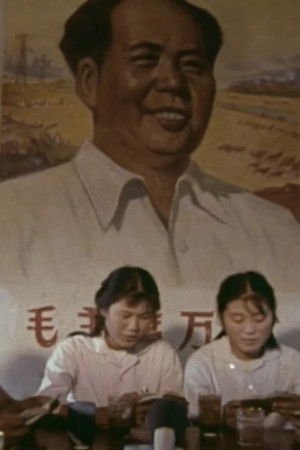
From 1972 until 1974, Joris Ivens and Marceline Loridan, along with a Chinese film crew, documented the last days of the Cultural Revolution, marking the end of an era. The vast amount of footage they shot was edited into 14 films of varying lengths. Focusing on ordinary people spread over a wide geographic area—many of whom were living and working in collectives—the filmmakers recorded a unique moment in history, and also captured some of the more enduring aspects of Chinese culture.
The first International Female Mud Wrestling Championships presented at the Imperial Palace Hotel, Las Vegas.
Chinese Spring
Expedition China invites you on location in some of the world's most intense, hard-to-reach environments with the filmmakers of Disneynature's big-screen adventure Born in China.
China - Treasures of the Jade Empire
John Wayne was a legendary actor and an embodiment of America itself. While he played men who always do the right thing on camera his real life is far more complicated.
Confucius was one of history's most influential thinkers. He was a sage, philosopher and teacher who, with Socrates and Buddha, lived at an extraordinary time in the evolution of human civilization. This stunningly beautiful drama-documentary explores the life and times of Confucius, while reflecting on his influence on modern justice and morality. Today, Confucius is a window into China's rise.
Humanity’s ascent is often measured by the speed of progress. But what if progress is actually spiraling us downwards, towards collapse? Ronald Wright, whose best-seller, “A Short History Of Progress” inspired “Surviving Progress”, shows how past civilizations were destroyed by “progress traps”—alluring technologies and belief systems that serve immediate needs, but ransom the future. As pressure on the world’s resources accelerates and financial elites bankrupt nations, can our globally-entwined civilization escape a final, catastrophic progress trap? With potent images and illuminating insights from thinkers who have probed our genes, our brains, and our social behaviour, this requiem to progress-as-usual also poses a challenge: to prove that making apes smarter isn’t an evolutionary dead-end.
A Swedish singer trades Europe for China. Like a blonde nephew of Bryan Ferry, he enters the burgeoning music scene in Shanghai, where electronic dance music dominates. But is this new land of opportunity ready for his soul-searching, tormented voice? Is music really such a universal language?
Follows Long Island’s Mary Lamont Band on their groundbreaking 23,000-mile tour in six cities and provinces across mainland China in 2002.
Le Baron et l'Empereur : Japon, la voie de la guerre
We are witnessing a generational transformation of audiovisual entertainment. Independent work by internet creators, who have already managed to take first places in the celebrity rankings, is competing with television production. Parents panic when their children spend the whole day frozen in front of laptop and smartphone screens. The most watched is a communication bridge between two generations. What does it actually mean to be a YouTuber? And why have YouTubers become a phenomenon that already has an undeniable influence on society today? The feature-length documentary reveals the secrets of their success and looks into the everyday lives that they keep away from the cameras. It hears the opinions of everyone who is affected by watching and creating YouTube videos. Parents of children, marketing specialists, sociologists, psychologists and the viewers themselves.
The Forbidden City is the world’s biggest and most extravagant palace complex ever built. For five centuries, it was the power center of imperial China and survived wars, revolution, fires, and earthquakes. How did the Ming Emperor’s workforce construct its sprawling array of nearly 1,000 buildings and dozens of temples in a little over a decade?
For over 1,000 years, chariots were indispensable weapons in ancient China. The art of chariot driving and special warfare were used there for longer than anywhere else. Their contribution to the unification of the Chinese empire is undisputed. New archaeological discoveries reveal how the Chinese developed and perfected this sophisticated weapon. In the Bronze Age, over 3,000 years ago, chariots and other war equipment arrived in China from Central Asia via the Hexi Corridor. In addition to trade and new alliances, their spread was mainly due to the Zhou dynasty's incessant military campaigns against rebellious vassal states and the constant attacks by the mobile cavalries of its northern neighbors. Manned with spearmen or archers, the chariots were a decisive weapon in battle.
Part Two: SMALL HAPPINESS - Despite the tremendous advances women in China have made, serious problems continue. Long Bow women talk about love, marriage, work, birth control, birth customs and the now outlawed custom of foot binding. Truly moving interviews with Lingqiao and her mother-in-law draw us into their lives.
Meet the real Paris Hilton for the very first time as she embarks on a journey of healing and reflection, reclaiming her true identity along the way.
TUPAC: ASSASSINATION II - RECKONING details the motive for murder in a follow-up to the award winning and critically acclaimed predecessor "Tupac: Assassination - Conspiracy or Revenge." RECKONING takes you into an unprecedented level of access regarding the life and death of Tupac Shakur. An emotional look at the loss felt by those closest to Shakur, the film also explores the true legacy of the hip-hop icon: his influence on the youth of today and the work that still continues. Filled with intimate observations, humorous anecdotes and discussions only an artist as outspoken as Tupac could ever put forward, Tupac's inner circle - family and business associates who have refused to be interviewed for any documentary until now - share information of certain theories and put to rest others regarding those responsible for Tupac's death.
To discover the truth behind the mysterious objects her uncle brought back from the Far East during her childhood, filmmaker Francesca Lixi embarks on a journey to those places through archival footage.
At the turn of the 19th and 20th century Finnish philologist G. J. Ramstedt travelled around Mongolia and Central-Asia. In this documentary Ramstedt’s memoirs are heard in the modern day setting, where tradition is replaced with hunger for money, and deserts give way to cities.