Verdi’s monumental score is fully the equal of Shakespeare’s famous tragedy—and both demand great actors. This is one performance where both playwright and composer are well served. Plácido Domingo’s Otello is one of the glories of the operatic world, beautifully sung and so commandingly acted that audiences are devastated by the end. Renée Fleming’s ravishingly beautiful Desdemona is deeply moving, and as Iago, James Morris is as beguiling as he is menacing. Under James Levine’s conducting the Met orchestra and chorus are vital characters in the drama.
Dancers, shown in photographic negative, perform a series of ballet moves, solos, pas de deux, larger groupings. The dancers glide and rotate untroubled by gravity against a slowly changing starfield background. Their movements are accompanied by music scored for a small ensemble of woodwind and percussion.
The moon landing is juxtaposed to Dante and Beatrice's journey through paradise in this visual oratorio composed by Jacob ter Veldhuis.
LUCIANO PAVAROTTI was the rare artist who could easily bridge the divide between classical and popular music. Together with an impressive roster of the best-known names in rock, pop and jazz, Pavarotti entertained millions of people around the world with his "Pavarotti & Friends" concerts. This release is the first time that these tracks have been brought together in one album! Rarely has such a glittering array of singing legends from such varied genres been brought together at one time--on both DVD and CD! Featuring Bryan Adams, Andrea Bocelli, Bon Jovi, Bono/The Edge/Brian Eno, Mariah Carey, Eric Clapton, Sheryl Crow, Celine Dion, The Eurythmics, Elton John, Lionel Richie, Frank Sinatra, Sting and Zucchero.
Mozart's second collaboration with the mercurial librettist Lorenzo da Ponte is among the very blackest of black comedies. Glyndebourne welcomes back the winning team of director Jonathan Kent and designer Paul Brown, while the music is conducted by Vladimir Jurowski. In the title role, the bass-baritone Gerald Finley, joined by Luca Pisaroni, Kate Royal and the young Russian soprano Anna Samuil.
German silent film operetta (Filmoperette)
Two noble women, bored of their lives, disguise themselves as country wenches and go to the market at Richmond Fair, where two young farmers fall in love with them.
In Mea Culpa, Christoph Schlingensief blurs a delicate line: he ignores the threshold that separates the healthy from the sick. By making his cancer the subject of an opera, premiering on the largest German-speaking theater, he is putting the art district under pressure: a wonderful institution like the Burgtheater must use its artistic resources lavishly to reveal the entire "truth" about us humans. At the end of the day, when the scenery on Janina Audick's revolving stage has finally come to rest, when Isolde's last Liebestad has been sung enchantingly beautifully by Elfriede Rezabek and indescribable jubilation breaks out, then Schlingensief is completely alone with his illness.
Eugene Onegin, a jaded young dandy from the big city of St. Petersburg, travels to the country to ingratiate himself into the affection of a dying uncle. There he meets the idealistic and romantic poet Vladimir Lensky, who introduces him to the daughters of a local landowner.
Puccini’s heartbreaking story of young love in the garrets of Belle Epoque Paris has attracted many famous singers through the years. But with James Levine at the helm and the starry duo of Luciano Pavarotti and Renata Scotto as Rodolfo and Mimi, every bit of emotion in the score pours across the footlights and seduces the audience. In this case, the audience was in the millions since this was the very first in the “Live from the Met” series of telecasts. The evocative production is by Fabrizio Melano, designed by Pier Luigi Pizzi.
Count Almaviva is in love with Rosina. However, she is currently staying with Dr. Bartolo – who desires to marry her. By using a series of disguises, Almaviva manages to pass letters to Rosina and serenade her with his beautiful voice. Dr. Bartolo does his best to stop Almaviva but is constantly thwarted. In the end, Count Almaviva marries Rosina and Dr. Bartolo comes to terms with his defeat.
Johan Strauss Eine Nacht in Venedig (1883) together with Die Fledermaus and Die Zigeunerbaron, has long been among the three most popular of the more than a dozen operettas composed by the 19th c. Waltz King. This Rudolf Bibl conducted performance was recorded live during the Seefestspiele Moerbisch Austria Festival in 1999 and features Marc Clear, Gideon Singer, Evelyn Schörkhuber , Ingrid Habermann, and Anton Steingruber.
Opera singer Chivo is currently playing a singing cowboy, and Mexican bandito Braganza kidnaps him (along with Jane, an heiress) so he can learn to become more like the American movie gangsters he admires.
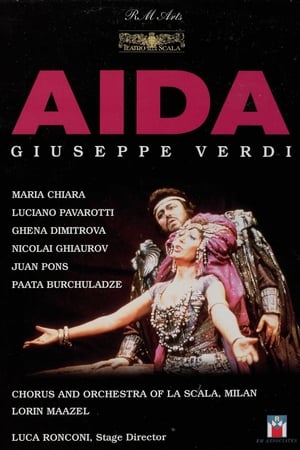
La Scala went all out for its 1986 production of this grandest of grand operas, with a strong cast and, most important for a video recording, a larger-than-life staging. The Triumph Scene in Act II is by no means Aida's only attraction, but it is the part that makes the strongest and most lasting impression and it is the visual and musical climax of this production. Stage director Luca Ronconi brings on a procession to dwarf all processions: looted treasures, heroic statuary, miserable captives struggling under the lash of whip-bearing slave drivers. On par with these visuals is Lorin Maazel's first-class performance of the popular Grand March with the outstanding La Scala chorus and orchestra. In Act III, the contrasting tranquility of the Nile Scene also gets a visual treatment to match the music's qualities.
Génération Club Dorothée - L'incroyable histoire d'une émission culte
Live performance at Opernhaus Zürich in 2006. Nello Santi conducting Orchester der Oper Zürich and Chor der Oper Zürich. Directed for the stage by Gilbert Deflo.
Jeanne's beautiful breasts spill out from her torn clothes, and her gouged internal organs lie beneath. The contrast between death and eroticism is captured in a profound image. The opera that unfolds in the underground ward comes to a powerful catastrophe with jazz-like dissonance. Are they the living or the dead, shedding blood and singing in high spirits? The director comments, "This film will be the beginning of a new contemporary opera film“.
Renée Fleming has matured into one of the finest sopranos around at the moment, a true star with a sparkling personality and a velvet-toned voice that is capable of wringing the finest emotions out of works by Strauss and Tchaikovsky that from a lesser singer could sound rather cold and clinical. I wouldn't have thought her voice would be so well suited to Violetta Valéry in La Traviata, and it does take some getting used to, but I think she at least brings a distinct quality to the role with an emotional heart that isn't always necessarily there when a leading diva uses it primarily as a display for her vocal talents. It's served well also by Antonio Pappano's conducting of the Royal Opera House Orchestra in a traditional, but effective production by Richard Eyre.
On the eve of the 1990 World Cup final, Plácido Domingo, José Carreras, and Luciano Pavarotti sang together for the first time. A look behind the scenes at a musical event whose phenomenal success lasted for more than a decade.
Vivian, Roe, JJ, Ines and a mysterious French man through a 20 year musical memory of New York City. As people and places in their lives drift away, visual impressions meld with sound and narrative stories to reveal a complex yet moving tableau. As the characters recall their own personal histories, conflicting images reveal their past, present and future.