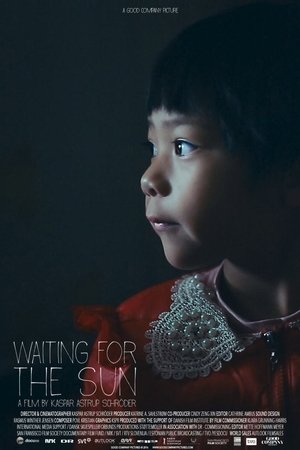
In China more people are on death row than the rest of the world combined. The children of the convicts are often left alone, stigmatized and living in the streets. Grandma Zhang, as the kids call her, is a former prison guard who has founded an orphanage in Nanzhao.
Crocodile in the Yangtze follows China's first Internet entrepreneur and former English teacher, Jack Ma, as he battles US giant eBay on the way to building China's first global Internet company, Alibaba Group. An independent memoir written, directed and produced by an American who worked in Ma's company for eight years, Crocodile in the Yangtze captures the emotional ups and downs of life in a Chinese Internet startup at a time when the Internet brought China face-to-face with the West. Crocodile in the Yangtze draws on 200 hours of archival footage filmed by over 35 sources between 1995 and 2009. The film presents a strikingly candid portrait of Ma and his company, told from the point of view of an “American fly on a Chinese wall” who witnessed the successes and the mistakes Alibaba encountered as it grew from a small apartment into a global company employing 16,000 staff.
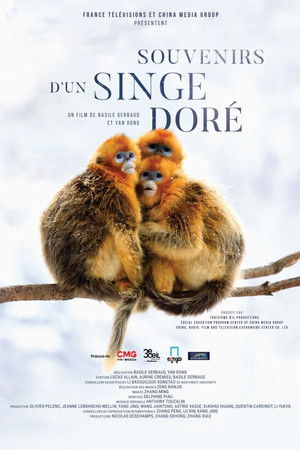
Mist swirls around the base of Shanghai's skyline. From the city, tigers and monkeys seem as unreal and distant as dragons and mermaids emerging through the mist. Yet they do exist, as rare survivors in an extraordinary and diverse landscape. From snow leopards to wild horses, and from alligators to elephants, China's iconic wildlife is a lot more than just pandas.
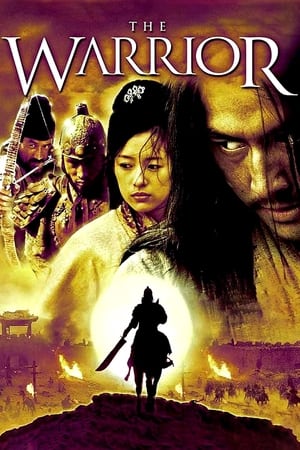
This is a powerful, yet fictionalized life story of Huo Yuan Chia, a real kung fu master in Southern China who brought respect to the populace and allowed kung fu to be taught to all Chinese during a time of revolt and low morale in the country's history.
A biplane pilot is saddled with a spoiled industrialist's daughter on a search for her missing father through Asia that eventually involves them in a struggle against a Chinese warlord.
Documentary about the history and development of Qiqihar city.
A Rebel Without a Cause for a new generation, and one of the most defiant children to ever grace the big screen, 14-year-old Hai is a teenage terror, a high school dropout and an all-around badass. He is also entirely irresistible. You cannot take your eyes off this kid, complete with a motorbike and an everpresent cigarette butt drooping from the corner of his mouth. (Dorothy Woodend, DOXA Documentary Film Festival)
Lao Zha’s film examines rural life in Haiyuan County, in Ningxia Province. Unlike the rapidly globalizing urban centres, here life remains largely unchanged for the Hui people, a Muslim ethnic group, whose diverse cultural roots incorporate Arabic and Persian influences that arose out of the Hui’s proximity to the Silk Road. In a remote Hui village, a little boy named Huhu is growing up under the watchful eye of his grandparents, and, occasionally, his less-than-reliable mother. (Dorothy Woodend, DOXA Documentary Film Festival)
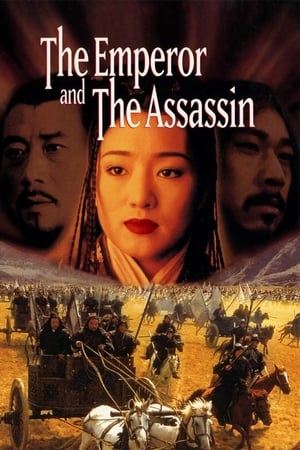
In 208 A.D., in the final days of the Han Dynasty, shrewd Prime Minster Cao convinced the fickle Emperor Han the only way to unite all of China was to declare war on the kingdoms of Xu in the west and East Wu in the south. Thus began a military campaign of unprecedented scale. Left with no other hope for survival, the kingdoms of Xu and East Wu formed an unlikely alliance.
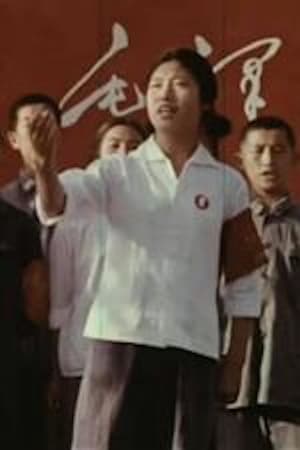
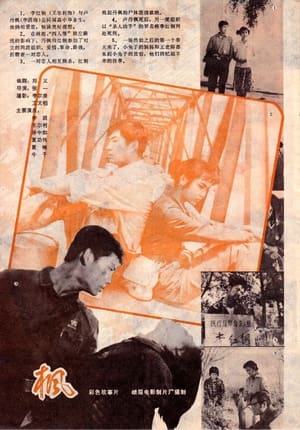
A Chinese drama set in 1966, during the Cultural Revolution.
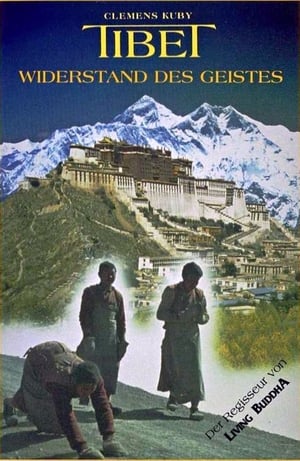
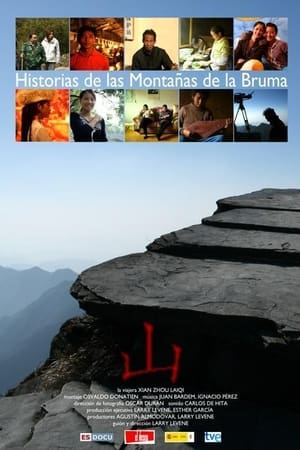
Tibet: The Survival of the Spirit
A dramatic history of Pu Yi, the last of the Emperors of China, from his lofty birth and brief reign in the Forbidden City, the object of worship by half a billion people; through his abdication, his decline and dissolute lifestyle; his exploitation by the invading Japanese, and finally to his obscure existence as just another peasant worker in the People's Republic.
Exploring the Anthropocene era characterized by human impact on the planet, this is an enlightening VR film that examines an emerging superpower undergoing mass urbanization, industrial development, and topographical changes.
Livestreaming your life to a devoted audience is big business. What happens when the cameras are off?
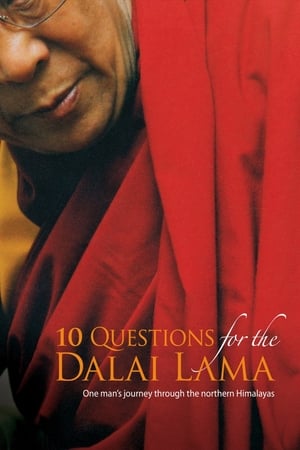
How do you reconcile a commitment to non-violence when faced with violence? Why do the poor often seem happier than the rich? Must a society lose its traditions in order to move into the future? These are some of the questions posed to His Holiness the Dalai Lama by filmmaker and explorer Rick Ray. Ray examines some of the fundamental questions of our time by weaving together observations from his own journeys throughout India and the Middle East, and the wisdom of an extraordinary spiritual leader. This is his story, as told and filmed by Rick Ray during a private visit to his monastery in Dharamsala, India over the course of several months. Also included is rare historical footage as well as footage supplied by individuals who at great personal risk, filmed with hidden cameras within Tibet.
Le Baron et l'Empereur : Japon, la voie de la guerre
Presented by the British Museum this is the story of the most famous army in the world. A triumph of early mass production and craftmanship, they were dreamt up by a man whose face we will never know; a figure who remains a more shadowy presence than that of his constructed warriors. And yet, Qin Shihuangdi was one of the greatest military leaders in history. Based on the latest research and including location photography at key sites in China, this film sheds new light on the achievements, ambitions and legacy of this enigmatic and intriguing ruler - an emperor who wished to reign for all eternity.
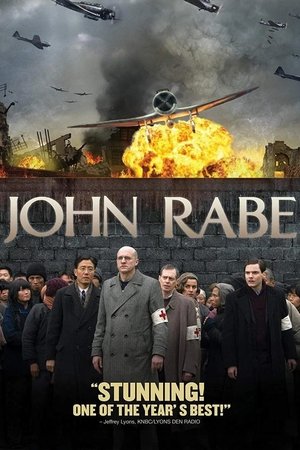
A true-story account of a German businessman who saved more than 200,000 Chinese during the Nanjing massacre in 1937-38.
MANUFACTURED LANDSCAPES is the striking new documentary on the world and work of renowned artist Edward Burtynsky. Internationally acclaimed for his large-scale photographs of “manufactured landscapes”—quarries, recycling yards, factories, mines and dams—Burtynsky creates stunningly beautiful art from civilization’s materials and debris.
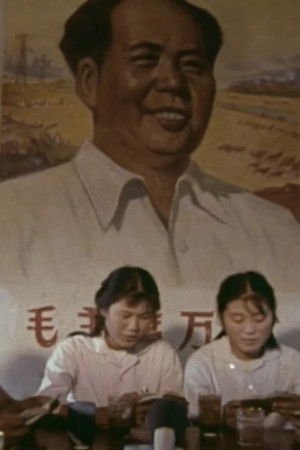
Mao Zedong was not only a revolutionary leader and thinker, he was also a poet. In poems written in the classic calligraphic tradition he expresses his experiences and visions. In this film, 8 of Mao's poems are sung, recited and interpreted: 'Changsha' (1925), 'Jinggang Mountains' (1928), 'The Long March' (1935), 'Snow' (1936), 'The People's Liberation Army Captures Nanjing' (1949), 'Swimming' (1956), 'Reply to Comrade Guo Moruo' (1961) and 'Reascending Jinggang Mountains' (1965). Through these poems we get a picture of the Chinese revolution from its first beginning in 1921 until the Cultural Revolution. The poems of Mao Zedong have been published in more than 57 million copies