We follow Dusk & Dawn, two exes who rekindle their love on the night of their high school graduation. As they navigate the night with their friends, they get pulled into a love triangle that leaves Dawn desperate to decide: stay home and give this another shot, or move away for good and start university.
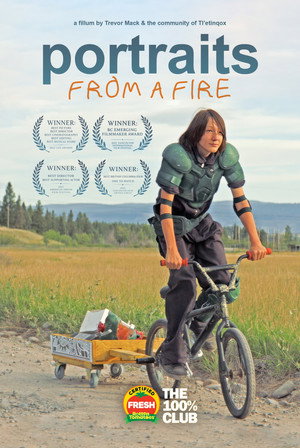
An Indigenous teenage boy fights through distorting realities as a family secret unravels.
Still working through the grief of losing her only child, Thelma, a young Blackfeet woman in Browning, MT, is taken advantage of by friends who use her as de facto child care while they continue to live the freewheeling lifestyles they had before becoming parents.
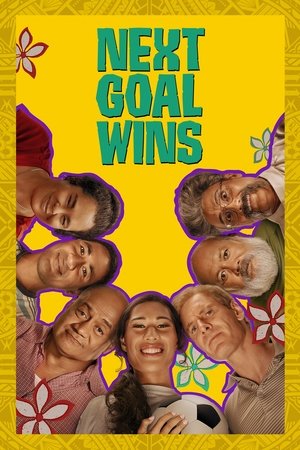
Dutch coach Thomas Rongen attempts the nearly impossible task of turning the American Samoa soccer team from perennial losers into winners.
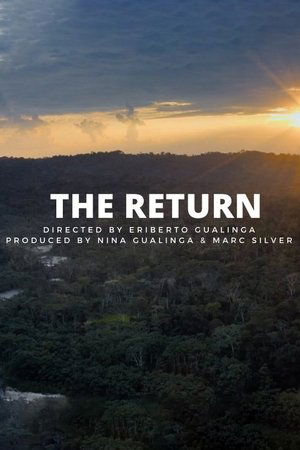
The Shipibo-Konibo people of Peruvian Amazon decorate their pottery, jewelry, textiles, and body art with complex geometric patterns called kené. These patterns also have corresponding songs, called icaros, which are integral to the Shipibo way of life. This documentary explores these unique art forms, and one Shipibo family's efforts to safeguard the tradition.
In Inukjuak, an Inuit community in the Eastern Arctic, a baby boy has come into the world and they call him Timuti, a name that recurs across generations of his people, evoking other Timutis, alive and dead, who will nourish his spirit and shape his destiny.
In 1921 the Kwakiut'l people of Alert Bay, British Columbia, held their last secret potlatch. In 1980 at Alert Bay, the U'mista Cultural Centre (U'mista means "something of great value that has come back") opened its doors to receive and house the cultural treasures which were seized decades earlier and only then returned to the people. The center also took up activities such as recording stories told by elders so that some part of the past would always be alive and teaching children about their heritage in order to make them feel connected to their ancestors. This film documents the cultural significance of these events for today's Kwakiut'l people. It is an eloquent testimony to the persistence and complexity of Kwakiut'l society and to the struggle for redefining cultural identity for them.
Povo da Floresta
A golden object mystifies a young man living in a traditional Solomon Islands village. He dreams of going to the city and wakes up in a nightmare that changes his life forever.
The 6 Guarani villages of Jaraguá, in São Paulo, fight for land rights, for human rights and for the preservation of nature. They suffer from the proximity to the city, which brings lack of resources, pollution of rivers and springs, racism, police violence, fires, lack of infrastructure and sanitation, among others. Unable to live like their ancestors, their millenary culture is lost as it merges with the urban culture.
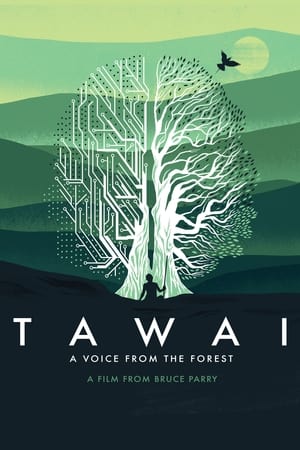
Explorer Bruce Parry visits nomadic tribes in Borneo and the Amazon in hope to better understand humanity's changing relationship with the world around us.
Two Filipina victims of sexual abuse search the truth behind the finding of a renowned anthropologist: that merely a few generations ago, the Bontok Igorot lived in what seems an unthinkable utopia—a rape-less society.
The people of Unamenshipu (La Romaine), an Innu community in the Côte-Nord region of Quebec, are seen but not heard in this richly detailed documentary about the rituals surrounding an Innu caribou hunt. Released in 1960, it’s one of 13 titles in Au Pays de Neufve-France, a series of poetic documentary shorts about life along the St. Lawrence River. Off-camera narration, written by Pierre Perrault, frames the Innu participants through an ethnographic lens. Co-directed by René Bonnière and Perrault, a founding figure of Quebec’s direct cinema movement.
Helena is 17 years old and studies in Finland. Her father, a Swede, and her mother, indigenous Kichwa of Sarayaku, live at the heart of the Amazon in Ecuador.
TOKYO Ainu features the Ainu, an indigenous people of Japan, living in Greater Tokyo (Tokyo and its surrounding areas), who are and actively in promoting their traditional culture in a metropolitan environment away from their traditional homeland, Hokkaido. Shedding a common assumption that all Ainu live in Hokkaido, the film captures the feelings, thoughts and aspirations of Ainu people that who try to follow the Ainu way no matter where they live.
Following her sister's disappearance, Jax and her niece Roki must stick together. Desperate to keep what's left of their family intact, Jax and Roki defy the law and hit the road on a journey to the Grand Nation Powwow in Oklahoma City.
Joyce Jonathan Crone—Mohawk matriarch, retired teacher, activist, humanitarian—reaches forward into her community of Huntsville, Ontario, opening hearts and bridging gaps for Indigenous education.
Alifu, a 25 year-old Paiwan boy, works as a hair-dresser in Taipei and struggles between his dream of getting a sex change operation and following his father’s footsteps to inherit the title as Chief of the indigenous Paiwan tribe. His lesbian roommate, Pei-Zhen, is also his best friend and confidante. Sherry, a transgender man, is the owner of a drag queen bar. For years, Sherry has been in love with the plumber, Wu, even though Wu only sees him as his buddy. Chris, a civil servant, lives a dull life. A one-time gig as a drag queen in the bar unexpectedly becomes his unique and secret way to relief stress. Chris has no choice but to keep this gig a secret from his girlfriend Angie. Across different genders and sexualities, the only common ground these people share is their search for love, understanding and acceptance. (Source: Golden Village)
In decades past, Native American artists who wanted to sell to mainstream collectors had little choice but to create predictable, Hollywood-style western scenes. Then came a generation of painters and sculptors led by Allan Houser (or Haozous), a Chiricahua Apache artist with no interest in stereotyped imagery and a belief that his own rich heritage was compatible with modernist ideas and techniques. Narrated by actor Val Kilmer and originally commissioned as part of an exhibit of Houser’s work at the Oklahoma History Center, this program depicts the artist’s tribal ancestry, his rise to regional and national acclaim, and the continuing success of his sons as they expand upon and depart from their father’s achievements. Key works are documented, as is Houser’s tenure at the Santa Fe–based Institute of American Indian Arts.
A group of people bows down as a ritual for religious ceremonies. This community shares a belief named Sapta Drama, one of the native religions in Indonesia that uses bowing down as a worshiping medium.