Elizebeth Friedman contre la mafia et les nazis
A documentary examining possible historical and modern conspiracies surrounding Christianity, the 9/11 terrorist attacks, and the Federal Reserve bank.
Marking the 75th Anniversary of the end of WWII, the documentary features the first-hand accounts of the Canadians who fought in the worst war in human history. Raw and personal experiences of the terror, pride, horror, excitement, friendship and loss – told through the eyes of the people who fought it.
The history of the Warsaw Ghetto (1940-43) as seen from both sides of the wall, its legacy and its memory: new light on a tragic era of division, destruction and mass murder thanks to the testimony of survivors and the discovery of a ten-minute film shot by Polish amateur filmmaker Alfons Ziółkowski in 1941.
Beiderseits der Rollbahn
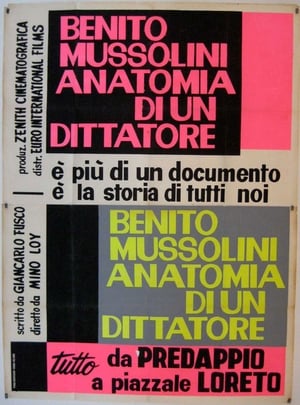
The story of Italian cinema under Fascism, a sophisticated film industry built around the founding of the Cinecittà studios and the successful birth of a domestic star system, populated by very peculiar artists among whom stood out several beautiful, magnetic, special actresses; a dark story of war, drugs, sex, censorship and tragedy.
A wartime short encouraging workers to join free, government-organised engineering training schemes.
The story of a Franco-Belgian family living in Japan from 1927 to 1947, a time of prosperity and fortune, but also of political turbulence and war.
This World War II documentary rests on an unusual thesis: it argues that, in the wake of Pearl Harbor, the actions precipitated by the U.S.A.F. that truly helped turn the tide were perpetrated not by the widely-ballyhooed U.S.N. aviators or aircraft carriers, but by the American submarines - silent warriors beneath the deceptively placid ocean surface. The subs, after all, were responsible for gravely wounding Japan's industry, all but destroying the Japanese merchant fleet, and therefore preventing reinforcement of Japanese military garrisons. In relaying this story, the program draws on a series of interviews with military veterans, and endless archival footage of naval battles that chronologically tells the gripping story of the Pacific Front of the war.
Le Temps des assassins
Classic Fighter – the story of the great piston-engined fighters of World War Two. A tribute to the men who flew them, and to the men and women who guided them and kept them in the air. Made in conjunction with the Imperial War Museum, Duxford, this programme tells the story of these great war planes. Stunning air-to-air flying sequences are intercut with interviews with pilots and aircrew of the British and American air forces. Some of the fighter aircraft featured are the Supermarine Spitfire, the Hawker Hurricane, the Messerschmitt Bf109, the P-47 Thunderbolt and the P-51 Mustang.
‘Spitfire— Birth of a Legend‘ tells the story of the Spitfire from a radical design on the drawing board to the fighter aircraft that became the symbol of Britain’s determination to fight on to victory. It celebrates the history of this acclaimed aircraft, the men who designed and built it, and those who flew and fought in it. The story, along with dramatic archive and colour film of aerial combat, graphically illustrates the appeal and fascination the Spitfire has maintained since it faced and fought the fighter and bomber formations of the Luftwaffe.
The Normandy landings of 6 June 1944 were pivotal to the outcome of WW2. We learn when Churchill and Roosevelt first proposed the operation and how preparations started—finishing with the key events of D-Day and the far-reaching effects of its outcome.
The filmmaker's father and uncle, Norm and Stan, are third generation Japanese Americans. They are "all American" guys who love bowling, cards and pinball. Placed in the Amache internment camp as children during World War II, they don't think the experience affected them that much. But in the course of navigating the maze of her father's and uncle's pursuits while simultaneously trying to inquire about their past, the filmmaker is able to find connections between their lives now and the history that was left behind.
This short documentary produced by the University of Oregon Multimedia Journalism graduate program explores memories of Portland's Japantown – Nihonmachi – and the thriving Japanese American community in Oregon prior to World War II. The film features Chisao Hata, an artist, teacher and activist, and Jean Matsumoto, who was incarcerated at the Portland Assembly Center and in the Minidoka concentration camp as a child.
La France de l'épuration, entre vengeance et justice
When Allied forces liberated the Nazi concentration camps in 1944-45, their terrible discoveries were recorded by army and newsreel cameramen, revealing for the first time the full horror of what had happened. Making use of British, Soviet and American footage, the Ministry of Information’s Sidney Bernstein (later founder of Granada Television) aimed to create a documentary that would provide lasting, undeniable evidence of the Nazis’ unspeakable crimes. He commissioned a wealth of British talent, including editor Stewart McAllister, writer and future cabinet minister Richard Crossman – and, as treatment advisor, his friend Alfred Hitchcock. Yet, despite initial support from the British and US Governments, the film was shelved, and only now, 70 years on, has it been restored and completed by Imperial War Museums under its original title "German Concentration Camps Factual Survey".
This rare documentary was filmed with the participation and personal camera of Wolfgang Gorther, a German military cinematographer of the 1st mining division, who participated in the legendary ascent of Elbrus on the night of August 21, 1942. From the beginning of the Second World War and the last international winter sports week in Garmisch-Partenkirchen follows the invasion of the German troops into the Soviet Union: Dnieper, Zaporozhy, Kharkov, Rostov-on-Don, Nogaean Steppe, Caucasus – fighting at 50 degrees below zero, military expedition into the world of ice and snow; – ascent of mountain arrows and subsequent hoisting of flags on the Elbrus at an altitude of 5,633 meters.
Doolittle's Raiders pull off a one-way bombing run over Tokyo and ditch their planes in and along the coast of China, where they are rescued by Chinese villagers, guerrillas, and missionaries. That generosity triggers horrific retaliation by the Japanese that claims an estimated quarter-million lives and prompts comparisons to the 1937-38 Rape of Nanking. The memory of the Raiders and their rescuers is kept alive by their children and grandchildren.
The story of the unjust incarceration of Japanese Americans and the loss of civil rights.