The Bionic Eye
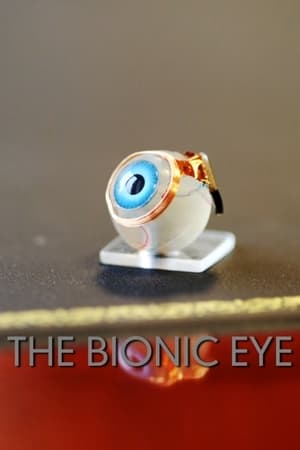
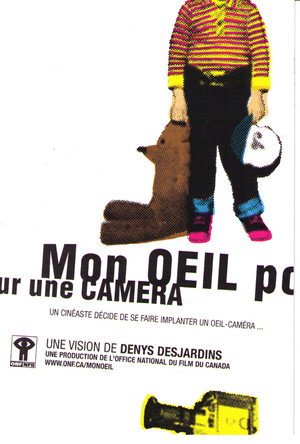
A filmmaker, fascinated by the power of the camera and obsessed with the theories of Russian film pioneer Dziga Vertov, decides to get a camera eye to replace the real eye he lost as a child. The visionary quest begins on the operating table, where a surgeon grafts a prototype ocular implant into his eye socket. Seeking a microscopic camera that could be incorporated into his artificial eye so he could secretly film whatever he sees, the filmmaker explores the futuristic technology that could make this possible, while revisiting chapters of his own past.
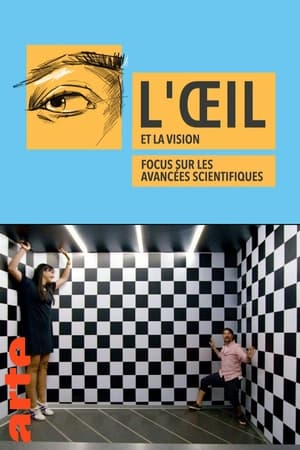
At a time when our eyes are tiring ever faster, we zoom in on new techniques to combat visual diseases and deficiencies.
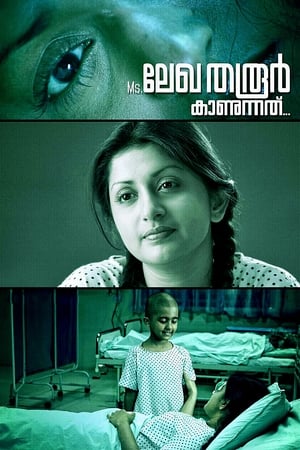
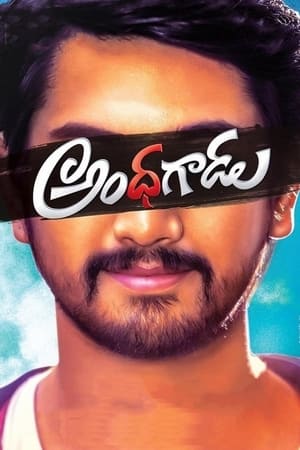
Lekha Tharoor is an intelligent woman with a breadth of knowledge about everything who anchors a popular TV show of her own. She was blinded at a young age in an accident involving firecrackers. She gets her sight back after getting a transplant. However post the operation she starts getting strange visions which unfortunately makes the people around her think that she lost her mind.
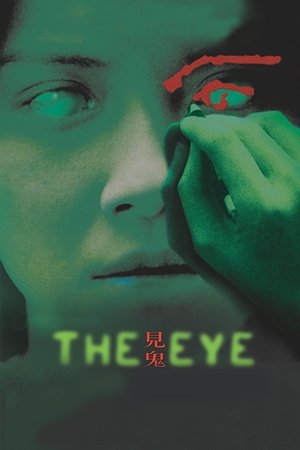
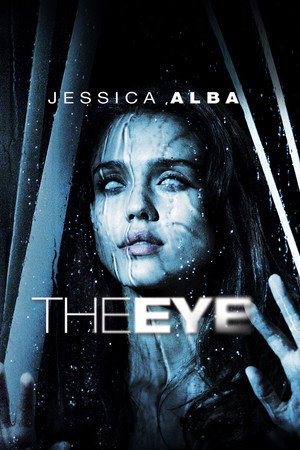
A blind concert violinist gets a cornea transplant allowing her to see again. However, she gets more than she bargained for when she realizes her new eye can see ghosts. She sets out to find the origins of the cornea and discover the fate of its former host.
A blind man falls in love with the doctor who has arranged his eye transplant. The operation, although successful, carries unexpected and haunting consequences.
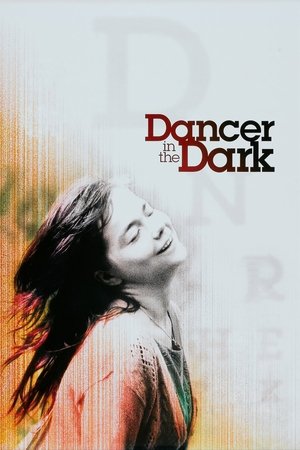
Selma, a Czech immigrant on the verge of blindness, struggles to make ends meet for herself and her young son, who has inherited the same genetic disorder and will suffer the same fate without an expensive operation. When life becomes increasingly difficult, Selma learns to cope through her love of musicals, dreaming up little numbers to the rhythmic beats of her surroundings.
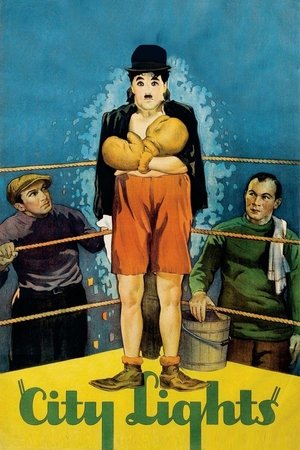
A tramp falls in love with a beautiful blind flower girl. His on-and-off friendship with a wealthy man allows him to be the girl's benefactor and suitor.
Violinist Sydney Wells was accidentally blinded by her sister Helen when she was five years old. She submits to a cornea transplantation, and while recovering from the operation, she realizes that she is seeing dead people.
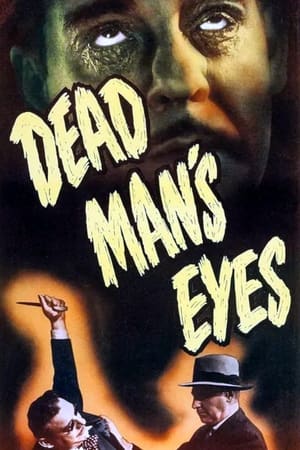
Artist David Stuart is blinded by a jealous model whose portrait he is painting. His fiance's father generously offers his eyes for a sight restoring operation. There's only one hitch: Stuart has to wait until after the man dies. Not surprisingly, when the benefactor dies a very premature death, suspicion falls on the artist.
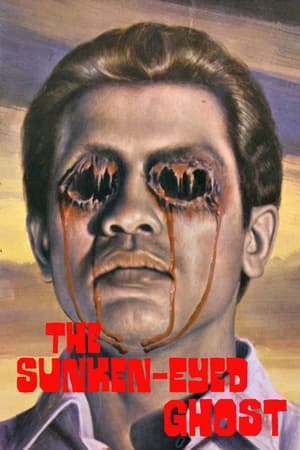
A mad doctor uses a fake taxi driver to kidnap victims and then removes their eyes in hopes of perfecting an eye transplant that will allow his blind wife to see again. One of the doctor's servants ends up getting possessed by not one, but several of the victims.
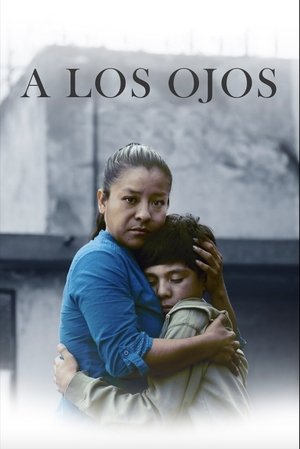
Monica is a social worker in Mexico City, whose son has a degenerative illness in both eyes. Having exhausted all other options, a corneal transplant is the only hope. Overwhelmed by the slowness of the health care system and the scarcity of resources, she decides to search for an extreme solution in her work environment: the world of street children.
Leading up to the events of Pitch Black, Richard B. Riddick escapes the Ursa Luna Penal Facility with William J. Johns hot on his tail.
A documentary about the making of The Turin Horse, the last film directed by Hungarian master Béla Tarr.
An extraordinary film about memory, and specifically the fading memory of an 86-year-old political activist who has fought tirelessly against historical amnesia and for justice in Argentina. The director’s grandmother, Laura Bonaparte, was one of the founders of the Mothers of the Plaza de Mayo, formed during the 1970s by women whose children and family members had been disappeared by the Videla military dictatorship. Laura herself lost three children and their partners, including the director’s parents. Today, after a lifetime battling that the disappeared never be forgotten, Laura faces her own struggle to remember.
Neuropsychologist Paul Broks travels America in search of the soul of legendary jazz guitarist Pat Martino who was brutally silenced by memory stripping brain surgery. Tracing his remarkable ascent from the depths of amnesia, back to the peak of artistry, Broks explores the nature of memory, self, creativity and the brain systems underlying personal identity. Filmed throughout the US in 2006 and 2007 the film features Delmar Brown, Red Holloway, John Patitucci, Les Paul, Joe Pesci, Carlos Santana and Pete Townshend.
Diana Mariscal reached a moment of fame in the sixties, when at just 18 years of age she was the lead actress of the movie Fando and Lis by Alejandro Jodorowsky. The moment seemed to trigger a promising career, but her public image faded little by little until disappearing. Forty years later the traces of her existence have not been entirely erased.
At the beginning of 2012 the so called war against crime, led by the Mexican Federal Government brought, as consequence, a number of nearly 50,000 casualties and a social climate of violence and distrust. How was this experienced by the men and women who fight this violence from the trenches of science? To the End of Reckoning tells through the eyes of the Jalisco Forensics Institute the development of this engagement, in one of the most violent states in the Country.
During 1950, Miguel Contreras Torres led a group of filmmakers to officially denounce William O. Jenkins' monopoly on film theaters, which was built throughout the country upon crime and corruption. Ever since, Uncle Miguel was ridiculed and eventually forgotten, but it is certain that his proclaim announced the separation of Mexican cinema and its audience. Discoveries may be found in the films made by Miguel, and bringing back to life these moving pictures might recover this history that was never told, a story that is almost lost and that Contreras Torres himself tried to pass on through his writings in The Black Book of Mexican Cinema.
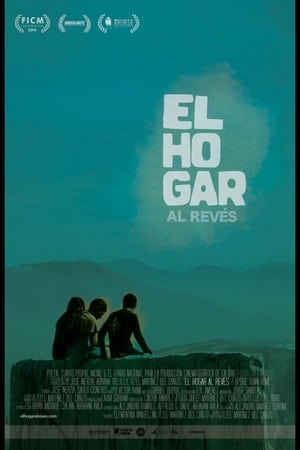
In an unfair country women work day and night far from home while their children learn to survive between loneliness and emptiness. They grow to become teenagers, locked down in one of many low income neighborhoods made up of identical small houses, outlined by overcrowding and scarcity. Their mothers, mostly workers in transnational factories, go in and out in buses that take them to a work place where they carry out twelve hour shifts two hours away from home, while their children muddle through their upbringing in tiny houses of 40 square meters. In spite of everything, they look for a way to move ahead and chase their illusions. This is a story full of youthful aspirations set in a context of difficulties and shortages.