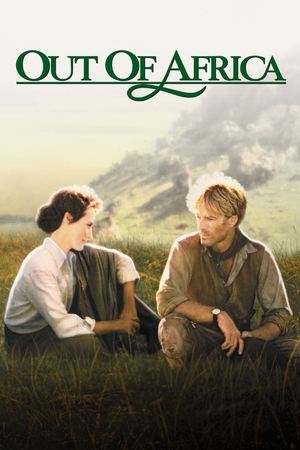
Tells the life story of Danish author Karen Blixen, who at the beginning of the 20th century moved to Africa to build a new life for herself. The film is based on her 1937 autobiographical novel.
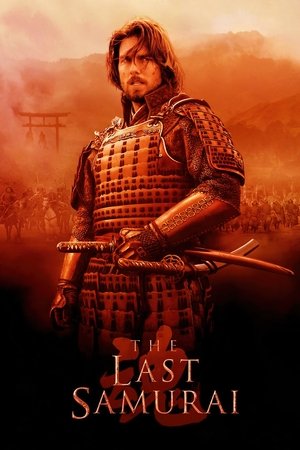
Nathan Algren is an American hired to instruct the Japanese army in the ways of modern warfare, which finds him learning to respect the samurai and the honorable principles that rule them. Pressed to destroy the samurai's way of life in the name of modernization and open trade, Algren decides to become an ultimate warrior himself and to fight for their right to exist.
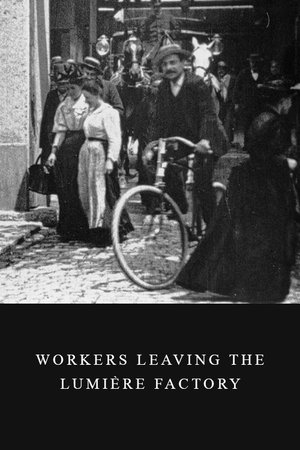
Working men and women leave through the main gate of the Lumière factory in Lyon, France. Filmed on 22 March 1895, it is often referred to as the first real motion picture ever made, although Louis Le Prince's 1888 Roundhay Garden Scene pre-dated it by seven years. Three separate versions of this film exist, which differ from one another in numerous ways. The first version features a carriage drawn by one horse, while in the second version the carriage is drawn by two horses, and there is no carriage at all in the third version. The clothing style is also different between the three versions, demonstrating the different seasons in which each was filmed. This film was made in the 35 mm format with an aspect ratio of 1.33:1, and at a speed of 16 frames per second. At that rate, the 17 meters of film length provided a duration of 46 seconds, holding a total of 800 frames.
In the 16th century, during the Kazakh Khanate, Kasym Khan was the fourth ruler, often viewed as the greatest leader to unite the Kazakh tribes.
At the dawn of the modern era, Portuguese explorer Ferdinand Magellan leads an expedition under the Spanish crown in search of the first westward route to the Spice Islands. He embarks on a perilous journey across the uncharted Pacific, where his fleet faces starvation, mutiny, and the psychological toll of endless seas. Upon reaching the shores of Cebu, Magellan is pulled into a fatal conflict with the natives by his drive to spread Catholicism, culminating in his tragic doom.
A British ex-convict in colonial Australia and his fragile wife, haunted by the past crime that binds them, struggle to rebuild their lives when a young newcomer stirs long-buried passions and secrets.
The untold true story set in the winter of 1925 that takes you across the treacherous terrain of the Alaskan tundra for an exhilarating and uplifting adventure that will test the strength, courage and determination of one man, Leonhard Seppala, and his lead sled dog, Togo.
A retelling of the story of France’s iconic but ill-fated queen, Marie Antoinette - from her betrothal and marriage to Louis XVI at fifteen to her reign as queen at nineteen and ultimately the fall of Versailles.
Alexander, the King of Macedonia, leads his legions against the giant Persian Empire. After defeating the Persians, he leads his army across the then known world, venturing farther than any westerner had ever gone, all the way to India.
Ari Ben Canaan, a passionate member of the Jewish paramilitary group Haganah, attempts to transport 600 Jewish refugees on a dangerous voyage from Cyprus to Palestine on a ship named the Exodus. He faces obstruction from British forces, who will not grant the ship passage to its destination.
Based on the murder of nine street peddlers in the aftermath of the Great Kanto earthquake.
In 1919, Australian farmer Joshua Connor travels to Turkey to discover the fate of his three sons, reported missing in action. Holding on to hope, Joshua must travel across the war-torn landscape to find the truth and his own peace.
Entatsu, Achako and Torazo: Chuji Kunisada's First Smile of the New Year
唄祭けんか道中
In a sweeping tale that spans 1000 years and multiple generations – from the distant past to the 19th century, the present day and a strange, dystopian future – this landmark collection traces the collective histories of Indigenous peoples across Australia, New Zealand and the South Pacific. Diverse in perspective, content and form, traversing the terrain of grief, love and dispossession, they each bear witness to these cultures’ ongoing struggles against patriarchy, colonialism and racism.
After the Hungarian army was annihilated by the Mongols at the battle of Mohi, only the castle of Esztergom stood in the Mongolians' way of invading the rest of Europe. Batu Khan, the grandson of Genghis Khan, reaches the walls of Esztergom with his invincible troops. The castle's defenders, led by Eusebius, the canon of Esztergom, and a Spanish mercenary, Captain Simon, are preparing for the final battle. The sudden arrival of Cardinal Cesareani, the Papal Legate, coinciding with the Mongol Lunar New Year celebrations and the mystical practices of Eusebius, combine to offer the defenders a small glimmer of hope.
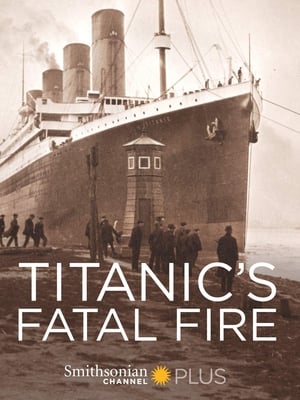
The sinking of the RMS Titanic remains one of the most enduring and mysterious tragedies of the 20th century. For decades, investigators and amateurs alike have floated theories for why it occurred and who was to blame for the extraordinary loss of life, but no one answer could fully explain what happened. Until now. To mark the 100th anniversary of the infamous disaster, Smithsonian Channel will premiere Titanic's Final Mystery. The two-hour special investigates a century of theories and uncovers astonishing new forensic evidence that proves the most likely theory for the case.
Three disconnected siblings find themselves living once again under the same roof when the father who abandoned them returns to their lives.
This is a sad tale of a noble lady who is entranced by an opera singer. Hoping to get closer to the singer, the lady takes up lessons with her. Despite their affection, they must face obstacles.
As the son of a Viking leader on the cusp of manhood, shy Hiccup Horrendous Haddock III faces a rite of passage: he must kill a dragon to prove his warrior mettle. But after downing a feared dragon, he realizes that he no longer wants to destroy it, and instead befriends the beast – which he names Toothless – much to the chagrin of his warrior father.