With access to the scientists and engineers responsible for the Curiosity rover's on-the-ground experiments, NOVA captures its landing on Mars
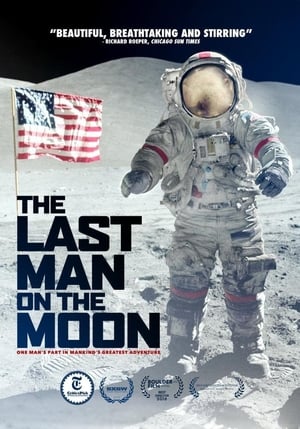
The 1960s was an extraordinary time for the United States. Unburdened by post-war reparations, Americans were preoccupied with other developments like NASA, the game-changing space programme that put Neil Armstrong on the moon. Yet it was astronauts like Eugene Cernan who paved the uneven, perilous path to lunar exploration. A test pilot who lived to court danger, he was recruited along with 14 other men in a secretive process that saw them become the closest of friends and adversaries. In this intensely competitive environment, Cernan was one of only three men who was sent twice to the moon, with his second trip also being NASA’s final lunar mission. As he looks back at what he loved and lost during the eight years in Houston, an incomparably eventful life emerges into view. Director Mark Craig crafts a quietly epic biography that combines the rare insight of the surviving former astronauts with archival footage and otherworldly moonscapes.
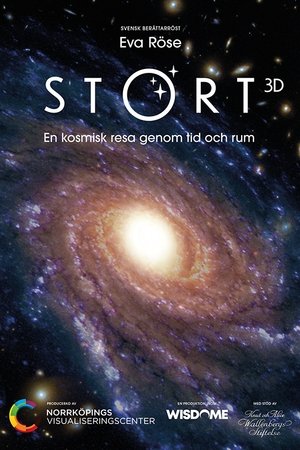
In one single, epic camera move we journey from Earth's surface to the outermost reaches of the universe on a grand tour of the cosmos, to explore newborn stars, distant planets, black holes and beyond.
Gravitation - Urkraft des Universums
Archival material from the original NASA film footage – much of it seen for the first time – plus interviews with the surviving astronauts, including Jim Lovell, Dave Scott, John Young, Gene Cernan, Mike Collins, Buzz Aldrin, Alan Bean, Edgar Mitchell, Charlie Duke and Harrison Schmitt.
Travel alongside the astronauts as they deploy and repair the Hubble Space Telescope, soar above Venus and Mars, and find proof of new planets and the possibility of other life forming around distant stars.
This feature-length documentary is a portrait of eclipse chasers, people for whom solar eclipses - among nature's more spectacular phenomena – are a veritable obsession. The film follows 4 of them as they travel incredible distances to witness the last total eclipse of the millennium as it sweeps eastward across Europe to India. At various points along the way enthusiasts Alain Cirou in France, Paul Houde in Austria, Olivier Staiger in Germany and Debasis Sarkar in India offer their impressions of the historic event.
The film features amazing scenes of places never before seen gathered by key space missions that culminated with groundbreaking discoveries in 2015. It features a spectacular flight though the great cliffs on comet 67P, a close look at the fascinating bright "lights" on Ceres, and the first ever close ups of dwarf binary planet Pluto/Charon and its moons.
In the year 1957 the cold war expands to space. The Soviet-Union sends Sputnik as the first manmade object into earth-orbit. 3 years later Yuri Gagarin enters space as the first man in space. The so called "Space Race" seems to be decided. But in 1961 President Kennedy promised to send American Astronauts to the Moon. The Apollo Project was born. A space ship had to be built that is strong enough to escape earth's gravitation, land on the moon and bring the crew safely back to earth. Motion Designer Christian worked with his brother and Composer Wolfgang for 18 months on this shortfilm. The foundation were thousands original NASA photographies, taken from the Astronauts during the Apollo Missions, which were released in September 2015. It is an animated collage using different techniques to bring the stills to life.
In unusual circumstances, scientists from different countries work together to achieve a common scientific goal. Locked in their spinning space lab, they are isolated from the world — family and friends - and can only watch from the outside as life on Earth continues without them. The space station is a monument not only to the weaknesses of humanity, but also to its ability to do the impossible for the sake of life in space.
Twin astronauts Scott and Mark Kelly were separated for almost a year, undergoing intensive measurements when one was in space and one was on Earth. But that was only the beginning of their scientific odyssey. "Beyond A Year in Space," PBS and Time's follow-up documentary to last year's — which followed Scott Kelly from launch to landing — chronicles Kelly's return to life on Earth and the extensive medical testing the duo undergo to determine exactly what changes have occurred as a result of his record-breaking stay on the International Space Station. The documentary also follows two new astronauts, Jessica Meir and Victor Glover, training to go even further.
Horizon visits state-of-the-art laboratories and uses CGI to recreate the science-fiction-worthy weather experienced on other planets.
Twelve men who belong to one of the world's most exclusive fraternities -- people who've walked on the surface of the moon -- are paid homage in this documentary. Using newsreel footage, rare NASA photographs, and digitally animated re-creations, Magnificent Desolation: Walking on the Moon examines the Apollo missions between 1969 and 1972 which put astronauts on the moon.
Documentary about humankind’s first walk on the moon with Apollo 11, NASA’s first test mission of Orion for beyond low-space orbit, and Mars 1, the upcoming first manned mission to the red planet.
Poetic documentary about the beauty of Earth and space as captured from the International Space Station.
Documentary about the beauty of Earth as seen from the International Space Station.
Black holes stand at the limit of what we can know. To explore that edge of knowledge, the Event Horizon Telescope links observatories across the world to simulate an earth-sized instrument. With this tool the team pursues the first-ever picture of a black hole, resulting in an image seen by billions of people in April 2019. Meanwhile, Hawking and his team attack the black hole paradox at the heart of theoretical physics—Do predictive laws still function, even in these massive distortions of space and time? Weaving them together is a third strand, philosophical and exploratory using expressive animation. “Edge” is about practicing science at the highest level, a film where observation, theory, and philosophy combine to grasp these most mysterious objects.
An IMAX 3D camera chronicles the effort of 7 astronauts aboard the Space Shuttle Atlantis to repair the Hubble Space Telescope.
Venture into deep space for a fascinating look at asteroids, their cosmic origins and the potential threat they pose to our world. Written and produced by Phil Groves, produced by Jini Durr and directed by W.D. Hogan, Asteroid Hunters introduces asteroid scientists – the best line of defense between Earth and an asteroid’s destructive path – and reveals the cutting-edge tools and techniques they use to detect and track asteroids, and the technology that may one day protect our planet. The effects of an asteroid impact could be catastrophic and while the current probability of an event in our lifetime is low, the potential consequences make the study of asteroids an incredibly important area of scientific research. Witness the latest in planetary defense and how science, ingenuity and determination combine to explore the world’s most preventable natural disaster.
In a studio setting, Stephen Hawking, Arthur C. Clarke and Carl Sagan (who joins them via satellite) discuss the Big Bang theory, God, our existence as well as the possibility of extraterrestrial life.