Based on the true events revolving around Beaver Island, Michigan and King James Strang--Elder Island, 1856. Peter Wiggenstein turned to the men of the five island families around him and warned: "Tell nothing of this" as the men all looked at the body of their former Reverend--gunned down just outside his own home--and a decision was made. They secretly buried the body on Graves Island, and the reign of America's first and only king ended; but for every end, there is always a new beginning, for an evil was born that night. Five families have always controlled the Island. Five families share the Island's fortune; five families share its curse.
When World War II broke out, John Ford, in his forties, commissioned in the Naval Reserve, was put in charge of the Field Photographic Unit by Bill Donavan, director of the soon-to-be-OSS. During the war, Field Photo made at least 87 documentaries, many with Ford's signature attention to heroism and loss, and many from the point of view of the fighting soldier and sailor. Talking heads discuss Ford's life and personality, the ways that the war gave him fulfillment, and the ways that his war films embodied the same values and conflicts that his Hollywood films did. Among the films profiled are "Battle of Midway," "Torpedo Squadron," "Sexual Hygiene," and "December 7."
It's 1957, and James Whale's heyday as the director of "Frankenstein," "Bride of Frankenstein" and "The Invisible Man" is long behind him. Retired and a semi-recluse, he lives his days accompanied only by images from his past. When his dour housekeeper, Hannah, hires a handsome young gardener, the flamboyant director and simple yard man develop an unlikely friendship, which will change them forever.
"A young filmmaker studying at the Alexandria Higher Institute of Cinema (AHIC) struggles with an internal conflict; torn between his deep loyalty to his hometown of Alexandria and his burning desire to immerse himself in the vibrant film scene of Cairo, the bustling capital. He discusses the matter with a fellow AHIC student, where they share their thoughts and questions about the meaning of success and their personal aspirations. This shared exploration becomes a search for a guiding light, a clue that reveals whether their chosen paths will lead them to their desired futures.
This documentary captures the sounds and images of a nearly forgotten era in film history when African American filmmakers and studios created “race movies” exclusively for black audiences. The best of these films attempted to counter the demeaning stereotypes of black Americans prevalent in the popular culture of the day. About 500 films were produced, yet only about 100 still exist. Filmmaking pioneers like Oscar Micheaux, the Noble brothers, and Spencer Williams, Jr. left a lasting influence on black filmmakers, and inspired generations of audiences who finally saw their own lives reflected on the silver screen.
Since the early 1990s, Quentin Tarantino has been on a cinematic rollercoaster ride, that's never looked like slowing down, that has cemented himself as one of the worlds most influential filmmakers. Through his unique style, Tarantino carved out a place in Hollywood just for him, and even when others have tried to emulate him, his films stand-out amongst the crowd. And with one movie left before he supposedly retires, we take a look back at the ups and downs of his incredible life on film.
Jean-Claude van Damme, Sheldon Lettich and more discuss the 1991 film "Double Impact" from inception to reception.
Growing up in post-World War II era Arizona, young Sammy Fabelman aspires to become a filmmaker as he reaches adolescence, but soon discovers a shattering family secret and explores how the power of films can help him see the truth.
An aspiring filmmaker poses as a relative of Francis Ford Coppola to get her independent movie made.
In a hospital on the outskirts of 1920s Los Angeles, an injured stuntman begins to tell a fellow patient, a little girl with a broken arm, a fantastic story about 5 mythical heroes. Thanks to his fractured state of mind and her vivid imagination, the line between fiction and reality starts to blur as the tale advances.
A retrospective documentary about the groundbreaking horror series, Friday the 13th, featuring interviews with cast and crew from the twelve films spanning 3 decades.
Making-of documentary about Lino Brocka's 1975 film "Manila in the Claws of Light," featuring interviews and behind-the-scenes footage.
Teenager Deacon works at a video shop, and his buddies, Fred and Matt, sell the bootleg porno films he acquires. Deacon gets fired, but the pals have the bright idea of filming their own Internet porn flick in order to make money and become more popular at school. Hijinks ensue as they cast and create their movie, but porn industry player Vic Ramalot grows jealous of their burgeoning success and tries to put a stop to the project.
Eccentric, outspoken, and unfiltered TV and low budget film director Josh Becker struggles to emerge from the shadow of his work on "The Evil Dead", "Xena", the careers of his more successful colleagues, depression and alcoholism to fulfill his lifelong ambition of creating high quality, successful films.
Two public broadcast employees, tired of their dead-end jobs, set out to make a documentary proving aliens exist in a small Minnesotan farming community.
In 1928, as the talkies threw the film industry and film language into turmoil, Chaplin decided that his Tramp character would not be heard. City Lights would not be a talking picture, but it would have a soundtrack. Chaplin personally composed a musical score and sound effects for the picture. With Peter Lord, the famous co-creator of Chicken Run and Wallace & Gromit, we see how Chaplin became the king of slapstick comedy and the superstar of the movies.
Tony has recently been released from a sentence for violent behaviour. He promises to improve his ways and is finally granted a few hours alone with his two children. They celebrate the reunion by going to the movies to see a new film by the famous, critically acclaimed Danish director Claus Volter. But the film is not the masterpiece it is said to be on the poster; the children are crying and Tony cannot get the money back he spent on tickets and candy. Tony does not give up; he seeks out Claus Volter in order to get an explanation and a refund. It is however easier said than done to get money out of a world-renowned filmmaker.
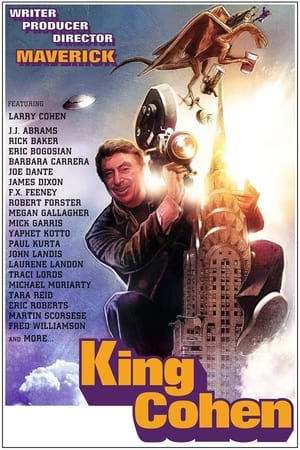
A feature-length documentary focusing on the acclaimed work and eclectic career of maverick filmmaker Larry Cohen, writer-director of "Black Caesar," "It's Alive," "God Told Me To," "Q," "The Stuff," and many more.
As Australian cinema broke through to international audiences in the 1970s through respected art house films like Peter Weir's "Picnic At Hanging Rock," a new underground of low-budget exploitation filmmakers were turning out considerably less highbrow fare. Documentary filmmaker Mark Hartley explores this unbridled era of sex and violence, complete with clips from some of the scene's most outrageous flicks and interviews with the renegade filmmakers themselves.
The first half is a salute to John Wesley Powell, the first man to explore the Colorado River. Walt Disney presents a behind-the-scenes look at the filming of Ten Who Dared on the same waters. Then the True-Life Adventure Featurette: Bear Country is shown.