Nora is a young housewife and mother, living in a quaint little village with her husband and their two sons. The Swiss countryside is untouched by the major social upheavals the movement of 1968 has brought about. Nora’s life is not affected either; she is a quiet person who is liked by everybody – until she starts to publicly fight for women’s suffrage, which the men are due to vote on in a ballot on February 7, 1971.
Switzerland in the 13th century: Shot in the middle of World War II, this classic film returns to the origins of Switzerland and turns about the problem of the small country against a big power: Resist or obey?
For ten years, immigrant Tobias has worked at a Swiss clock factory and, in the relentless ticking, he saw life go by without much expectation. One day, he sees Caroline, a former schoolmate from back in Eastern Europe, and falls in love with her, but she's married and has a daughter.
Jeff, a mental health patient in a clinic high in the Swiss Alps, escapes to his only friend Morton, while Prisha, the daughter of Indian guru Majula, mysteriously enters Jeff’s life. After an argument with Morton at his bakery where the fugitive wanted to start over, Jeff moves on and visits a monk who gives workshops for enlightenment in the Balkan mountains, in search and full of hope for redemption. Still haunted by his past, Jeff must run again and travels with Prisha, who secretly followed him, to India to find a new life and to get her father’s blessing for the two now in love. Can he fulfil his dream?
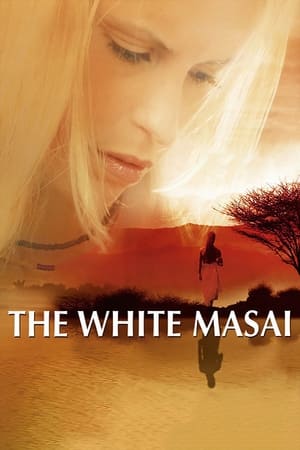
A girl, Carola, whose vacation in Kenya takes an interesting turn when she becomes infatuated with a Masai. Carola decides to leave her boyfriend to stay with her lover. There, she has to adapt to the Masai's way of life and get used to their food which includes milk mixed with blood. She also has to face her husband's attitude towards women and what he expects from a wife. Nonetheless, Carola is welcomed warmly into the tribe she has chosen to join.
Datura Ultra
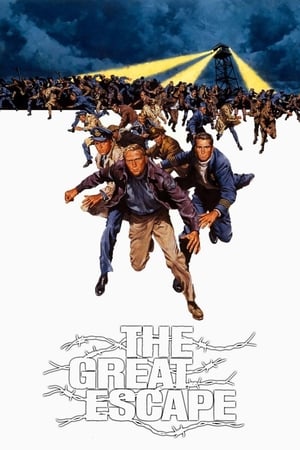
The Nazis, exasperated at the number of escapes from their prison camps by a relatively small number of Allied prisoners, relocate them to a high-security 'escape-proof' camp to sit out the remainder of the war. Undaunted, the prisoners plan one of the most ambitious escape attempts of World War II. Based on a true story.
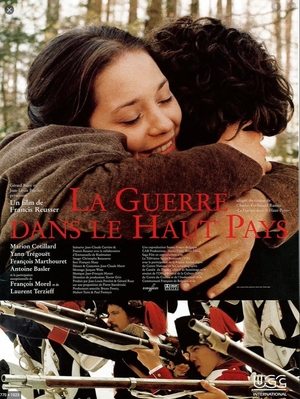
La Guerre Dans le Haut Pays is a period piece set in the winter of 1797-98, during the six days leading up to the fall of Bern and the victory of Napoleon's army, when the Bern government is faced with mixed loyalties from its subjects. The population of the lower valley is divided, but the upper region remains loyal, since they have been given special autonomy and a favorable system of taxation. David, a postman, works between the two regions. His father, who is a hard-line conservative, does not approve of his relationship with Julie, who is from the lower part of the valley. Julie's father, on the other hand, is more open to the new ideas of liberation. As a result of his work, David is exposed to new ideas and becomes a believer in equality and justice.
The story of a German singer named Willie, who while working in Switzerland, falls in love with a Jewish composer named Robert, whose family is helping people to flee from the Nazis. Robert’s family is skeptical of Willie, thinking she could be a Nazi as she becomes famous for singing the song “Lili Marleen”.
A native of Sennwald, Anna Göldi arrived in Glarus in 1765. For seventeen years, she worked as a maidservant for Johann Jakob Tschudi, a physician. Tschudi reported her for having put needles in the bread and milk of one of his daughters, apparently through supernatural means. Göldi at first escaped arrest, but the authorities of the Canton of Glarus advertised a reward for her capture in the Zürcher Zeitung on February 9, 1782. Göldi was arrested and under torture, admitted to entering in a pact with the Devil, who had appeared to her as a black dog. She withdrew her confession after the torture ended, but was sentenced on June 18, 1782 to execution by decapitation. The charges were officially of "poisoning" rather than witchcraft, even though the law at the time did not impose the death penalty for non-lethal poisoning.
An 80-year-old woman spends her time at a bus station. She’s waiting for the right moment to leave this place forever.
The narrative unfolds in the 14th Century, when the European nations vie for supremacy within the Holy Roman Empire. The ambitious Austrian Empire, desiring more land, invades neighbouring Switzerland, a serene and pastoral nation. Protagonist William Tell, a formerly peaceful hunter, finds himself forced to take action as his family and homeland come under threat from the oppressive Austrian King and his ruthless warlords.
When some small satirical group enters a theatre they don't realize they are getting locked up after dark.
Without knowing it, Alfred and Julia live in a land of pure invention. It is the richest and most beautiful land in the world. From a height, this land looks like a piece of felt, from close up like a clean and tiny park. The footpaths are lined with benches and the streets with banks. Alfred and Julia have been married for 8 years, are childless, and live on the 16th floor of a new building. Thanks to their various crises, they have got to know each other somewhat better, but their most outstanding characteristic remains their mediocrity. On Friday, August 12th 1977, a mysterious epidemic breaks out in their country. The mass media ensure that the news is widely broadcast. The authorities order a ban on information, but those concerned break their imposed silence. On Sunday evening, it becomes known that the epidemic was nomore than a kind of "dress rehearsal" for a real emergency. Alfred and Julia continue to live in a land of pure invention - but now they are conscious of the fact.
In 1960, Martín and Marcos are forced by their difficult personal circumstances to travel to Switzerland in search of work, leaving their families in the Madrid of Franco's Spain. But they undertake more than a simple journey; they begin the road to a new life.
This romantic drama follows two policemen whose job is to investigate the lives of foreigners who have applied for Swiss citizenship. Among the applicants they must screen are a French psychiatrist and his wife, and a ballet dancer. The married couple are quickly accepted, but the dancer's life offers some objections. However, since the younger policeman has fallen in love with her, there is a chance that she, too, will win Swiss citizenship.
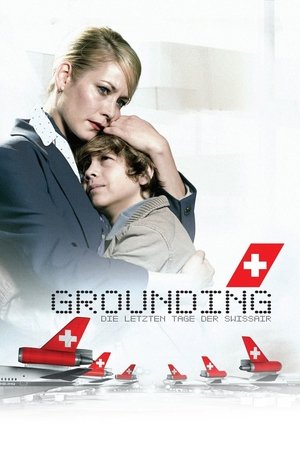
The demise of airline Swissair in 2001 was a huge blow to Switzerland's economy and to the country's morale. It was a sad day for Swiss history when the airline's fleet was grounded on 2 October 2001. "Grounding" is set during the last days of the doomed airline, and tells the story of manager Mario A. Corti's unhappy fate, the last, unlucky CEO at the traditional airline company, as well as of all those nameless people who lost almost everything in the maelstrom of Swissair's downfall: their job, home and their belief in Switzerland.
An intimate portrait of Matthew Shepard, the gay young man murdered in one of the most notorious hate crimes in U.S. history. Framed through a personal lens, it's the story of loss, love, and courage in the face of unspeakable tragedy.
Before an office complex is set to be demolished, it expresses one last wish: a love story. It centers around desire, security, and a melody that runs through the entire fabric of the building. So when darkness descends and everything falls silent, the routine lives of those within its walls sparkle like stars, paving the way for intimate chance encounters and absurd humor to unfold. A nocturnal kaleidoscope of longing, loneliness and freedom.
During World War II, Switzerland severely limited refugees: "Our boat is full." A train from Germany halts briefly in an isolated corner of Switzerland. Six people jump off seeking asylum: four Jews, a French child, and a German soldier. They seek temporary refuge with a couple who run a village inn. They pose as a family: the deserter as husband, Judith as his wife, an old man from Vienna as her father, his granddaughter and the French lad, whom they beg to keep silent, as their children. Judith's teenage brother poses as a soldier. The fabrication unravels through chance and the local constable's exact investigation. Whom will the Swiss allow to stay? Who gets deported?