Traces the long and ferocious rivalry between Coke and Pepsi, centered on the “New Coke” debacle of 1985. For almost a hundred years, Coke had been the undisputed leader in the multibillion dollar global soda industry–stodgy, predictable, but indisputably top dog–while Pepsi had been the upstart No. 2, forever poking at its big brother with cutting edge advertising. But in 1985, in a stranger-than-fiction twist, Coca-Cola’s executives took a step so daring that no one in either company could believe it: they changed the formula of the most popular beverage on the planet.
Burp! Pepsi Vs Coke in the Ice Cold War traces the history of these brands against the backdrop of global politics. The second world war was the perfect vehicle for Coca-Cola distribution (including to the Nazis), with bottling plants on front lines paid for by the US war department.
Cocaine has always gotten a bad rap, and for a reason. It is a drug used by the rich and the poor legally and illegally, Mexican cartels fought over it with Colombia once associated with the brutal cocaine wars, and a source of tension between the American and Mexican borders on the people who are illicitly bringing in cocaine from one side of the border to another and will do anything to do it. So it can be surprising at times to the viewer throughout the course of the documentary special, that it was never always like this.
Coca vs Pepsi : le combat du siècle
In Cold War-era West Berlin, American Coca-Cola executive C.R. 'Mac' MacNamara is tasked with playing babysitter to his boss' spoiled 17-year-old daughter Scarlett, who proves more difficult than anticipated when she reveals that she is pregnant by a Communist.
After graduating from Yale in 1962, womanizing Lawrence flees a gambling debt that his rich dad won't pay and takes his roomie's place as a Peace Corps Volunteer in the Thai Golden Triangle with two other PCVs. Will he survive two years?
A Coca-Cola bottle dropped from an airplane raises havoc among a normally peaceful tribe of African bushmen who believe it to be a utensil of the gods.
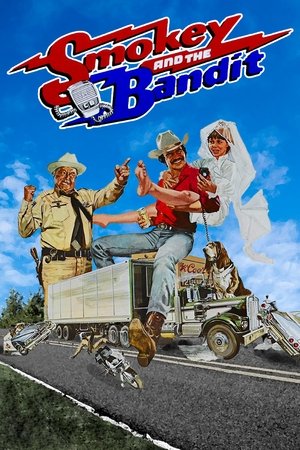
A race car driver tries to transport an illegal beer shipment from Texas to Atlanta in under 28 hours, picking up a reluctant bride-to-be on the way.
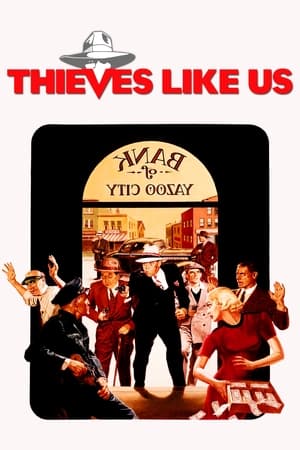
Three criminals escape from prison and embark on a robbery spree across USA. Along the way, one of them falls in love while they plan a final heist before going their separate ways.
Zeke seems to think he can tell the difference between Coke and Pepsi while Derek thinks it's all in his head. Only a blind taste can prove anything.
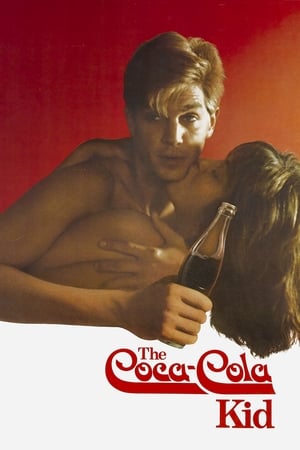
An eccentric marketing guru visits a Coca-Cola subsidiary in Australia to try and increase market penetration. He finds zero penetration in a valley owned by an old man who makes his own soft drinks, and visits the valley to see why. After "the Kid's" persistence is tested he's given a tour of the man's plant, and they begin talking of a joint venture. Things get more complicated when the Coca-Cola man begins falling in love with his temporary secretary, who seems to have connections to the valley.
A behind-the-scenes account of Pepsi's attempt to challenge Coca-Cola's century-long reign as the world's top cola, sparking the unforgettable "Cola Wars" of the mid-1980s
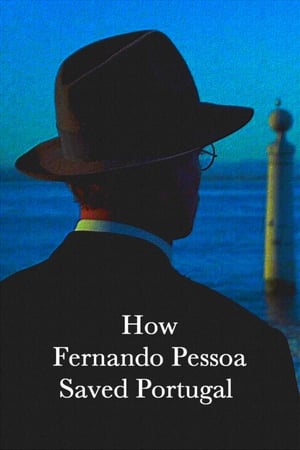
Lisbon, Portugal, 1927. The writer and journalist Fernando Pessoa accepts from his boss the commission to create an advertising slogan for the drink Coca-Louca; but conservative government authorities consider the new drink as revolutionary as it is diabolical.
East-Germany, 1990. The first summer after Germany's reunification and Olli is eager to explore this new freedom. But for someone who has never left his small village in East Germany, he has high expectations. On top of that, he is not the brightest candle on the cake. So when he's suddenly convinced that the glorious US is just a stone throw away, across the lake, his sister Peggy knows not to stop her brother but rather see where this adventure might lead them. And to Peggy's surprise New York's subway is closer than she thought.
Timo Novotny labels his new project an experimental music documentary film, in a remix of the celebrated film Megacities (1997), a visually refined essay on the hidden faces of several world "megacities" by leading Austrian documentarist Michael Glawogger. Novotny complements 30 % of material taken straight from the film (and re-edited) with 70 % as yet unseen footage in which he blends original shots unused by Glawogger with his own sequences (shot by Megacities cameraman Wolfgang Thaler) from Tokyo. Alongside the Japanese metropolis, Life in Loops takes us right into the atmosphere of Mexico City, New York, Moscow and Bombay. This electrifying combination of fascinating film images and an equally compelling soundtrack from Sofa Surfers sets us off on a stunning audiovisual adventure across the continents. The film also makes an original contribution to the discussion on new trends in documentary filmmaking.
Bruce Brown's The Endless Summer is one of the first and most influential surf movies of all time. The film documents American surfers Mike Hynson and Robert August as they travel the world during California’s winter (which, back in 1965 was off-season for surfing) in search of the perfect wave and ultimately, an endless summer.
An exploration —manipulated and staged— of life in Las Hurdes, in the province of Cáceres, in Extremadura, Spain, as it was in 1932. Insalubrity, misery and lack of opportunities provoke the emigration of young people and the solitude of those who remain in the desolation of one of the poorest and least developed Spanish regions at that time.
Megacities is a documentary about the slums of five different metropolitan cities.
Through candid interviews, the perpetrators of Argentina's most notorious bank heist detail how — and why — they carried out the radical 2006 operation.
"After Jiang Ge's murder, Liu Xin and her family's approach and attitude are the only reason that triggered this lawsuit; I just use the law to legally defend my rights and interests, not to talk about being more serious. But no matter how much legal responsibility Liu Xin should bear, I never wanted anyone to commit cyber violence against her, such as disinformation and defamation. As early as the beginning of Jiang Ge's murder, someone added a WeChat to scold me: sending Jiang Ge to study in Japan deserved it. I couldn't understand at all. Sending my daughter to study abroad was to let her learn more, so why should even that be attacked after Liu killed her. After that, some people publicly abused Jiang Ge on Weibo, and in the first half of 2017, I went to the local police station to report the case. in December 2017, when the trial of Chen Shifeng was held in Japan, the net storm was the craziest. Numerous netizens could not stand to see it and helped me report it..."