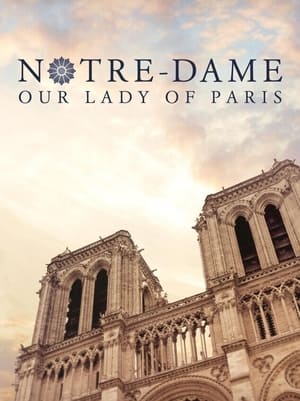
This ABC documentary special provides a detailed look into the disastrous fire that ravaged Paris' revered Notre-Dame Cathedral in 2019. Firsthand accounts of firefighters, clergy, local officials and those who were inside the cathedral on April 15, 2019, as well as harrowing footage from within the inferno, tell the story of the fire watched around the world.
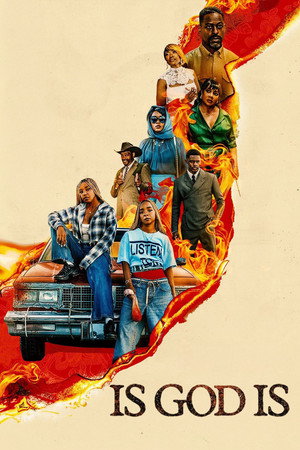
Žháři
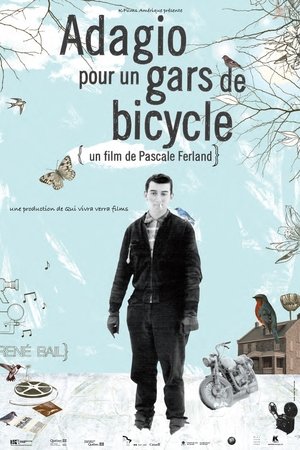
Adagio pour un gars de bicycle
This Traveltalk series short visit to New Zealand starts in Auckland, a bustling, modern city. Next is Christchurch, home of Canterbury University, where rowing teams participate in a regatta. Nearby is Lake Wakatipu, which inspires artists to put their impressions on canvas. We then visit Rotorua, a city famous for its geysers, hot springs, bubbling mud pools, and other geothermal activity. At Ferry Springs there is lots of trout for fishing. Later, a group of natives performs a canoe dance.
The Andes Mountains travel the western side of South America. Unlike many other mountain ranges of their altitude, the Andes do support human life on their high altitude slopes. Modern life is slowly making its way to the high altitude Andes, but the natives for the most part continue with the traditional ways of their ancestors, growing limited crops such as beans and potatoes - where the crop originated - raising sheep and pigs, and living in crude huts. The llama is the most useful of their work animals. The most conspicuous aspect of the native dress is their derby hats, the origins which are unknown. Further down the slopes, agriculture and ranching is more productive and is carried out by descendants of the Spanish settlers. There is a famous lake district in the Chilean part of the Andes, where resort hotels are located.
The captivating tales of the people and events behind one of humanity's greatest achievements in exploration: NASA's Voyager mission.
A short film following the release of journalist and activist Barrett Brown from prison, and his drive across Texas to a halfway house. 'Relatively Free' is an examination of Brown's return to a very different world, post the election.
September 2016: Stacey Dooley embeds herself on the frontline with the extraordinary all-female Yazidi battalion, who are fuelled to take revenge against the so-called Islamic State. As the battle to take Mosul from ISIS advances in Northern Iraq, in this extraordinary film for BBC Three, Stacey finds these young women's lives have been transformed by a desire to avenge their loved ones who were murdered by Isis.
22-year-old Kei refuses to conform to the Japanese achievement-oriented society. He is homeless by choice, living on the streets and under the bridges of Kyoto. His love for nature and music keeps him afloat in his dream world. However, when he runs out of money, he is forced to face reality.
A flickering dance of intriguing imagery brings to light the possibilities of ordinary movements from the everyday which appear, evolve and freeze before your eyes. Made entirely from archive photographs and footage from the earliest days of moving image, All This Can Happen (2012) follows the footsteps of the protagonist from the short story 'The Walk' by Robert Walser. Juxtapositions, different speeds and split frame techniques convey the walker's state of mind as he encounters a world of hilarity, despair and ceaseless variety.
This Traveltalk series short takes us to Edinburgh, Scotland. We learn the importance of religion, science and the arts here and see various historic sites including Edinburgh Castle.
Crowds is a feature documentary that records popular events of Uruguay where thousands of people gather spontaneously, called by faith, passion, celebration and memory. What happens when we set aside our individuality to act collectively? This documentary observes the passions that draw thousands of people close in order to join in a choral character. It discovers the crowd while it transgresses and experiences catharsis, while it seeks miracles and hopes; in continuous movement it splits and rejoins... until they dissipate and individuals re-emerge in their own solitude.
Documentary film that takes a visual and anthropological journey through man's spirit across the thin line dividing excessive faith in religious believes and the passion with which he devotes himself to worldly pleasures in a city that coexists in harmony with its double standards. Religion, faith, politics, violence and death are intimately bound in this social portrait.
This black-and-white film is a loving portrait of Santiago de Cuba and its people. It provides a view of Cuba as a picturesque country, the product of an earthy mix of black and criollo cultures. The film uses historical images which portray the end of the eighteenth century when Haitian slave owners fled with their slaves to Cuba after the Haitian Revolution.
Across America, the morning of September 11, 2001 began routinely, with news and radio broadcasts sharing local human interest stories and traffic reports. But by 9 a.m., the day's narrative had taken a tragic turn. Most of us are familiar with the national news coverage of 9/11, but the local reporting from TV and radio affiliates across the nation was no less important and no less compelling. This is an account of the tragedy as it unfolded, and as it aired in American cities large and small, told without narration or interviews.
This travelogue begins with the vast agricultural wealth of the country, whose farmers can produce four times the amount required to feed the country's population. As such, the export of these agricultural products is a vital part of the country's economy. This agricultural tradition extends to its food consumption, as Denmark's vast array of open faced sandwiches is world renowned. It also extends to flower production and the Dane's love of flowers, which are sold in public markets. Denmark has a strong social support system, as witnessed by the free and mandatory public schooling, free medical services for expectant mothers and children, the provision of cooperative housing and housing for seniors, and the provision of old age pensions without premiums.
This travelogue emphasizes Copenhagen's harmonious residents and tone. We see well-known landmarks and get a quick history of some of them.
This Traveltalk series short looks at four of Spain's most famous cities, Granada, Seville, Toledo, and Madrid, with an emphasis on the Moors and their influence on the country.
Under the Southern Cross also known as The Devil's Pit or Taranga, is a 1929 American drama film set in New Zealand, directed by Lew Collins for Universal Studios, who also wrote the screenplay. Originally titled Taranga by the original director Alexander Markey, but was completed by Collins and released as Under the Southern Cross in 1929, then with the introduction of sound was given a soundtrack and retitled The Devil’s Pit in 1930. The film was shot on White Island, which has an active volcano. It is one of four films (with Down on the Farm, Hei Tiki and On the Friendly Road) which lay claim to be the first "New Zealand talkie", although dubious as the sound was added to the 1930 release in the United States. Only fragments of out-takes are left. The film probably has no connection with the 1927 British film of the same name, directed by Gustav Pauli.
A family portrait in which the director profiles his grandmother, Odette Robert. Eustache includes in the film the conditions of its production — he is seated at the table with her, pours her some whiskey, speaks with the camera operator, manipulates the clapboard at the head and tail of the reels, and even takes a phone call. Robert, who was seventy-one, speaks rapidly and tells the story of her life, starting from her early childhood in villages in the Bordeaux region of France. A shorter version of the film ("Odette Robert") was edited in 1980 to be broadcast on television on TF1. The complete film only gained exposure in 2002, when it was salvaged by Boris Eustache, Thierry Lounas, João Bénard da Costa, Jean-Marie Straub, and Pedro Costa.