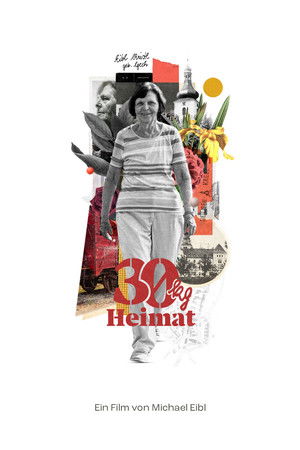
Documentary of Daniel Schubert's grandmother, Martha Katz, a Holocaust survivor.
World War II was not just the most destructive conflict in humanity, it was also the greatest theft in history: lives, families, communities, property, culture and heritage were all stolen. The story of Nazi Germany's plundering of Europe's great works of art during World War II and Allied efforts to minimize the damage.
Produced in 1943 under the guidance of Army Air Force Lieutenant Clark Gable, this film follows a single 8th Air Force B-17 crew from training through a series of missions over Europe.
The Normandy landings of 6 June 1944 were pivotal to the outcome of WW2. We learn when Churchill and Roosevelt first proposed the operation and how preparations started—finishing with the key events of D-Day and the far-reaching effects of its outcome.
In 1942, Digvijaysinhji Ranjitsinhji Jadeja, Maharaja Jam Sahib of Nawanagar, established the Polish Children's Camp in Jamnagar-Balachadi for refugee Polish children brought out of the USSR during WWII.
The life (and death under torture) of Jean Moulin, head of the French Interior Resistance movements during WWII.
In 1944 France, an American Intelligence Squad locates a German Platoon wishing to surrender rather than die in Germany's final war offensive. The two groups of men, isolated from the war at present, put aside their differences and spend Christmas together before the surrender plan turns bad and both sides are forced to fight the other.
A politically naive Viennese butcher manages to survive the Nazi occupation of Austria and the second world war.
In September 1942, the German Afrika Korps under Rommel have successfully pushed the Allies back into Egypt. A counter-attack is planned, for which the fuel dumps at Tobruk are a critical impediment. In order to aid the attack, a group of British commandos and German Jews make their way undercover through 800 miles of desert, to destroy the fuel dumps starving the Germans of fuel.
The Mediterranean, 1941/42 - Axis forces are using frogmen and manned torpedoes to attack previously impregnable harbours. The Allied forces need to come up with something to answer this threat, which they find in the form of Lt. Lionel "Buster" Crabb.
Willem was an artist who lived openly as a gay man at a time when few did. Frieda was a well-connected musician who became the first woman to lead an orchestra. We learn of their early lives and the selfless decisions that informed their devotion to the anti-Nazi cause, often at great personal risk. The gentle revelation of these extraordinary lives is gradually revealed through archive footage, skillfully combined with photographs and interviews with experts, journalists and family members.
Prelude to War was the first film of Frank Capra's Why We Fight propaganda film series, commissioned by the Pentagon and George C. Marshall. It was made to convince American troops of the necessity of combating the Axis Powers during World War II. This film examines the differences between democratic and fascist states.
A documentary propaganda film produced by the U.S. Army Signal Corps about the Aleutian Islands Campaign during World War II. The film opens with a map showing the strategic importance of the island, and the thrust of the 1942 Japanese offensive into Midway and Dutch Harbor. Nominated for the Academy Award for Best Documentary Feature.
Historical movie set during the Japanese occupation of China during WWII. Jackie Chan is one of the good guys but has nothing much more than a supporting role.
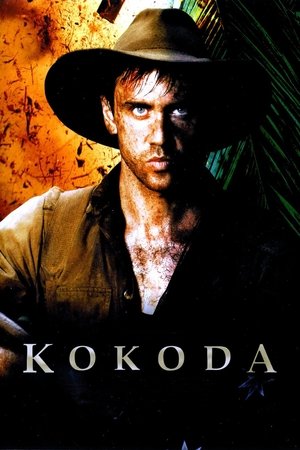
A bitter battle is fought between Australian and Japanese soldiers along the Kokoda trail in New Guinea during World War II.
The film traces two families, one of which is Jewish, who preserved the images for decades but hadn’t brought them to light. 80 years after their creation, the son of the photographer finds the forgotten negatives and launches an investigation. With a team of researchers, archivists, and animators who use near-forensic precision to reconstruct locations and contexts, they trace the circumstances of those tragic days and the lives captured in each frame.
It is 1943, and the German army—ravaged and demoralised—is hastily retreating from the Russian front. In the midst of the madness, conflict brews between the aristocratic yet ultimately pusillanimous Captain Stransky and the courageous Corporal Steiner. Stransky is the only man who believes that the Third Reich is still vastly superior to the Russian army. However, within his pompous persona lies a quivering coward who longs for the Iron Cross so that he can return to Berlin a hero. Steiner, on the other hand is cynical, defiantly non-conformist and more concerned with the safety of his own men rather than the horde of military decorations offered to him by his superiors.
Starting in late May 1944, during the German retreat on the Eastern Front, Captain Stransky (Helmut Griem) orders Sergeant Steiner (Richard Burton) to blow up a railway tunnel to prevent Russian forces from using it. Steiner's platoon fails in its mission by coming up against a Russian tank. Steiner then takes a furlough to Paris just as the Allies launch their invasion of Normandy.
Documentary looking back at a Britain during the darkest days of WWII using stunning new archived footage and interviews with people who lived through it.
The story of a Franco-Belgian family living in Japan from 1927 to 1947, a time of prosperity and fortune, but also of political turbulence and war.