Someone Else’s Country looks critically at the radical economic changes implemented by the 1984 Labour Government - where privatisation of state assets was part of a wider agenda that sought to remake New Zealand as a model free market state. The trickle-down ‘Rogernomics’ rhetoric warned of no gain without pain, and here the theory is counterpointed by the social effects (redundant workers, Post Office closures). Made by Alister Barry in 1996 when the effects were raw, the film draws extensively on archive footage and interviews with key “witnesses to history”.
No Meio de Nós
The story of unemployment in New Zealand and In A Land of Plenty is an exploration of just that; it takes as its starting point the consensus from The Depression onwards that Godzone economic policy should focus on achieving full employment, and explores how this was radically shifted by the 1984 Labour government. Director Alister Barry's perspective is clear, as he trains a humanist lens on ‘Rogernomics' to argue for the policy's negative effects on society, as a new poverty-stricken underclass developed.
Let's look back at the 18th presidential vote. The 13,500 ballot boxes were taken to 251 ballot count locations and were sorted by 1,300 automatic ballot openers. The chairman announced the sorted data and soon it was announced to the public. But something strange happened. The 251 ballot count locations found 'a number' that have the same pattern. Scientists, mathematicians, statistician and hackers from all over the country start looking into the secret of 'this number'. The result is tremendously shocking...
Bajo el signo libertario is a propaganda documentary, with the script and direction of Les (known for his articles in Solidaridad Obrera and the magazine Espectáculo) whose central theme is the reconstruction of the development of life in a libertarian community in the Aragonese town of Pina de Ebro.
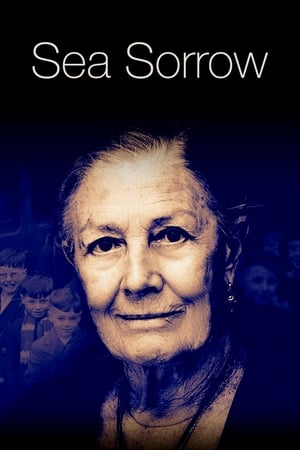
A very personal and dynamic meditation on the current global refugee crisis through the eyes and voices of campaigners, specially children, where past and present establish a dialogue. A reflection on the importance of human rights.
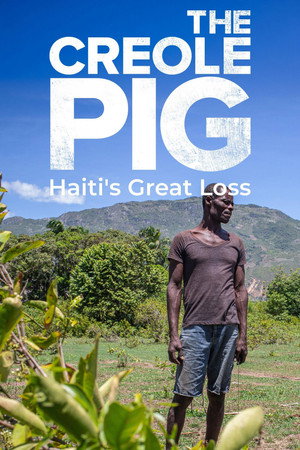
In the 1980s, a swine flu crossed the Haitian-Dominican border and started to affect the Creole pig, an important commodity in Haiti. The flu also threatened livestock in the United States. As a preemptive measure, the USAID in conjunction with the Haitian government proceeded to exterminate all Creole pigs from the island, leading to a crushing economic blow for an already impoverished country.
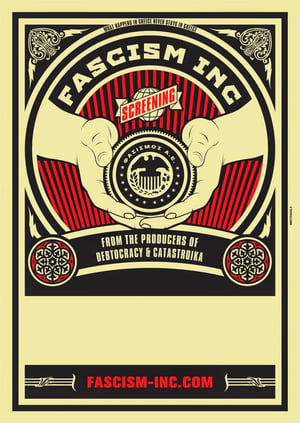
Unknown short stories from the past, the present and the future of fascism and its relation to the economic interests of each era. We will travel from Mussolini’s Italy to Greece under the Nazi occupation, the civil war and the dictatorship; and from Hitler’s Germany to the modern European and Greek fascism.
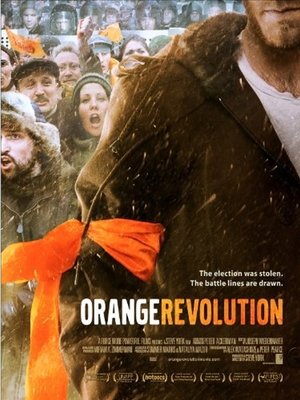
Filmmaker Steve York explores the controversial 2004 Ukrainian presidential election, during which candidate Viktor Yushchenko suffered a near-fatal poisoning and his unpopular opponent, Viktor Yanukovych, was declared the winner. In the aftermath, more than a million people -- including the ailing Yushchenko -- took to the streets of Kiev, protesting the results that contradicted exit polls showing Yushchenko with an impressive lead.
What does the world's richest man, dedicated chaos agent, and Donald Trump's new best buddy want out of politics? To shape the world? Or is it bigger than that?
Documentary about the Lyon sex workers who occupied the church of St. Nizier on June 3, 1975.
In South Korea, 2002, the Democratic Party put the presidential nomination to a plebiscite for the first time. Amongst numerous candidates, the one who brought about the most unexpected result was a fringe candidate named Roh Moo-hyun.
Samadhi Part 1 (Maya the Illusion of the Self) is the first installment in a series of films exploring Samadhi. Samadhi is an ancient Sanskrit word which points toward the mystical or transcendent union that is at the root of all spirituality and self inquiry. The saints, sages and awakened beings throughout history have all learned the wisdom of self surrender.
Brilliant Moon chronicles the life of the writer, poet, and meditation master Khyentse Rinpoche, one of Tibet's most revered 20th-century Buddhist teachers. Spiritual guide to His Holiness the Dalai Lama and the Royal Family of Bhutan, his life and teachings were an inspiration to all who encountered him. Richard Gere and Lou Reed provide the narration for his dangerous journey out of China, the subsequent spread of his influence and the search for his reincarnation after his death.
Life is about choice. What we eat, what we read, who we elect; every day we make choices that determine how we want to live. But what if these choices are just an illusion? In an era where regulations and red tape rule every industry, where lobby groups and big businesses wield more influence than ever before, our daily choices have become increasingly limited. And with all our options so deliberately handpicked, are we really making a choice at all? Freedom From Choice examines the current state of life and personal choice today. Experts from many different fields offer a frank and startling look at the hidden limitations in our daily lives. Focusing on key areas such as food, medicine, finance, and media, Freedom From Choice provides viewers with a glimpse at the myriad of ways their lives are being dictated and tells us who stands to gain.
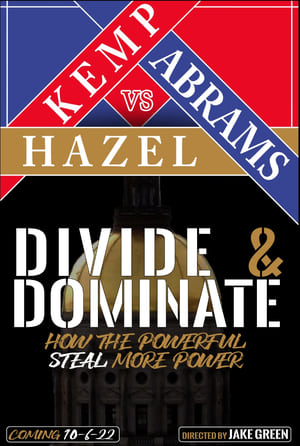
Money, Media, and Legislation. Using these three means, your livelihood is being subverted and coopted by politicians and their cronies... and it's only getting worse. This documentary gives you a front row seat to the methodically planned and perpetual corruption of our "democracy." It's about time we fought back. Go to peacefulseaproductions.com to learn more and explore our other films and media. Featuring: Shane Hazel Spike Cohen Angela McArdle Gerred Bell Martin Cowen Narrated by Robbie Bernstein Produced & Directed by Jake Green Produced by Nikki Tomlinson Animator: Greg Fisher Composer: Geoffrey Burch Title and Credits Songs by Casey Sabol Additional Music by Jay Denton & ENDURE Studios
When artist Janet Biehl fell in love with radical American philosopher Murray Bookchin in the 1980s whilst editing his ground-breaking opus “The Ecology of Freedom”, she could never have imagined that it would one day take her halfway across the globe. Now, over 40 years later, Janet travels from America to the Middle East to witness something remarkable - how Murray’s ideas have ignited a female-led revolution in North-East Syria, where society is being rebuilt in the wake of victory over ISIS. Janet meets the women who are turning her late partner’s political theories into a modern reality, creating a grassroots communal democracy. Janet draws what she sees, and her illustrations capture the humanity of ordinary people in their struggle to self-govern. Now, at this critical moment for Syria and with this revolutionary project under renewed threat, "Threads of a Revolution" reveals a possible way forward for those prepared to fight for a new way to live.
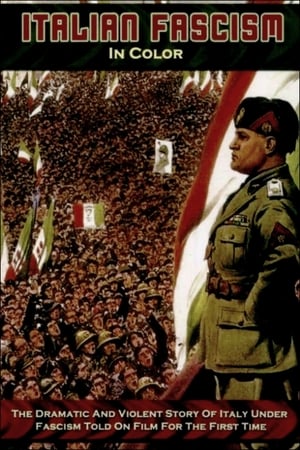
After the World War I, Mussolini's perspective on life is severely altered; once a willful socialist reformer, now obsessed with the idea of power, he founds the National Fascist Party in 1921 and assumes political power in 1922, becoming the Duce, dictator of Italy. His success encourages Hitler to take power in Germany in 1933, opening the dark road to World War II. (Originally released as a two-part miniseries. Includes colorized archival footage.)
Documentary about the Rembrandt Association. In the 19th century, a lot of Dutch art disappeared abroad, before the Rembrandt Association stood up in 1883 to put a stop to it. Today, 140 years later, the Association still helps determine what art lovers see in Dutch museums. In their crowning year, the Association faces a difficult choice: will they make the largest contribution in their history to the purchase of Rembrandt's De Vaandeldrager? The amount of 175 million needed for the painting is causing discussion. Is this money well spent?
Sankara