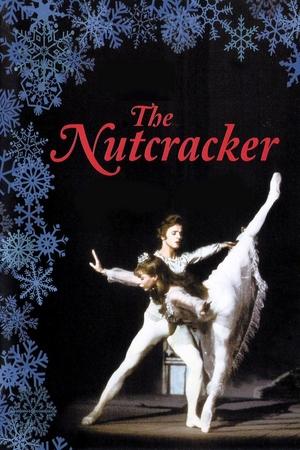
The Nutcracker is Mikhail Baryshnikov's breathtaking and critically acclaimed Emmy-nominated production. This spectacular performance is danced by the magnificent team of Baryshnikov, one of the greatest classical dancers of the century, and Gelsey Kirkland, both showcased at the peak of their careers, with members of the American Ballet Theatre.
A story set in revolutionary China, whose proletariat suffers and starves, but refuses to be passive and rises to decisive resistance. Even the artists believe in the victory of the working class, and the symbol of this victory becomes the red poppy, a flower given by a sailor from a Russian ship that brought the much-prized flour to China as a gift to the Chinese comrades.
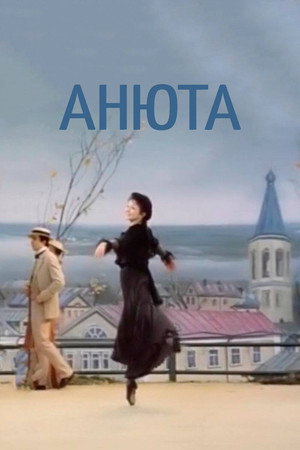
Bolshoi Ballet stars Vladimir Vasiliev and Ekaterina Maximova dance this 1982 performance of "Anyuta," the story of a small-town woman who purposely marries above her social status only to learn that popularity comes with a price. Maximova performs the role of Anyuta; Vasiliev plays Anyuta's drunk father.
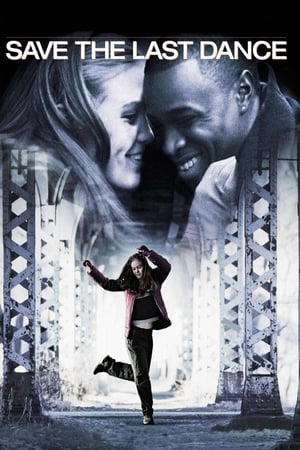
After the death of her mother, Sara moves to the South Side of Chicago to live with her father and gets transferred to a majority-black school. Her life takes a turn for the better when befriends Chenille and her brother Derek, who helps her with her dancing skills.
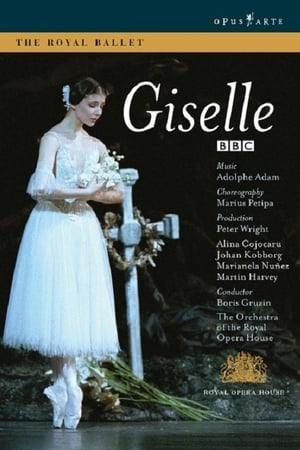
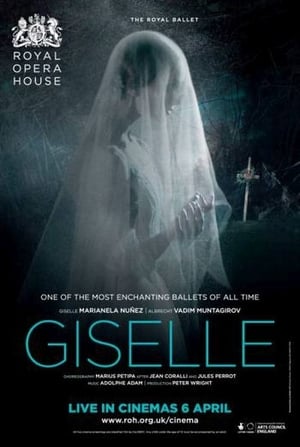
Giselle is the quintessential Romantic ballet. Its title role, one of the most technically demanding and emotionally challenging in the classical repertory, is here danced by Alina Cojocaru, partnered by Johan Kobborg as Count Albrecht. This tale of the transcendental power of love over death is evocatively portrayed through Peter Wrights sensitive staging and John Macfarlanes designs, which beautifully contrast the human and supernatural worlds mastered from a High Definition recording and true surround sound. Conductor : Boris Gruzin Orchestra : The Orchestra of the Royal Opera House
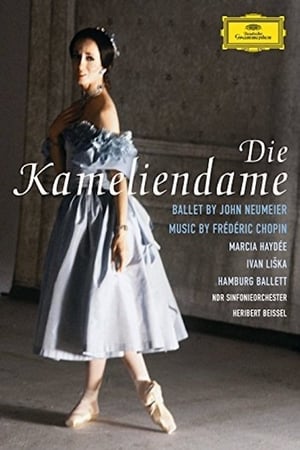
"Lady of the Camellias" (Kameliendame) was premiered in Jan 1978 at the Stuttgart ballet. Choreographer and text writer was John Neumeier who had been requested in 1972 by ballerina Marcia Haydee to write a full length ballet. He suggested "Lady of the Camellias" , the Dumas fils autobiographical novel. The idea of using Chopin music was suggested by ballet conductor Gehart Markson. The ballet was a success and this version was also presented in 1979 at the Kennedy Center in Washington DC. Neumeier revised it for the Hamburg Ballet now directed by Brazilian ballerina Marcia Haydee after the death of famous director John Kranko. The revised version with sets and costumes by Jugen Rose and conducted by Heribert Beissel was recorded as a movie in 1987.
A dance story about Tchaikovsky, illuminating the long-hidden moments of his life. Through his compositions, Pyotr Ilyich Tchaikovsky influenced and shaped classical ballet like few other composers. The myth of his music remains unbroken to this day. Cayetano Soto draws an engaging portrait of a man who could not live his life the way he wanted to. In "Tchaikovsky", the view behind the glorious moments of a biography is revealed - in brokenness, courage and genius. Recorded at the Leipzig Opera.
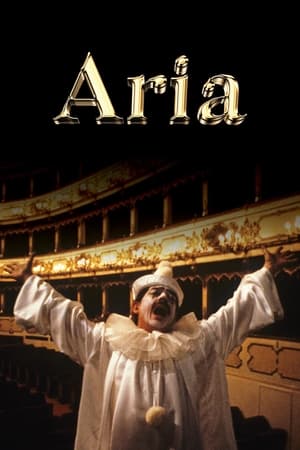
Ten short pieces directed by ten different directors, including Ken Russell, Jean-Luc Godard, Robert Altman, Bruce Beresford, and Nicolas Roeg. Each short uses an aria as soundtrack/sound, and is an interpretation of the particular aria.
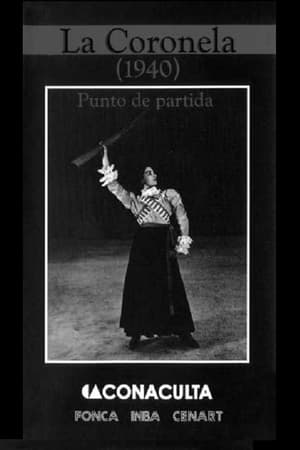
La Coronela (1940). Punto de partida
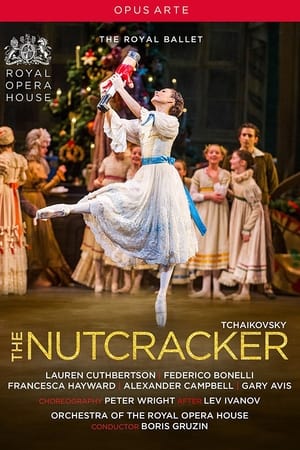
The young Clara creeps downstairs on Christmas Eve to play with her favourite present – a Nutcracker. But the mysterious magician Drosselmeyer is waiting to sweep her off on a magical adventure. After defeating the Mouse King, the Nutcracker and Clara travel through the Land of Snow to the Kingdom of Sweets, where the Sugar Plum Fairy treats them to a wonderful display of dances. Back home, Clara thinks she must have been dreaming – but doesn’t she recognize Drosselmeyer’s nephew?
The peasant girl Giselle discovers the true identity of her lover Albrecht – and that he is promised to another. Giselle kills herself. Her soul enters the ranks of the Wilis – shades of young women who died before their wedding day. All men that come across their path are compelled to dance themselves to death, and Albrecht falls into their trap. Giselle’s intercession saves Albrecht and releases her soul from the Wilis’ power.
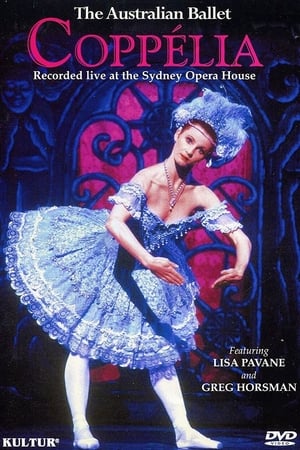
This delightful ballet tells the story of Dr Coppelius, an eccentric toymaker, who attempts to bring life to his beautiful doll Coppélia. He is foiled by the mischevious Swanilda, who masquerades as Coppélia and saves her love, Franz, from the Doctor's magic. Recorded live at the Sydney Opera House, this acclaimed production by Dame Peggy van Praagh, the founding Artistic Director of the Australian Ballet, is a triumph.
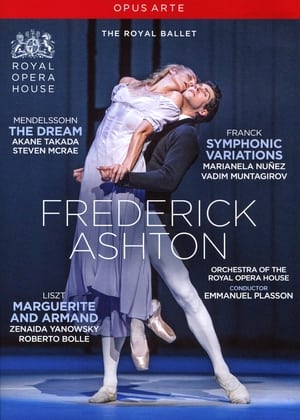
The Dream: Frederick Ashton’s delightful interpretation of Shakespeare’s A Midsummer Night’s Dream is a classic of The Royal Ballet’s repertory. Symphonic Variations: Ashton was inspired to create a ballet on the four seasons – but as he began to choreograph he refined and purified until the ballet shook off its original meaning, emerging as an abstract celebration of movement and physicality. Marguerite and Armand: Marguerite, a Parisian courtesan, lies on her deathbed. She recalls her tragic love affair with Armand in a series of feverish flashbacks.
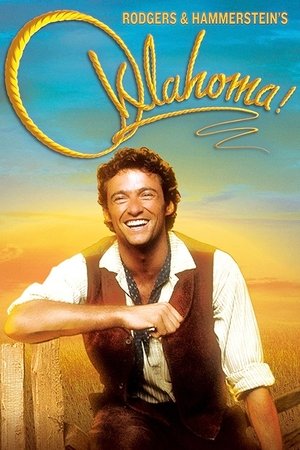
A dark-themed and redesigned West End production of Rodgers & Hammerstein's seminal Broadway musical tells the story of farm girl Laurey and her courtship by two rival suitors, cowboy Curly and the sinister and frightening farmhand Jud.
Shannon Davidson and Ashley Shaw at the iconic Royal Opera House in Covent Garden, delving into their thoughts and feelings about the timeless classic "The Red Shoes" to celebrate its 75th anniversary.
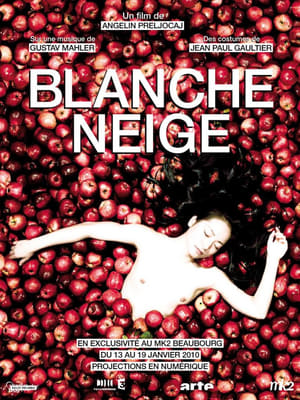
To speak of that ballet is very difficult because the theme is so popular as a fairy tale, adapted by Perrault from German folklore and then recuperated from the same folklore by the Grimm brothers, and what's more turned into an unforgettable film by Walt Disney. Angelin Preljocaj was thus trying to break a mould in which that character and her story had been cast seemingly for ever. And it is a success. Because first the setting, the stage direction are very interesting and rich. Rich are the costumes. Rich are the main ideas of the setting like the enormous magic mirror coming down from the sky, or like the deep underground mine turned into a vertical surface on which the seven dwarfs are dancing like dragon-flies on their strings.
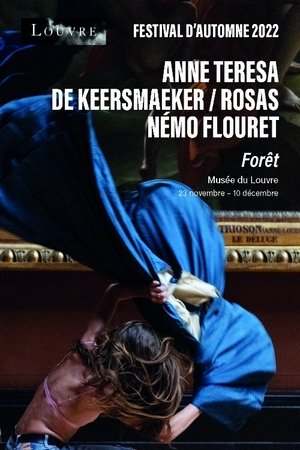
Whirlwinds, burning forests, erased cities – the centuries-old artworks housed in the Louvre strongly resonate with our present time. Forêt follows a new generation of Rosas dancers moving amidst these artworks, bridging past and present. Choreographed by Anne Teresa De Keersmaeker and Némo Flouret in 2022, the performance was designed for the Louvre’s Grande Galerie and its famed 'red rooms,' home to Italian masterpieces and 19th-century French Romantic art. Evi Cats captured this performance, with a camera that moves almost imperceptibly between the dancers and the audience, alternating between intimate close-ups and wide shots of the imposing scenery.
Part folklore, part opera-ballet, this féerie presents local pagan traditions on the day of the summer solstice and historical events from Cossack times to the more recent 2014 Ukrainian Revolution of Dignity.
Characters from Haitian folklore come to life telling their story of ritual, ceremony and celebration. All wait to be overcome by the female spirit Erzuli. Who will be chosen?
A synthesis of sound and movement; colourful characters dance and move in repetitive patterns to percussive and melodic elements. A combination of motion and music that is hypnotic and beautiful. At first it feels structured and orderly but as more elements are added becomes quixotically expressive.