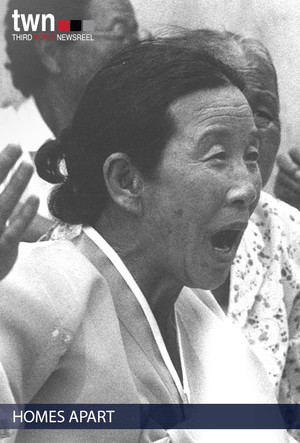
They speak the same language, share a similar culture and once belonged to a single nation. When the Korean War ended in 1953, ten million families were torn apart. By the early 90s, as the rest of the world celebrated the end of the Cold War, Koreans remain separated between North and South, fearing the threat of mutual destruction. Beginning with one man's journey to reunite with his sister in North Korea, filmmakers Takagi and Choy reveal the personal, social and political dimensions of one of the last divided nations on earth. The film was also the first US project to get permission to film in both South & North Korea.
Two North Korean soldiers are killed in the border area between North and South Korea, prompting an investigation by a neutral body. The sergeant is the shooter, but the lead investigator, a Swiss-Korean woman, receives differing accounts from the two sides.
A middle-aged woman in Busan searches for the son she lost in Gilsodom during the Korean War.
In this war drama, set during the Korean War, an Air Force nurse gets involved in a love triangle on the front lines.
Upon hearing that her fiance has been killed in battle, a woman makes her way to the Park Pagoda to seek comfort from the monument. There she becomes acquainted with Henry Jang, a Korean-American whom she eventually marries. There is no happy ending for the two, however, because her fiance shows up alive and well, but bitter over his lover's fickle nature
Captain Kim is grievously wounded in the first days of the war. When the northern troops continue their advance, his wife and small daughters flee south to Taegu, dragging him along in a two-wheel handcart. His wife struggles to keep herself and their surviving daughter alive. Working as a market trader, she meets a kind young man -- who happens to be tall, dark and handsome.
After graduating from university, Il-ryeong goes back to his hometown, a small village beside the Nakdong River. Ok-nam is his lover and a teacher in his hometown. He cooperates with her in order to enlighten the people and to improve the village. Nakdong River is, along with The Street of Sun (1952) and A Bouquet of Thirty Million People (1951), one of the important films made during the Korean War that the Korean Film Archive has rediscovered and made available to the public.
The Korean conflict is often called "The Forgotten War," but it has never been forgotten by the men and women who experienced it. These veterans share their thoughts, experiences and memories, highlighting the human and social costs of war.
When two brothers are forced to fight in the Korean War, the elder decides to take the riskiest missions if it will help shield the younger from battle.
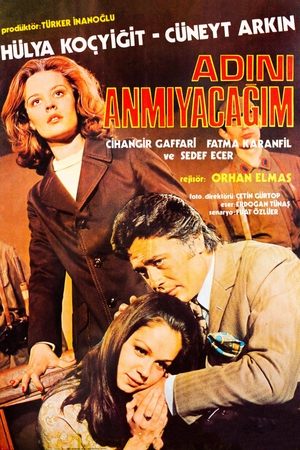
Gul is a famous singer, married to Captain Engin, who has studied law. Engin goes to Korea during the war. One day Gul is told that he is dead. Her violinist, Cemil fancies her. One day Gul meets Engin again, yet Cemil continues molesting her. Engin takes his daughter while Gul gives becomes an alcoholic and is miserable. Engin learns about her condition and decides to go to her but in a car accident he becomes blind. Gul starts to work in their house under a false name, Seher. In the meantime she gives piano lessons to their daughter Oya. Engin regains his eyesight after a surgery. Cemil attempts to rape Oya, but Gul reaches in time, saves Oya and kills Cemil. Oya finds out that Gul is her mother and asks Engin to defend her in court. A happy future awaits all three.
Deep in the wilderness, three soldiers are lost far behind North Korean lines. As the two American soldiers begin to distrust their South Korean counterpart, they must decide which of their hearts and souls must pay the price of war.
LETTERS, a dramatic historical fiction written by Mrs. Evelyn Merritt in 2010, tells the story of U.S. soldiers and their loved ones through their correspondence beginning with the Civil War and ending with the War in Iraq. Sahuarita High School students adapted the Readers’ Theatre play into a movie, reasoning the student actors would be kept safe from Covid-19 by filming them individually, and afterward the footage could be reassembled into a screenplay following the original dialogue.
Based on the long running play by Jang Jin, the story is set in Korea during the Korean War in 1950. Soldiers from both the North and South, as well as an American pilot, find themselves in a secluded and naively idealistic village, its residents unaware of the outside world, including the war.
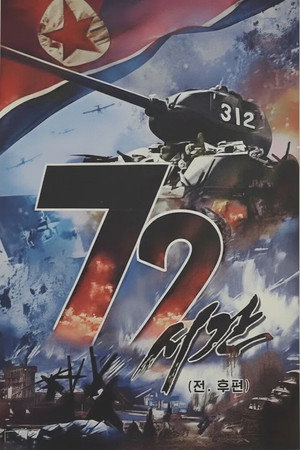
June 25, 1950. When second lieutenant Jang has a date with his girl friend during weekend, numerous North Korean jet fighters make sudden air raids to the skies of Seoul. It is the beginning of Korean War. In spite of Korean Army's brave defense, North Korean army reddens South Korea with their state-of-the-art weapons. This movie describes the progress of war from the invasion in June 25, 1950 to the reclamation of territory on the basis of Sun-A's personal experience. Also this film reminds hard lessons from tragic history.
One of the world's most acclaimed comedies, M*A*S*H focuses on three Korean War Army surgeons brilliantly brought to life by Donald Sutherland, Tom Skerritt and Elliott Gould. Though highly skilled and deeply dedicated, they adopt a hilarious, lunatic lifestyle as an antidote to the tragedies of their Mobile Army Surgical Hospital, and in the process infuriate Army bureaucrats. Robert Duvall, Gary Burghoff and Sally Kellerman co-star as a sanctimonious Major, an other-worldly Corporal, and a self-righteous yet lusty nurse.
A man wanders around the mountains with a bleeding leg, holding a rifle in his hand. Seemingly a fugitive, he runs from as-yet unknown pursuers, but he also seems to be following somebody who has already walked the same path. As he hides in a secluded cave, past memories sweep through his exhausted mind, memories of lifelong cowardice and evasion. And this recollection leads to a reconstruction of early 20th century Korean history. Winner of Best Picture (Nam-a Pictures Co., Ltd.), Best Actor (Ha Myung-joong), Best Art Direction (Kim Yoo-joon), Best Lighting (Son Young-cheol) at the 14th Grand Bell Awards. (source: Jiro Hong, koreanfilm.org)
Documentary about the struggle of the people of Jeju Island, South Korea. Set in the context of the U.S. presence in Korea after World War II, the film reveals horrible atrocities at the hands of the U.S. Military Government of Korea.
Near the end of the Korean War, a platoon of U.S. soldiers is captured by communists and brainwashed. Following the war, the platoon is returned home, and Sergeant Raymond Shaw is lauded as a hero by the rest of his platoon. However, the platoon commander, Captain Bennett Marco, finds himself plagued by strange nightmares and soon races to uncover a terrible plot.
The director's father, who did not know how to use a computer, left her an autobiography via email. It includes his whole life through many notable events such as the Korean War, the Vietnam War, 88's Seoul Olympic, New Town Development, etc.
The film depicts a romance set against the backdrop of the Korean War.