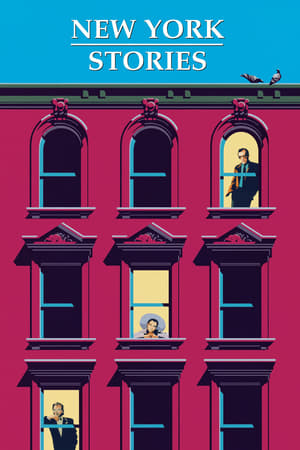
This omnibus release consists of three playlets filmed and aired during television's Golden Age, and starring some of the legends of film and television. The collection originally ran as a two-hour segment on December 14, 1959, on the anthology series The Play of the Week, broadcast locally in New York City via the independent radio station WNTA. Each "tale" in the anthology was adapted from a single tale by the inimitable Sholom Aleichem, regarded by many as the "Yiddish Mark Twain". Included are: "A Tale of Chelm" starring Zero Mostel and Nancy Walker in the story of a bookseller attempting to buy a goat; "Bontche Schweig" about a poor man (Jack Gilford) whose recent arrival in Heaven makes the angels cry; and "The High School" about a Jewish merchant (Morris Carnovsky) persuaded by his wife (Gertrude Berg) to let their son attend a particular high school despite the enforcement of quotas for Jewish students.
An anthology of eleven vignettes featuring star-studded casts of extremely unique individuals who all share the common activities of conversing while drinking coffee and smoking cigarettes.
A short film based on the book by Slovak author Pavol Zeleňák, "Keď sú tajomstvá iba služobné" (When Secrets Are Only Official). In four tragicomic short stories—banking, confessional, medical, and state secrets—the viewer learns what can happen when bank clerks, priests, doctors, and ministers reveal or abuse official secrets. Regardless of the reason for their actions, they can cause curious problems or even tragedy.
An anthology horror involving a social gathering of writers on Halloween, where they each tell stories in hopes of winning a local competition.
Project 30
An anthology of three stories which portray various shades and motives of violence through different characters that are dissimilar in nature.
An anthology of four diverse stories about identity and belonging through prism of love and loss, sexuality, marriage and wish to fulfill dreams.
A filmmaker talks about his work and love life with an unseen friend behind the camera. We also watch four of his short films.
Three distinct tales unfold in the bustling city of Tokyo. Merde, a bizarre sewer-dweller, emerges from a manhole and begins terrorizing pedestrians. After his arrest, he stands trial and lashes out at a hostile courtroom. A man who has resigned himself to a life of solitude reconsiders after meeting a charming pizza delivery woman. And finally, a happy young couple find themselves undergoing a series of frightening metamorphoses.
Four darkly funny tales about Lebanon: Activists planning a protest descend into internal strife. Three sisters and their mother argue while an incompetent plumber destroys their flat. Depressed life coach Malek wants to die and seeks help from a «death coach». A stand-up comedian who jokes about a meteor strike that could put Lebanon out of its misery, is blamed when it appears to come true.
An anthology film that takes you to different eras in the history of Kerala through three stories about relationships and emotions.
In the heat of a summer day, Draginja discovers a dead body that resembles her. In the heat of a summer day, Draginja hires a fake husband to show off in front of her friends. In the cold of a winter night, Draginja roams the streets hoping to recover her lost memory. Through three different life possibilities, a middle-aged woman tries to get out of her skin.
Based on four of the six short stories compiled in Murakami Haruki's anthology, After the Quake explores the complex aftermath of Japan’s earthquakes and other global crises. (Movie version of the TV drama).
What is “Slovakia”? How to explain the notion of “Slovakia” of the past 20 years to an unknown stranger, a visitor from another planet? What is the genetic makeup or the software for “Slovakia”? How to use it? How does it change? Slovakia 2.0 is a film about twenty years of independent Slovakia as seen from the perspective of ten film directors. It is composed of ten 10-minute films of different genres ranging from drama, through animation and documentaries, to experimental film. The ten recognised film directors who offer an answer to what is Slovakia include a wide range of generations, views and genres, namely Juraj Herz, Martin Šulík, Peter Kerekes, Zuzana Liová, Mišo Suchý, Ondrej Rudavský, Iveta Grófová, Peter Krištúfek, Viera Čákanyová, and Miro Jelok.
An anthology of one-minute films created by 51 international filmmakers on the theme of the death of cinema. Intended as an ode to 35mm, the film was screened one time only on a purpose-built 20x12 meter public cinema screen in the Port of Tallinn, Estonia, on 22 December 2011. A special projector was constructed for the event which allowed the actual filmstrip to be burnt at the same time as the film was shown.
A filmmaker is invited to an actor's house, who is keenly interested in his story. For the story to be told, the characters need to speak for themselves so they began speaking and they said
Commissioned to mark the 60th anniversary of the Cannes Film Festival, "To Each His Own Cinema" brought together 33 of the world's pre-eminent filmmakers to produce short pieces exploring the multifarious facets of cinema and their perspective on the state of their chosen artform in the early 21st century.
A nine story anthology featuring various dregs, druggies, the innocent and the doomed inhabiting a dingy motel room somewhere along Route 66.
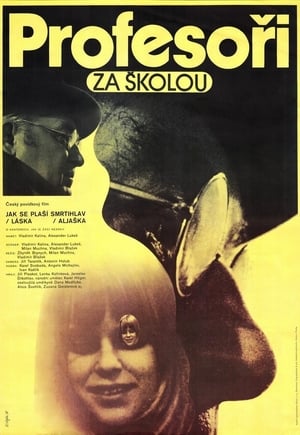
Three stories from the school environment, mostly from the perspective of teachers. In the first story we see an unnecessarily strict teacher, in the middle one a sports career is glossed over, which causes a young teacher to leave his job. In the final story, on the other hand, an experienced high school teacher goes to teach in a rural school to gain inner peace.
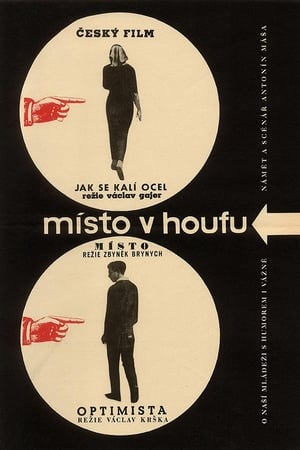
A film in five episodes, all based on an attempt to show the life of young people today, their feelings and relationships, their behaviour in public and private life.