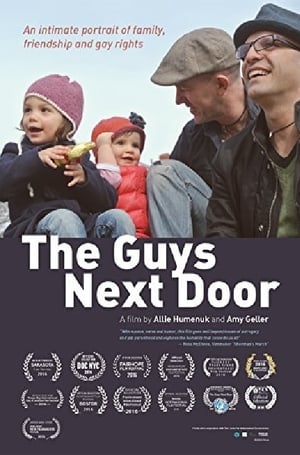
A moving account of the experiences of men exonerated after years, and sometimes decades, in prison following newly found DNA evidence.
L’endemà
Women from Turkey and Mecklenburg are working together side-by-side at a fish-processing factory in Lübeck. As they work, they share stories about their lives, including their sorrows, griefs, hopes, and dreams, while expressing their longing for home and feelings of being lost in a foreign place.
A chronicle which provides a rare window into the international perception of the Iraq War, courtesy of Al Jazeera, the Arab world's most popular news outlet. Roundly criticized by Cabinet members and Pentagon officials for reporting with a pro-Iraqi bias, and strongly condemned for frequently airing civilian causalities as well as footage of American POWs, the station has revealed (and continues to show the world) everything about the Iraq War that the Bush administration did not want it to see.
Kyra Gardner's loving tribute to growing up in the world of the psycho killer doll, Chucky.
With being thrown off buildings an occupational hazard, professional stuntwomen Jeannie Epper and Zoë Bell (the alter egos of Wonder Woman and Xena, respectively) would seem well-equipped for any challenges Hollywood might dish out. But finding roles -- and respect -- in a male-dominated field can prove more harrowing than dodging punches.
Since World War II North Americans have invested much of their newfound wealth in suburbia. It has promised a sense of space, affordability, family life and upward mobility. As the population of suburban sprawl has exploded in the past 50 years Suburbia, and all it promises, has become the American Dream. But as we enter the 21st century, serious questions are beginning to emerge...
The story of Manhattan Plaza, the renowned experiment in subsidized housing catering to people in the arts. Numerous celebrities pay homage to the impact the building had on their lives and careers.
Legendary Canadian documentarian Alanis Obomsawin digs into the tangled history of Treaty 9 — the infamous 1905 agreement wherein First Nations communities relinquished sovereignty over their traditional territories — to reveal the deceptions and distortions which the document has been subjected to by successive governments seeking to deprive Canada’s First Peoples of their lands.
A behind-the-scenes documentary about the Clinton for President campaign, focusing on the adventures of spin doctors James Carville and George Stephanopoulos.
Over the course of thirteen years, the filmmaker and protagonist shares the experience of his binational family, taking us to his wife's country. "Becoming family" requires a significant cultural sacrifice, as they navigate the challenges of uprooting and integrating into a new society. The film offers a transformative glimpse into the realities of migration.
At the peak of her immense popularity in the 1920s, evangelist Aimee Semple McPherson was drawing larger crowds to her revivals than those of P.T. Barnum or Harry Houdini. This chapter of "American Experience" paints a vivid portrait of the controversial and charismatic religious figure. Credited with mainstreaming religion in American culture, Sister Aimee created one of the country's first Christian radio stations, among other accomplishments.
Saroyanland is a docu-drama focusing on the journey of famous writer William Saroyan to the birthplace of his Armenian family Bitlis, in Turkey in 1964. While retaking the same road, the film aims to understand Saroyan's unique attitude to belonging, witnessing the self-discovery of a man who followed the traces of his Armenian ancestors.
"Trouble the Water" takes you inside Hurricane Katrina in a way never before seen on screen. The film opens the day before the storm makes landfall--just blocks away from the French Quarter but far from the New Orleans that most tourists knew. Kimberly Rivers Roberts, an aspiring rap artist, is turning her new video camera on herself and her Ninth Ward neighbors trapped in the city. Weaving an insider's view of Katrina with a mix of verité and in-your-face filmmaking, it is a redemptive tale of self-described street hustlers who become heroes--two unforgettable people who survive the storm and then seize a chance for a new beginning.
Filmed on location in Saskatchewan from the Qu'Appelle Valley to Hudson Bay, the documentary traces the filmmaker's quest for her Native foremothers in spite of the reluctance to speak about Native roots on the part of her relatives. The film articulates Métis women's experience with racism in both current and historical context, and examines the forces that pushed them into the shadows.
Susana Barriga’s documentary, the illusion, begins with violence. A long shot reveals a man standing on a street corner, his features indiscernible in the night. He moves out of the camera’s line of vision, but the filmmaker, persistent, moves with him as the jostling of the camera marks her steps. As we learn moments later, the man in the distance is Susana’s father – and this is the clearest image of him we will have. Suddenly, an angry British man demands that Susana cease filming. Susana protests in heavily accented English, “He is my father!” Glimpses of a man’s torso are followed by blurred images as the camera spins rapidly over surfaces. The image cuts to black. A new male voice asks in carefully spaced out words if Susana would like him to call the police. When she doesn’t respond immediately, he speaks louder, as though volume would compensate for the language difference. She gives her name; she refuses the offer of an ambulance.
An unconventional biography by Oscar nominee Paola di Florio and Sundance winner Lisa Leeman about Hindu mystic Paramahansa Yogananda who brought yoga and meditation to the West in 1920 and authored the spiritual classic "Autobiography of a Yogi," which became the go-to book for seekers from George Harrison to Steve Jobs.
A chronological look at films by, for, or about gays and lesbians in the United States, from 1947 to 2005, Kenneth Anger's "Fireworks" to "Brokeback Mountain". Talking heads, anchored by critic and scholar B. Ruby Rich, are interspersed with an advancing timeline and with clips from two dozen films. The narrative groups the pictures around various firsts, movements, and triumphs: experimental films, indie films, sex on screen, outlaw culture and bad guys, lesbian lovers, films about AIDS and dying, emergence of romantic comedy, transgender films, films about diversity and various cultures, documentaries and then mainstream Hollywood drama. What might come next?
This short documentary is a tribute to the unknown father. Emerging filmmaker Danic Champoux poses the question "How many men still have to uproot themselves and leave their families to get work?" as he sets out to search for his own father. He wonders about these men who are labourers, itinerants, and mostly nameless, but who are all exemplary providers. But at what cost? This film was produced as part of the Libres Courts collection of first-time documentary shorts.
In this documentary shot at Canadian Forces Base Petawawa during a troop deployment to Afghanistan, children and teens talk about the particular circumstances of having soldiers as parents. Directed by Claire Corriveau, Children of Soldiers lifts the veil on a reality shared by thousands of young Canadians, and on the difficulty of finding a balance between loyalty to the troops and staying true to themselves.