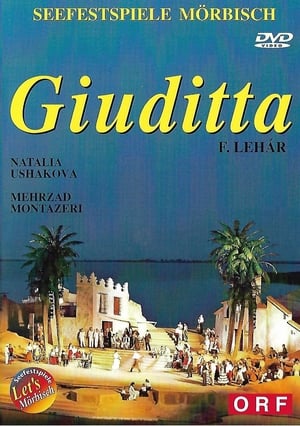
Austrian composer Franz Léhar's opera Giuditta receives a unique interpretation by the Seefestspiele Mörbisch in this stage production, which stars Natalia Ushakova and Mehrzad Montazeri as the principal leads. The Morbisch Festival Orchestra accompanies the production, while the Chorus and Ballet of the Seefestpiele Mörbisch lend added support.
As they are leaving the church following their wedding, Count Adrian Beltrami and Countess Anna-Marie are told that the Austrians are marching on the town to quell an Italian uprising. The bride and relatives induce the count to flee to his castle, but Tangy, a silhouette cutter, brings word from the revolutionary committee asking him to return; the count goes, asking Tangy to pose as the count and protect Anna-Marie.
Mam’zelle Nitouche
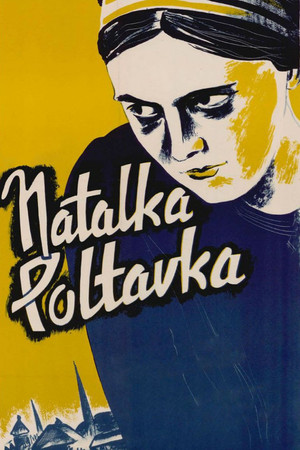
The trials and tribulations of Natalka and Petro. The sweethearts plan to get married, however, Natalka's father does not approve of the marriage because Petro's not affluent enough to keep Natalka in the manner he thought that she should be kept. Petro goes off to earn the required fortune. With no news from Petro for five years, Natalka succumbs to her mother's wishes and finally accepts her next offer of marriage, which happens to come from an old, but relatively wealthy government official.
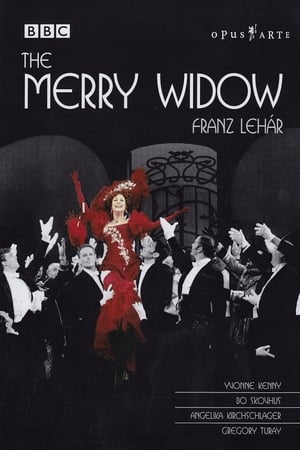
Lotfi Mansouri's spectacular last production as General Director of The San Francisco Opera with Yvonne Kenny making her debut in the title role, new dialogue specially commissioned from Pulitzer Prize-winning playwright, Wendy Wasserstein and an original ballet to set the scene ‘Chez Maxime’ bringing fresh insight into Lehár's classic operetta. This production also features another world premiere, Njegus's song, ‘Quite Parisian’.
Bílý oficír
Country girl Margit sits for the artist Sándor, from Budapest. She is fascinated and charmed by him, and agrees to accompany him to the capital, so he can complete the painting there. Disillusionment sets in, however, when Sándor wins a prize with the finished portrait and loses interest in her. Margit recognizes that her true happiness lies at home, with Pista, her faithful lover.
Captain Stanton, who because of a misunderstanding over a woman with Major Davolo, has been cited for a court martial. As a scout, he is sent to escort a wagon train which is under military escort. It turns out that this escort is his own former regiment. When he meet Davolo, there is another fight and between Stanton and Davolo in which Davolo is killed.
Der Vetter aus Dingsda
French General Birabeau has been sent to Morocco to root out and destroy the Riffs, a band of Arab rebels, who threaten the safety of the French outpost in the Moroccan desert. Their dashing, daredevil leader is the mysterious "Red Shadow". Margot Bonvalet, a lovely, sassy French girl, is soon to be married at the fort to Birabeau's right-hand man, Captain Fontaine. Birabeau's son Pierre, in reality the Red Shadow, loves Margot, but pretends to be a milksop to preserve his secret identity. Margot tells Pierre that she secretly yearns to be swept into the arms of some bold, dashing sheik, perhaps even the Red Shadow himself. Pierre, as the Red Shadow, kidnaps Margot and declares his love for her.
Děvče z předměstí
A Hungarian countess, wanting to dissuade unwanted suitors, announces her engagement to a fictional count Zsupán. Things go awry when a count Zsupán shows up, having heard of his engagement in the papers.
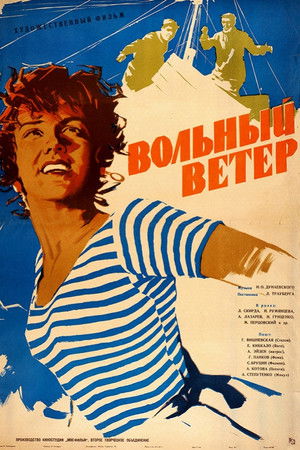
Based on the operetta of the same name by Isaak Dunayevsky. The port town of one of the small southern countries. After the Nazi occupiers left, the port's berths were empty, the steamers did not smoke, cargo cranes stood. Fearing retaliation for collaborating with enemies, port owner Georg Stan fled the city. After waiting a while and securing the support of local authorities, Stan nonetheless returns - and loading operations begin in the port. While loading oranges, the sailor Yango and the beautiful Stella are preparing for the wedding. Suddenly, Stan makes a proposal to the girl and tricks her into agreeing. Upon learning of the deception, the girl runs away to Yango. Having discovered weapons intended to support fascism in the drawer of the hold, the heroes do everything possible to make the boxes fall to the bottom of the sea.
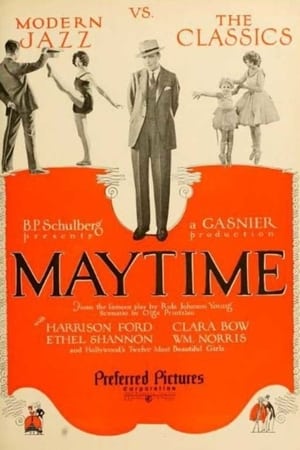
Ottilie Van Zandt is forced to wed her cousin, despite her love for Richard Wayne, the gardener's son. Richard leaves, vowing to return a wealthy man and eligible suitor for her. He returns to find she has already married and, in turn, marries another girl on impulse. Two generations later, the grandchildren of Ottilie and Richard, who both have inherited their names as well, meet and develop a close friendship that culminates in the romance that their grandparents began but could not consummate years before.
Vinobraní
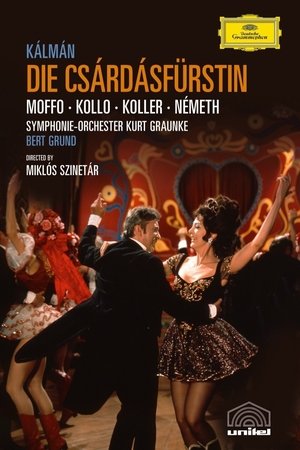
Kálmán Imre's beloved operetta comes to the screen in this comedy of music, marriage and class set in Budapest and Vienna before the outbreak of the First World War, recorded at the Budapest Opera in 1963.
In the Temesvar Province, a landowner returned from exile marries a gypsy girl who is revealed to be the daughter of a Turkish Pasha and the rightful owner of a hidden treasure. Next to "Die Fledermaus", DER ZIGEUNERBARON is Johann Strauss’s most popular operetta. The libretto gave Strauss the chance to revel in such contrasting musical forms as the Csárdás and the Viennese waltz. The style of the lied forms and ensembles is so original and finely balanced that the "Gypsy Baron" can truly be called a comic opera. Among the leading names of the stellar cast in this exuberant 1975 film of the operetta are Wolfgang Brendel, Ivan Rebroff, Janet Perry, Ellen Shade, Martha Mödl and, in the role that launched his career, Siegfried Jerusalem as Sándor Barinkay.
Země úsměvů
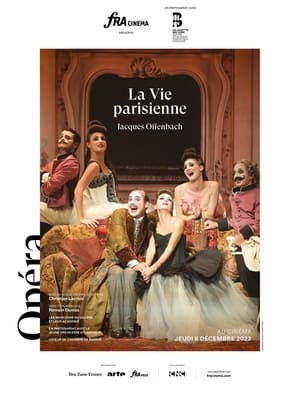
La Vie parisienne (Parisian life) is an opéra bouffe, or operetta, composed by Jacques Offenbach in 1866, with a libretto by Henri Meilhac and Ludovic Halévy. This work was Offenbach's first full-length piece to portray contemporary Parisian life, unlike his earlier period pieces and mythological subjects. It became one of Offenbach's most popular operettas.
Vienna, Austria, late 1870s. After suffering an irreparable misfortune, the Austrian composer Johann Strauss Jr. (1825-99), the Waltz King, falls in love with a ballet dancer, which disappoints the famous operetta singer Marie Geistinger…