Yamakasi - Les samouraïs des temps modernes is a 2001 French movie written by Luc Besson. It demonstrates the skills of the Yamakasi, a group of traceurs who battle against injustice in the Paris ghetto. They use parkour to steal from the rich in order to pay off medical bills for a kid injured copying their techniques.
When perpetually single, aging music industry exec Harry Sanborn, and his latest trophy girlfriend, Marin, arrive at her mother's beach house in the Hamptons, they find that her mother, playwright Erica Barry, also plans to stay for the weekend. Erica is scandalized by the relationship and Harry's sexist ways. But when Harry has a heart attack while there, and the doctor prescribes bedrest, his only option is to stay at the Barry home. Left in the care of Erica and his doctor, a love triangle starts to take shape.
A young French teenage girl after moving to a new city falls in love with a boy and is thinking of having sex with him because her girlfriends have already done it.
Paradise Found is a biography about the painter Paul Gauguin. Focusing on his personal conflict between citizen life and his family life and the art scene in Frane. In an incredible imagery montage Gauguin manages to make a successful living in the South Pacific, while being in opposition to France.
A thirteen-year-old French girl deals with moving to a new city and school in Paris, while at the same time her parents are getting a divorce.
The wife of a famous composer survives a car accident that kills her husband and daughter. Now alone, she shakes off her old identity and explores her newfound freedom but finds that she is unbreakably bound to other humans, including her husband’s mistress, whose existence she never suspected.
Parisian everyman Antoine Doinel has married his sweetheart Christine Darbon, and the newlyweds have set up a cozy domestic life of selling flowers and giving violin lessons while Antoine fitfully works on his long-gestating novel. As Christine becomes pregnant with the couple's first child, Antoine finds himself enraptured with a young Japanese beauty. The complications change the course of their relationship forever.
Now in his thirties, Antoine Doinel is a divorced proofreader in love with a record seller. Colette Tazzi, now a lawyer, buys his first published autobiography, leading them to a chance meeting.
For young Parisian boy Antoine Doinel, life is one difficult situation after another. Surrounded by inconsiderate adults, including his neglectful parents, Antoine spends his days with his best friend, Rene, trying to plan for a better life. When one of their schemes goes awry, Antoine ends up in trouble with the law, leading to even more conflicts with unsympathetic authority figures.
Nine years later, Jesse travels across Europe giving readings from a book he wrote about the night he spent in Vienna with Celine. After his reading in Paris, Celine finds him, and they spend part of the day together before Jesse has to again leave for a flight. They are both in relationships now, and Jesse has a son, but as their strong feelings for each other start to return, both confess a longing for more.
A quintet of cabbies in five cities and their remarkable fares on the same eventful night.
The third in a series of films featuring François Truffaut's alter-ego, Antoine Doinel, the story resumes with Antoine being discharged from military service. His sweetheart Christine's father lands Antoine a job as a security guard, which he promptly loses. Stumbling into a position assisting a private detective, Antoine falls for his employers' seductive wife, Fabienne, and finds that he must choose between the older woman and Christine.
Now aged 17, Antoine Doinel works in a factory which makes records. At a music concert, he meets a girl his own age, Colette, and falls in love with her. Later, Antoine goes to extraordinary lengths to please his new girlfriend and her parents, but Colette still only regards him as a casual friend. First segment of “Love at Twenty” (1962).
A young woman from the Midwest gets more than she bargained for when she moves to New York to become a writer and ends up as the assistant to the tyrannical, larger-than-life editor-in-chief of a major fashion magazine.
“My plan was to die before the money ran out,” says 60-year-old penniless Manhattan socialite Frances Price, but things didn’t go as planned. Her husband Franklin has been dead for 12 years and with his vast inheritance gone, she cashes in the last of her possessions and resolves to live out her twilight days anonymously in a borrowed apartment in Paris, accompanied by her directionless son Malcolm and a cat named Small Frank—who may or may not embody the spirit of Frances’s dead husband.
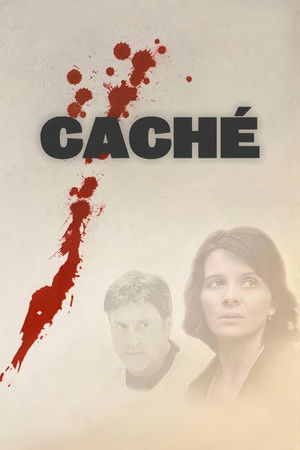
George, host of a television show focusing on literature, receives videos shot on the sly that feature his family, along with disturbing drawings that are difficult to interpret. He has no idea who has made and sent him the videos. Progressively, the contents of the videos become more personal, indicating that the sender has known George for a long time.
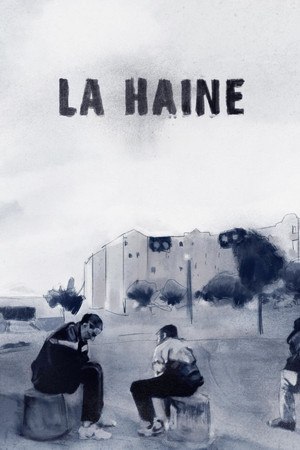
After a chaotic night of rioting in a marginal suburb of Paris, three young friends, Vinz, Hubert and Saïd, wander around unoccupied waiting for news about the state of health of a mutual friend who has been seriously injured when confronting the police.
Louise, who has just written a novel, comes to Paris to meet with a potential publisher. While in the city, she stays with her older sister, Martine, who in many ways is the exact opposite of Louise: she lives in a fashionable neighborhood, is cold to others, and has snobby friends, while Louise lives in a small town and is thoroughly unpretentious. Louise's apparent happiness -- and similarities to their mother -- gradually gets on Martine's nerves.
Successful writer/director Bernard Rougerie is at a creative dead end and decides to isolate himself from his wife in order to complete the script for his next film. Bernard moves into an apartment building whose tenants are in the midst of a revolt against their abusive landlord. Reluctant at first, he joins their cause and then becomes involved in an affair with young, unemployed resident Anne.
In 1980, the black Falashas in Ethiopia are recognised as genuine Jews and are secretly carried to Israel. The day before the transport the son of a Jewish mother dies. In his place and with his name (Schlomo) she takes a Christian 9-year-old boy.