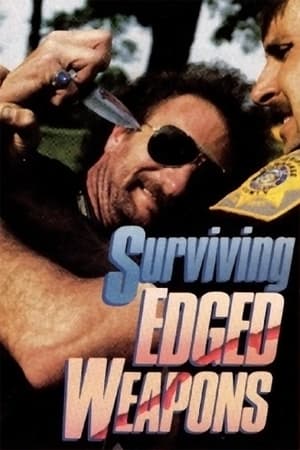
In an intense action-filled 85 minutes, you will learn to defend yourself against the mounting threat of “knife culture” offenders.
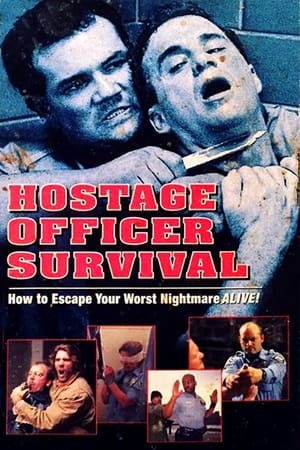
From the creators of Surviving Edged Weapons comes a new instructional film for police officers dealing with office hostage situations.
A training film showing police officers how to deal with persons who are mentally ill.
This 1964 training film, “Mob and Riot Control,” was produced by Charles Cahill and Associates, Inc and presented by Federal Laboratories, Inc. illustrating police tactics and techniques for controlling civil disturbances. The film opens with unruly mobs shouting and overturning a car.
Discusses strategies for police officers to anticipate and respond to ambush situations. It highlights the importance of planning, training, and teamwork in counter-ambush tactics. The text emphasizes the need for officers to remain vigilant, vary their routines, and utilize effective communication to minimize risks during potential threats.
Demonstration of shoplifting methods. With the Cooperation and Assistance of Berkeley, California Police Department and Berkeley Police Reserve; Addison H. Fording, Chief of Police; J.F. Hink & Son Department Store, L.W. Hink, President. Technical Assistance: Wm. P. Beall, Lieutenant; E.A. Skells, Sergeant, Berkeley Police DepartmentGeorge Jelten, Director of Visual Merchandising, J.F. Hink and Son. Director of Photography: John L. Siegle. Sound: Walter D. Porep. Narration: John E. Pedersen.
The Law Enforcement Technology Advancement Centre (LETAC) has developed SID version 6.7: a Sadistic, Intelligent, and Dangerous virtual reality entity which is synthesized from the personalities of more than 150 serial killers, and only one man can stop him.
To take down South Boston's Irish Mafia, the police send in one of their own to infiltrate the underworld, not realizing the syndicate has done likewise. While an undercover cop curries favor with the mob kingpin, a career criminal rises through the police ranks. But both sides soon discover there's a mole among them.
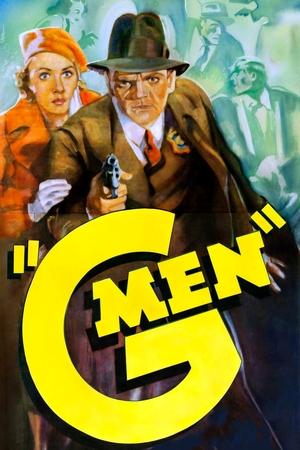
James “Brick” Davis, a struggling attorney, owes his education to a mobster, but always has refused to get involved with the underworld. When a friend of his is gunned down by a notorious criminal, Brick decides to abandon the exercise of the law and join the Department of Justice to capture the murderer.
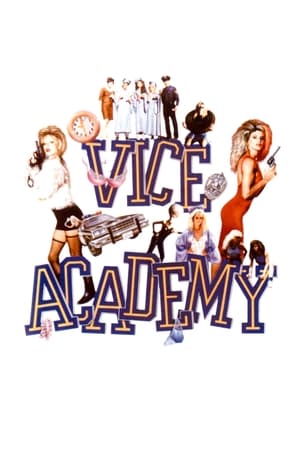
A band of female police cadets train to join the Hollywood vice squad. The toothsome rookies are assigned to infiltrate a kiddy porn operation, then must go undercover and join a prostitution ring run by Queen Bee.
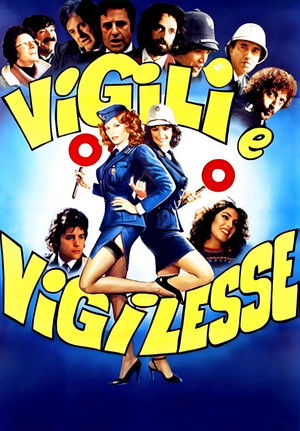
A group of policemen and policewomen from different municipalities are in Rome to take a course that will take them on a study trip to London.
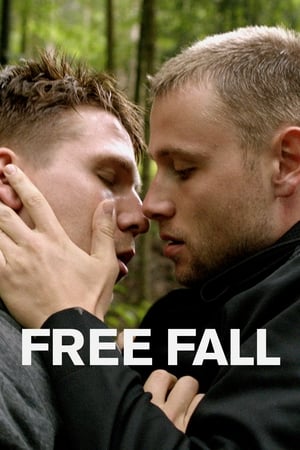
A promising career with the police, a baby on the way... Marc's life seems to be right on track. Then he meets fellow policeman Kay and during their regular jogs Marc experiences a never-before-felt sense of ease and effortlessness – and what it means to fall in love with another man.
One of over thirty police training films produced by Murray Woroner, "Patrolman You Have a Problem" was released by Motorola Teleprogram Center.Created in conjunction with the Miami Dade Police Department (and others), each film in the series examines an aspect of police conduct and training. In this specific film, the viewer is shown scenarios in which rookie cops are exposed to the cynical attitudes and reckless actions of seasoned veterans. Here, the words and actions of the sergeants and other senior police officers appear contradictory to the code of conduct and what was taught to the trainees in the police academy. The goal of the film is to create a discussion about "doing the right thing" and, of course, to reinforce the code of conduct. The film was produced by Woroner Films, inc and scripts and research were carried out by Frank Augustine, Sam Harris, Miami Dade Community College, and Bal Harbour Police Department of Florida.
A portrait of actor/photographer Tom McBride as he succumbs to AIDS.
The Abundance Factor Takes You On An Unprecedented Journey into The Minds of The Worlds Most Knowledgeable Experts on the Subject of Abundance and Prosperity.
The authors Johannes Unger and Sascha Adamek follow the traces of Ulrike Meinhof's life. In the documentary, contemporary witnesses who knew Ulrike Meinhof directly and experienced her path from different perspectives have their say: publisher Klaus Wagenbach, Spiegel editor-in-chief Stefan Aust, Meinhof friends Peggy Parnass and Erika Runge, RAF members Monika Berberich and Manfred Grashof, friends and neighbors from her youth and journalist Bettina Röhl, Ulrike Meinhof's daughter.
Seven students participate in the time-honored tradition of performing as mascot Bucky Badger at the University of Wisconsin during the 2007-2008 school year.
The film Mečiar is the confession of the young director Tereza Nvotová about Vladimír Mečiar and the influence that this politician had on Slovak society, but also on the life of Tereza herself. When the totalitarian communist regime fell in Czechoslovakia in 1989, Tereza was one year old. The leaders of the Gentle Revolution then decided to hold an audition for the Minister of the Interior, to which Vladimír Mečiar, an unknown business lawyer from the Slovak countryside at the time, applied. After success in bankruptcy, Vladimír Mečiar reaches the political top, from where he rules the country with a series of questionable practices. Against the background of events such as the division of Czechoslovakia or the kidnapping of the son of the president of the Slovak Republic, Tereza and her peers relive their childhood.
A 71 minute look into the wacky world of religion. Targeting groups from Catholics to Baptists, this movie exposes the idiocy that is associated to religion in general. This is the fourth film release from B.A. Brooks and is quickly causing quite a stir in religious communities across the globe, while also hailing acclaim as a very entertaining, and insightful film experience.
Nishika 3D cameras were the inexpensive cousins to the Nimslo 3D cameras made in the mid to late 1980's (the Nimslo cameras used glass lenses, while the Nishika ones used plastic lenses). The cameras used regular 35mm film that captured 4 simultaneous images onto 2 frames of film. These images were printed onto photo stock with a lenticular surface bonded to it which allowed 3D to be seen without glasses, like the old kids story books with the 3D covers. The basic 3D camera kit came with this VHS instructional video that was hosted by Vincent Price. It was one of the last things he did.