Bravo Marcel
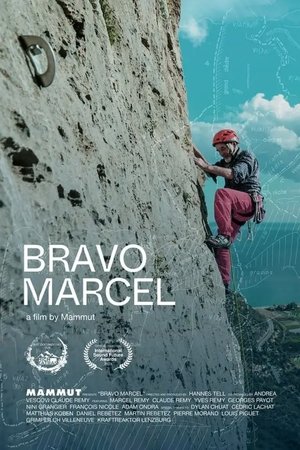
Marcel is on the eve of his 95th birthday. He trained his two sons, Claude and Yves, in the world of climbing where they are key figures. When old age came, a climbing buff, Marcel could not give up his passion. He then begins a final procession towards his last Mirror at the age of 94, accompanied by his sons. The northwest wall of the famous 450-meter Argentine Mirror (canton of Vaud, Switzerland) is the scene of Marcel's adventure, at the height of his art, a feat and a beautiful family story.
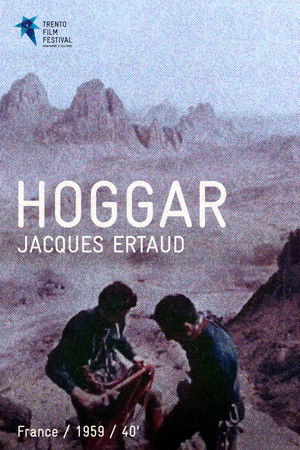
A 1959 documentary about climbing in the Hoggar Mountains of Algeria. For the first time, a mountain expedition was organized for 60 young aspiring climbers, accompanied by renowned mountaineers such as Lionel Terray, Lucien Bérardini, Maurice Herzog, and Jean-Paul Gardinier. In two weeks, dozens of new routes, often extremely difficult, were established. Jacques Ertaud's camera followed the climbers through all the challenging sections of the first ascent of the south spur of Assekrem.
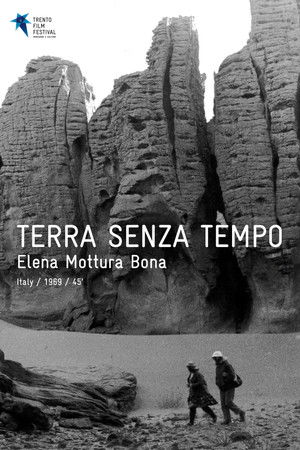
This is the journal of an expedition that, starting from the oasis town of Djanet, embarked on a 12-day journey guided by a member of the Algerian Tourism Club to discover the rock paintings of Tassili n'Ajjer in southeastern Algeria. These paintings date back to prehistoric times (10,000 to 5,000 years ago) and are located on an uninhabited rocky plateau whose highest point reaches 2,158 meters. Considered one of the largest and oldest "open-air rock art museums" in the world, the Tassili n'Ajjer boasts a particularly rugged landscape: the vast rocky plains, which sometimes give way to "forests" of monoliths, are riddled with akbas (holes in the escarpments accessible only on foot or by camel) and numerous faults and canyons. The Tassili n’Ajjer National Park was inscribed on the UNESCO World Heritage List in 1982 and classified as a biosphere reserve in 1986.
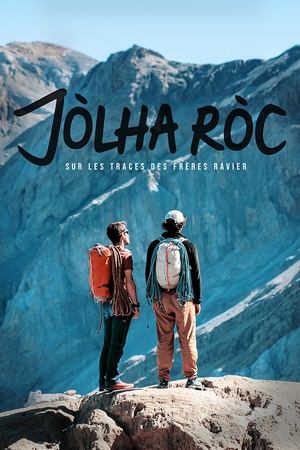
Bastien Lardat and Jordi Noguere, two rope brothers, invite us to pay tribute to the pioneers of modern Pyrenees, through a new kind of sporting journey. Pierre and Jean Ravier opened the way several decades ago, drawing on the Pyrenean reliefs one of the most beautiful pages of amateur climbing excellence. In three days, climbing and connecting 3 legendary north faces by Ravier on foot is the crazy challenge that Bastien and Jordi have set themselves. 3 days, 3 routes, 85 km of pedestrian connection, to arrive at the end of the north face of the Tour de Marboré in Gavarnie, the Dièdre Jaune du Vignemale and the Embarradère du Pic du Midi d'Ossau.
René Collet, skier member of the French team, guides a friend from the summit of the Aiguille du Midi. This descent is an opportunity to focus on the remarkable elements of the terrain: the cable car and its work still in progress, the surrounding peaks (Capucin, Mont Maudit, Mont Blanc). The two skiers stop regularly, here to observe climbers scaling the south face of the Aiguille, there to visit the Cosmiques Laboratory. They even take the time to rescue a skier stuck in a crevasse at the Séracs du Géant, before continuing their descent in style onto the Mer de Glace.
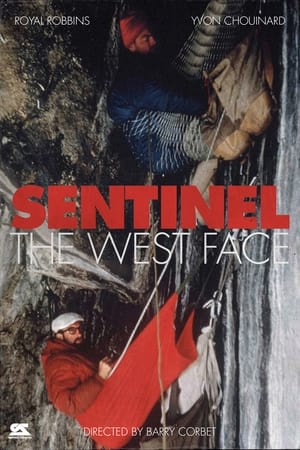
1967: Two of the world's best climbers, Yvon Chouinard and Royal Robbins, tackle the west face of Sentinel Rock, an iconic 2,100-meter granite peak located in Yosemite National Park, considered one of the most difficult in the world. The film's atmosphere is immersive, driven by a sober narrative that highlights the intimate relationship between man and the wall. The technical difficulty of the route, the prolonged physical effort, and the isolation reinforce the heroic dimension of this ascent. The documentary also reveals the essential solidarity between the climbers: each progression requires rigor, inventiveness, and total trust in both the equipment and the partner. This film is considered a benchmark in the history of mountain cinema. It testifies to the pioneering spirit of the era and the evolution of climbing techniques, perfectly illustrating the transition to a more athletic and thoughtful approach to large rock faces.
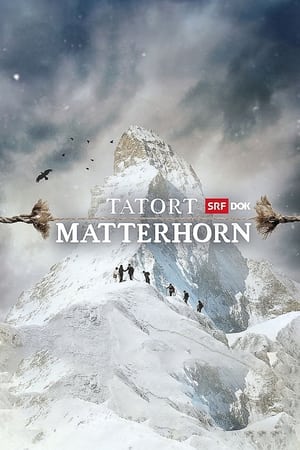
The first ascent of the Matterhorn was made on July 14, 1865 by Edward Whymper, Francis Douglas, Charles Hudson, Douglas Hadow, Michel Croz and two guides from Zermatt, Peter Taugwalder father and son. Douglas, Hudson, Hadow and Croz are killed on the descent after Hadow slips and drags the other three men down the north face. Whymper and the two Taugwalders, who survive, are later accused of having cut the rope that connected them to the rest of the group so as not to be dragged into the fall, but the ensuing investigation finds no evidence of their guilt and they are acquitted. The Matterhorn is the last great peak in the Alps to be conquered and its ascent marks the end of the golden age of mountaineering. One hundred and fifty years later, a team undertakes the same expedition in order to unravel the mystery.
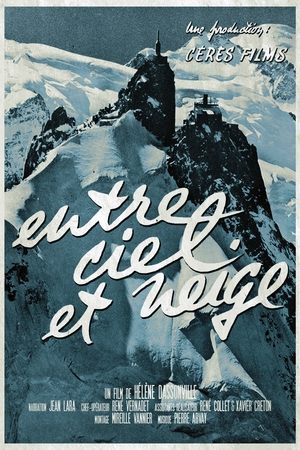
The story of the ascent of the Aiguille de la République by mountaineers Jacques Fromentin and Michel Bastien. The Aiguille de la République, in the Mont-Blanc massif, culminates at an altitude of 3,305 meters among the Aiguilles de Chamonix group of summits. In the Fontainebleau forest, children learn mountaineering techniques on the bouldering climbing site. In 1954, rock climbing was also practiced in the Chamonix valley. The Montenvers train crosses the viaduct taking tourists or athletes to the Mer de Glace viewpoint. The two climbers take an approach step and reach the Envers des Aiguilles refuge. They then climb this steep and smooth wall, progressing along the ridge. On the platform, a rope throw allows them to climb up and sit at the top to dominate the panorama. Then the return: abseiling from the summit block.
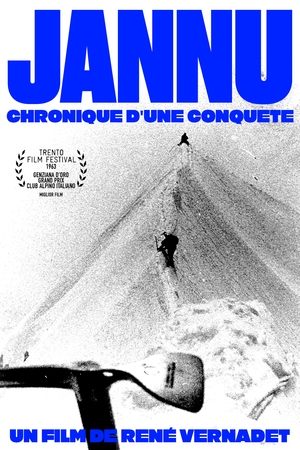
Three years after the 1959 expedition, abandoned 350m from the summit, Lionel Terray leads a new assault on Jannu, one of the most demanding peaks in the Himalayas. At the base camp, equipment and food rations are prepared. The conditions are optimal and the ascent can begin. The camera follows the progress of the mountaineers and Sherpas as closely as possible, from one high-altitude camp to another: installing fixed ropes, progressing over crevasses, in the middle of frozen towers, vertically down immense ice falls or along the edge of sharp ridges. From 7000m, oxygen bottles become essential, as the difficulty of the climb prevents acclimatization. The expedition is a total success: the majority of its members reach the 7710m summit.
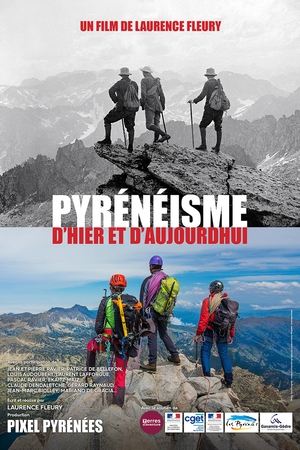
The word Pyreneism was invented by the writer Henri Beraldi at the end of the 19th century. Its definition did not come down to a simple practice of mountaineering in the Pyrenees. To be recognized as a Pyrenean, it was necessary to “ascend, write and feel”. An approach to the mountains, according to him, necessarily accompanied by an artistic or intellectual activity. This documentary looks back at the Pyrenees who have left their mark on history, before interviewing contemporary mountain dwellers who, through their mountain practice, consider themselves, or not, Pyreneanists. What prompted Beraldi to coin this term? Does it result from a Pyrenean complex facing the Alps? Chauvinism or a demand for identity? And today, does this word still have meaning? Beyond the reflection on the subject, this film is a wonderful tribute to the massif.
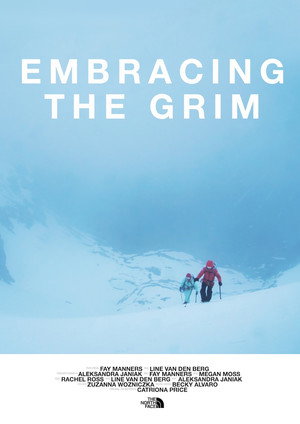
Follows Line van den Berg and Fay Manners to the ephemeral landscapes of the Scottish Highlands, on an ambitious mixed climbing mission beset by typically fickle weather. Despite the numerous obstacles they encountered, the most unexpected twist was yet to come. Tragically, since filming, Line lost her life in an avalanche in the Swiss Alps. The film was finished in her memory.
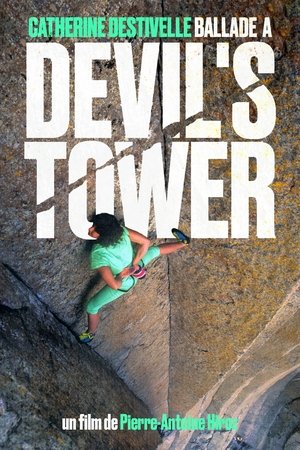
At the peak of her career as a rock climber, Catherine Destivelle goes to the United States to get away from the competitions and to recharge batteries. There, Destivelle travels by car through Utah and Wyoming to make spectacular free solo ascents in Indian Creek, where she soloes 'Supercrack' (5.10d), in Dead Horse Point State Park, and on the iconic Devil's Tower, where she climbs unroped the second half of the classic 130-foot route 'El Matador' (5.10d).
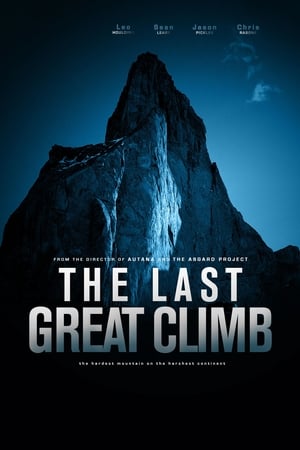
An epic to end all mountain epics. Set in the stunning mountains of Queen Maud Land, Antarctica the feature documentary follows top adventure climber Leo Houlding with his tried and tested team of Jason Pickles and Sean ‘Stanley’ Leary as they attempt to make the first ascent of the NE ridge of 'the master piece of the range'; the majestic Ulvetanna Peak (2931m) - one of the most technically demanding climbs in the world’s harshest environment. The film tells the story of a climber's life long dream to reach one of the world's most remote and difficult summits, interweaved with the fascinating story of the mountain itself; which incredibly was only discovered in 1994. All set against the backdrop of the current age of mountaineering where few great lines remained unclimbed.
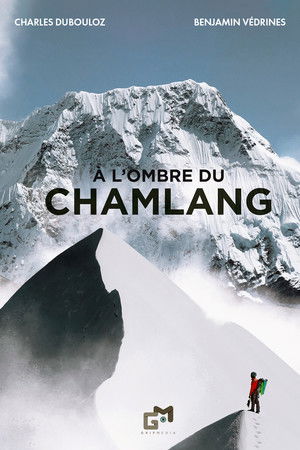
The north face of Chamlang, nearly 2,000 meters high and culminating at 7,200 meters, is one of the last great unclimbed faces in the Himalayas. Benjamin Védrines, who had scouted the face during a previous ascent of Chamlang in 2019 with Nicolas Jean via the northeast couloir, decided to tackle it with Charles Dubouloz, a very strong mountaineer but a novice at high altitude. Snow slides, suspended bivouacs, pitches of mixed climbing and vertical ice… The gamble paid off for the Frenchmen, who opened a new route, "À l'ombre du mensonge" (1,600m, 5+, m5+, 90°), after four intense days on the north face—a magnificent first ascent of a coveted summit, as a duo, in alpine style.
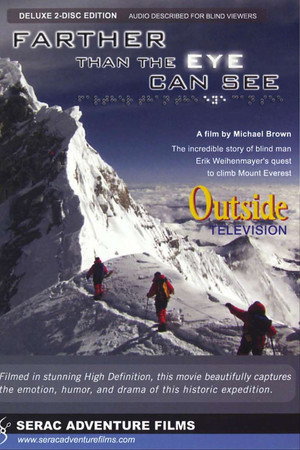
Blind climber Erik Weihenmayer and his team's highly successful ascent of Mount Everest along with four other remarkable milestones on the mountain. Time magazine called this the most successful Everest expedition of all time.
Brad and Barbara Washburn were filmed by National Geographic and RKO Pictures on their ascent of Mount McKinley in Alaska. The film is a pictorial record of the first scientific conquest of Mount McKinley, filmed with the cooperation of the Boston Museum of Science. The short is part of the RKO's 'This is America' documentary series.
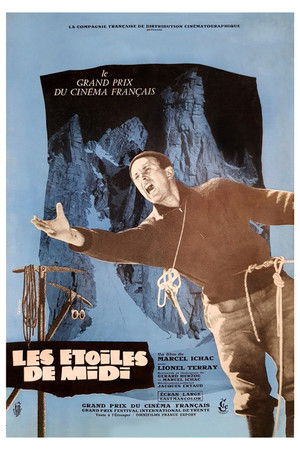
Les Etoiles de Midi is an engaging docudrama about some of the more spectacular exploits of French mountain climbers over the last several decades. In one re-enacted story, there is a wartime escape through the mountains, and in another, a daring rescue of a pair of climbers who had been missing. The actors themselves are adept at the sport of climbing, and they give the scenes an immediacy and real daring that brings the stories alive. A combination of their acrobatics and skill and the outstanding episodes in the history of French climbing creates a winning 78 minutes.
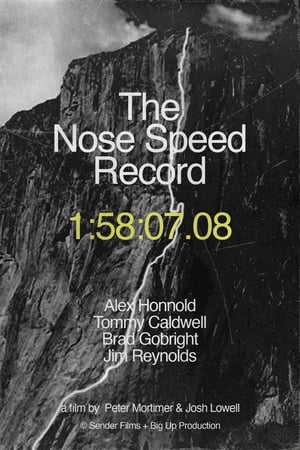
For decades, an elite handful of climbers have competed for the coveted speed record on the 3,000-foot Nose of El Capitan, risking big falls to shave mere seconds off the fastest time. When a record held by superstar Alex Honnold is broken by little-known climbers Brad Gobright and Jim Reynolds, Honnold drafts fellow climbing legend Tommy Caldwell to establish a new mark that will stand the test of time. Honnold pushes for perfection while Caldwell, a family man, wrestles with the risk amid a series of accidents on the wall that lay bare the consequences of any mistake.
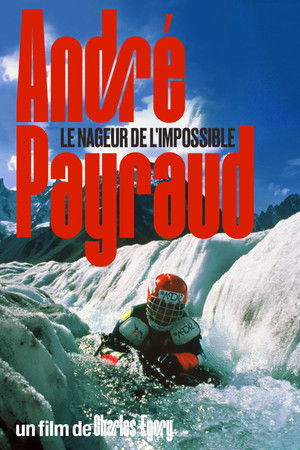
André Payraud, born in 1948 in Passy, Haute-Savoie, nicknamed "the swimmer of the impossible," is a major figure in French whitewater swimming, known by the nickname "Dédé the Carpet." He is renowned for his daring descents of large mountain rivers and for having helped popularize the sport from the 1980s onward. His achievements include swimming down the Mont Blanc torrent in 1980, the first in a long series of filmed feats: swimming Everest in 1982; the Ganges in 1985; the Colorado; Annapurna; the Jordan River—no river can stop Dédé in his quest for adventure. For his whitewater exploits, André Payraud was made a Knight of the National Order of Merit and received the Silver Medal for Youth and Sports. Alongside his exploits around the world, Dédé set up the first rafting company in Haute-Savoie in 1982, in Domancy, Session Raft, Aventures Payraud mont-Blanc..