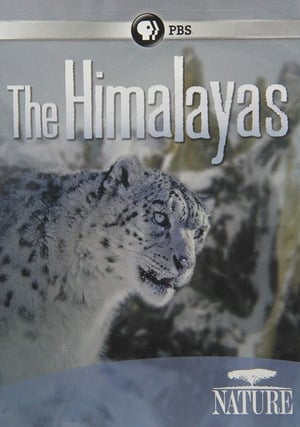
BBC The Natural World. In 2004, a team from the Planet Earth series captured the first ever film of a wild snow leopard in the mountains of Pakistan. For Nisar Malik, who led the expedition, these images sparked a passion that compelled him to return. With cameraman Mark Smith, he spent two years documenting the snow leopard's daily life, finally lifting the veil on the most elusive of all cats.
This films reveals the extraordinary variety of life found in the vast blue expanses of the open ocean. Here, all the action takes place in a 10 metre deep band of water, just under the surface. Many species use this section of water to migrate and hunt while others use ingenious ways to stay hidden where there appears to be no shelter.
The film "Wild Animals of Virginia" explores the diverse wildlife inhabiting Virginia's forests, fields, and waterways. It highlights various species such as chipmunks, squirrels, woodchucks, beavers, muskrats, minks, otters, raccoons, elk, white-tailed deer, cottontail rabbits, foxes, black bears, opossums, bobcats, and skunks. The documentary emphasizes the natural laws governing these animals, their habitats, diets, and behaviors, while also touching on their historical significance and interactions with early settlers.
The giant squid is a creature of legend and myth which, even in the 21st century, has never been seen alive. But now, an international team of scientists thinks it has finally found its lair, 1,000 metres down, off the coast of Japan. This is the culmination of decades of research. The team deploys underwater robots and state-of-the-art submersible vessels for a world first - to find and film the impossible.
Groundbreaking documentary which follows a Japanese-led team of scientists as they attempt to shed light on the mysterious world of deep sea sharks. Only 50 specimens of the newly discovered 'megamouth' have ever been sighted. Over four years, scientists and film crews voyaged in midget submarines into the depths of Suruga Bay and Sagami Bay to film them. Prehistoric 'living fossil' sharks such as bluntnose sixgill sharks, goblin sharks and frilled sharks also lurk in the depths. As part of the investigation, a sperm whale carcass was placed at the bottom of the sea to attract these sharks, which were then studied and observed from the submersible vessels. Revealing in detail the previously unknown behaviour of deep sea sharks, the film unravels another of the intriguing mysteries of our planet's biodiversity.
This short live-action film tells the story of a little raccoon who encounters many adventures when he strays from home to explore the world.
When the night falls, the sky comes alive. A flutter of wings that, for some, is the stuff of nightmares. One in every four mammals on the planet is a bat. But fear for these creatures is often misplaced, not all bats are blood-sucking beasts. The world of bats is incredibly diverse with some beautifully bizarre adaptations.
Le Bison d'Europe, colosse de la forêt
A documentary about the caprid, Ibex
Bonobos show a particularly pronounced sexual activity and an extraordinarily broad spectrum of sexual contacts for primates. These also extend to non-reproductive life phases and partner combinations. For example, homosexual contacts and sexual contacts between young animals or with adults are frequent, and females are ready to mate throughout the menstrual cycle. Bonobos use sexual contacts not only for reproductive purposes, but also in the context of social conflicts, where they have a clear tension-reducing or peacemaking function.
Die Bio-Revolution - Die Karriere der ökologischen Landwirtschaft
A wildlife documentary highlighting some of the 300-over species of birds that were native to Singapore. It also addressed the diminishing population of birds due to Singapore’s urbanisation.
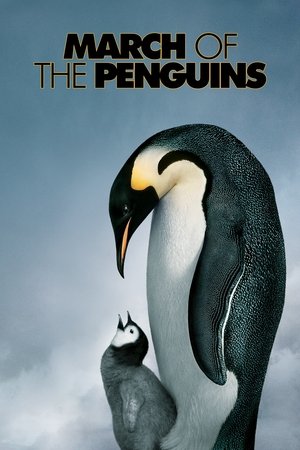
From the world's most famous penguin parade on Phillip Island to the penguins living in St Kilda, we meet key characters who will attempt to complete their mission: to stake their territory, partner up and raise their chicks.
Haida Gwaii, an archipelago off the west coast of Canada, is home to Skil Jaadee and her family. They live in harmony with nature and have made it their mission to save their language and preserve their history.
The Alps – wild mountains, extreme lives, but also a magical world. This majestic mountain range connects eight countries and reaches heights of up to 4,000 metres above sea level. At a length of 1,200 kilometres, the Alps form both a connecting bridge between western and eastern Europe and a high barrier between southern and central Europe. The mountains act as a mighty water reservoir and continental watershed, feeding innumerable rivers that flow into three different oceans. Their highest peak, Mont Blanc, is surrounded by long, soaring mountains with ice-covered slopes. These great summits are just one reason the so-called “Roof of Europe” continues to fascinate – across the continent and around the world. The incredible diversity of landscapes, flora and fauna makes the Alps a unique natural treasure at the heart of Europe.
Stelvio: Crossroads of Peace
Poisonous snakes are among the most deadly feared, yet fascinating creatures on earth. They strike their prey with pin-point precision, injecting lethal doses of poison. Now, for the first time on video, you can take an inside look at the exciting world of these intriguing reptiles. Witness lightening quick strikes and live capture scenes of America's most deadly snakes, the Rattler, Water Moccasin and the Coral Snakes. Join host and expert snake handler Bob Popplewell as he separates myth from reality!
A documentary about the beautiful nature of Drenthe
Deep in the jungles of Southeast Asia is an elusive and endangered member of the panther family that is threatened by poachers, development, and natural habitat changes. The fate of this exotic, python-patterned, clouded leopard may rest in the hands of a small cadre of scientists, activists, and veterinarians determined to help it stave off extinction. Three daring women comb the forests of Thailand for evidence of the elusive "ghost cat." They infiltrate a notorious smuggler's paradise and black market of exotic animals, determined to save the stunning creature.
Jellyfish blooms are making headlines around the world. This is due to the damage they cause to tourism, fishing and our health. How can these creatures, which are over 98% water and have no shell, skeleton or brain, expand so rapidly? Although this is a normal stage in the life cycle of these gelatinous animals, we have to admit that blooms have become much more frequent and massive in recent decades. We're even witnessing jellyfish populations appearing in more and more regions where fish have been replaced by them, such as off the coast of Namibia, in the Black Sea, in the Sea of Japan and in certain areas of the Baltic Sea. What causes this? Why has the role of jellyfish in the ocean been underestimated, even though they outlived the dinosaurs? Are jellyfish on their way to dominating the oceans as they once did? What if they were to be the only ones left?