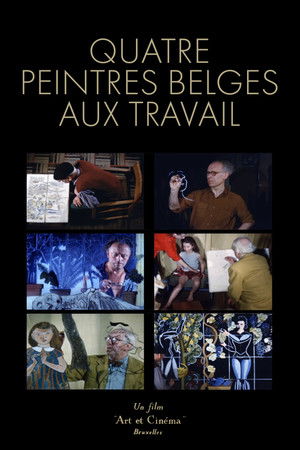
Belgian art historian and filmmaker Paul Haesaerts (1901–1974) made a significant contribution to the promotion of modern Flemish art. In the late 1940s, he started experimenting with the medium of film to practice a new form of lens-based art criticism. The understudied documentary "Quatre peintres belges au travail" (1952) presents Belgian artists Edgar Tytgat, Albert Dasnoy, Jean Brusselmans and Paul Delvaux at work in their studio. On a large sheet of glass placed in front of the camera, they each paint one of the seasons that also represent a stage in a person’s life. A close reading of this Kodachrome color film sheds light on the context of mid-century art reproductions, mass media and post-war Flemish culture. It also examines in what way this film operates as Haesaerts’s concept of cinéma critique, while raising questions as to the way Haesaerts attempted to reconcile the spatial art of painting with the temporal medium of film.
To the city come men, women, fruits, flowers, vegetables, goats and sheep – all ready for consumption. It is the process of consumption/exploitation that forms the core of the film.
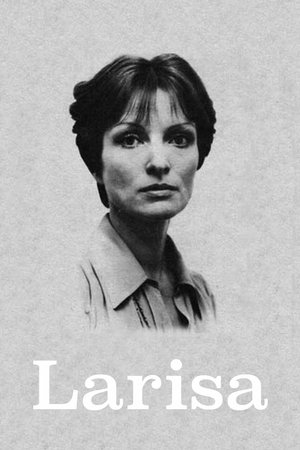
Elem Klimov's tribute to his late wife, director Larisa Shepitko, killed in a car accident a year earlier. Features excerpts from all of her films, and archival audio of her discussing life and art.
Buster Brown creater R.F. Outcault sketches his creation. Part of the Buster Brown series for Edison film studio.
A short, three minute documentary exploring audio recordings from the year 1894 to 1922, layered over home-footage from the year 1920 to 1985, as an indulgent social-commentary on our collective human experience as well as a testament to the everlasting nature of art.
Short documentary about the Belgian leather industry.
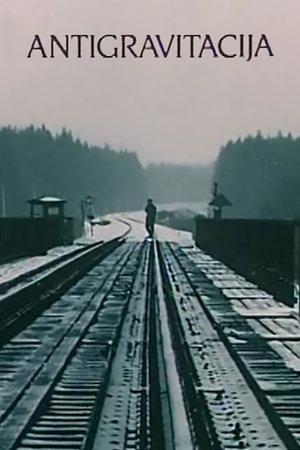
An isolated village in the Lithuanian countryside. Seated in her house, an elderly woman recites an old folk story. Then she climbs up the tall ladder that takes her to the rooftop of the church.
A young trans man tells his story on a early morning journey to Coney Island.
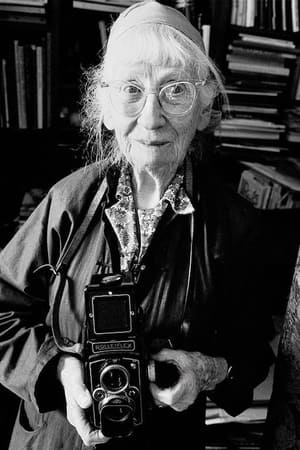
A fascinating insight into the life and works of photographer Imogen Cunningham. Coming into public attention around 1910, she was celebrated in the late sixties through awards, honorary degrees and exhibitions. Her photos are looked at from three focal points: nature, portraits and figure studies.
Fittan brinner - livet med vestibulit
Fighter Pilot: Operation Red Flag follows American F-15 Eagle pilot John Stratton as he trains with some of the world’s best pilots. The movie depicts Stratton’s progression through the challenging and dangerous exercises of Operation Red Flag, the international training program for air forces of allied countries.
Garden of Des Moines is an intimate interview-style short film that follows drag performers in Iowa as they navigate the challenges of being queer in a conservative state. Through personal stories, the film explores the difficulties they face, from political pushback to societal pressures, while highlighting the joy, resilience, and freedom they find in drag. Set against Iowa's landscape, the film captures the vibrant, defiant beauty of queer expression flourishing in unexpected places
Urban is a short documentary on the importance of dance in shaping the identity of five young adolescent girls. In the Susp3ctz dance crew, they learn the basics of hip hop, house, krump, in order to learn to freestyle and reveal their own identity.
Rated X, a short documentary about the adult industry, focuses on giving a voice to the porn actresses working within it. In a perspective of showing how these women empower themselves with their job, Rated X shows the porn industry like never before.
The artist stalks and serenades Joe Dimaggio in her car as he strolls the docks unaware that she is videotaping his every step.
The making of the hoax film Miracles of Evolution.
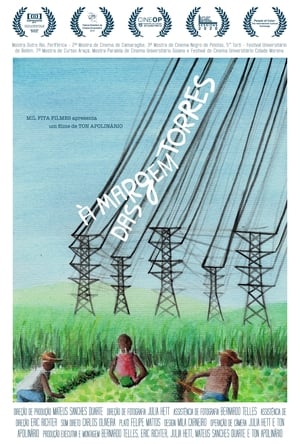
Vila das Torres was a self-built community based on one of the largest urban gardens in Rio de Janeiro, below the energy towers of the Light Company and next to the train lines. Eight years after its removal for the construction of Parque Madureira, former residents report their memories.
The hotel overlooks the city hall. The city hotel returns the glance. Glances bounce off each other, become directions and points headed towards, together, and outwards all just one frame apart in between the hotel and city hall.
In 1967, de Andrade was invited by the Italian company Olivetti to produce a documentary on the new Brazilian capital city of Brasília. Constructed during the latter half of the 1950s and founded in 1960, the city was part of an effort to populate Brazil’s vast interior region and was to be the embodiment of democratic urban planning, free from the class divisions and inequalities that characterize so many metropolises. Unsurprisingly, Brasília, Contradições de uma Cidade Nova (Brasília, Contradictions of a New City, 1968) revealed Brasília to be utopic only for the wealthy, replicating the same social problems present in every Brazilian city. (Senses of Cinema)
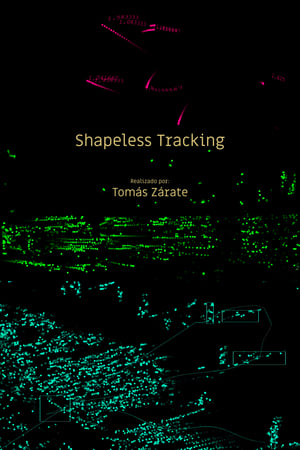
Inside a computer a space-time is revealed in which image and sound become numbers and motion manifests as rhythm, flow and chaos. This tracking and integration experiment removes the superficial identity of video to detect kinetic disturbances in everyday environment.