狂気が彷徨う
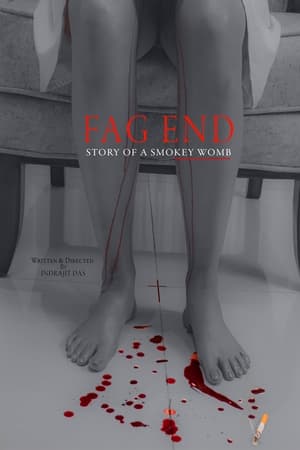
When Devan’s ex-girlfriend, Skye, knocks on his door with unmerited forgiveness and sexual desire, his naive lust leaves him too late to discover the monster which lies beneath her skin.
¿Has escuchado el llanto de las hadas?
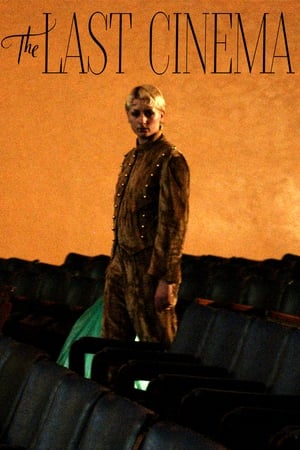
Cinema clerks Silva and Felix work the final night before their beloved cinema is demolished by private investors. An empty final screening allows them to reflect on the meaning of cinema in an age wherein art no longer occupies physical space.
When Demonetization (currency ban) is announced in India, 3 unlikely characters come face to face for a bag of cash. After that a car journey begins and some more characters come into picture. This results in a cat and mouse game with a very unexpected outcome.
Two gay men in Japan discuss the end of their respective relationships.
Under the relentless sun, a killer stalks through the mountains, where the innocence of a young couple becomes prey. With no shadows to hide their fate, the hunt is a macabre game in broad daylight, where fear is not hidden in the darkness, but burns with the rawness of the unperturbed noon.
A woman reflects under the parapet.
The story of a girl, after a breakup, removing her makeup and finding herself again in grief. About life, places, being yourself wherever you are, in love, and not losing yourself, moving through things. "Balaclava Quemado is about not ceasing to be yourself no matter what situation you find yourself in; with or without wearing it, it's the strength to keep going, it's a bit of a symbol of taking the freedom that one can and carries within." Daniela.
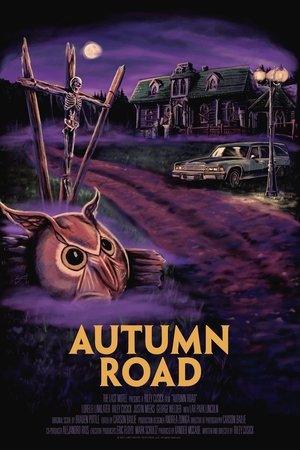
10 years after a young girl goes missing on Halloween night, her sister returns to their hometown to look for answers. Along the way she becomes entangled with two mysterious identical twins who run the town's roadside haunted house.
A visually driven, non-verbal short film exploring female solitude, migration, and inner resilience through surreal imagery and physical performance in contemporary Australia.
A hen questions the meaning of her life on a farm.
Five teenage girls gather for a party. Tensions mount as the guests exchange makeovers and hurl accusations. Tears in the bathroom lead to a ghostly kiss. In a circle around the Ouija board, they invoke a spirit. Their faces float in blackness. Five pairs of painted nails caress the planchette as it moves, swirling pale arms behind it. Our host becomes possessed. The characters overlap. Which of these women is not herself? Uzi's Party is a short experimental narrative written, directed and edited by Lyra Hill. All five characters are played by her sister Johanna Hill. Uzi's Party was filmed entirely in-camera on 16mm film, by means of intricately plotted multiple exposures and a cast of thirteen body doubles.
A poetic and experimental short film by Arin Paul, Let Me Call You, Ritwik Da pays tribute to Ritwik Ghatak, inspired by a poem by director John Abraham. Blending evocative imagery and voice-over, it explores Ghatak's legacy.
A feature-length deleted scenes movie from the Blu-ray release of the anthology series Castration Movie.
You're waiting,aren't you?
A mysterious boat returns to a village 30 years after vanishing. Two men join its crew hoping for better fortune. After one voyage, they find themselves transported back in time, mistaken for the original crew.
Lily, a lonely young woman, meets James at a party. Together, they embark on a passionate love affair. But the relationship eventually comes to an end. Lily recalls the memories of her relationship and tries to explain what caused their separation.
A film about peace, love and war. Dedicated to the 100th anniversary of the end of the Civil War in Russia. The film takes place at the end of the summer of 1917, when Russia and the whole world were at a crossroads between two eras. None of the people could even imagine how much his life would change in the very near future. In a strange way, the atmosphere of the film echoes our current reality and what is happening in Russia today. According to the form of visualization, the film belongs to experimental mockumentary cinema. To give greater authenticity to what is happening on the screen, the shooting was carried out on black-and-white negatives of 16 and 35 mm, hand-operated cameras were used and the material was developed in manual spiral tanks. The documentary chronicle of the Kolchak army of 1919 and the White army in the Far East of 1922 is embedded in the finale of the film.
Żeby już nigdy nie było Jesieni