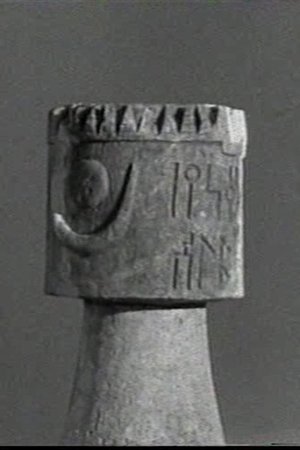
In 1896, Ethiopia, an African nation, largely armed with spears and knives, defeats a well-equipped and organized Italian military bent on colonization.
Benito Mussolini: Anatomy of a Dictator
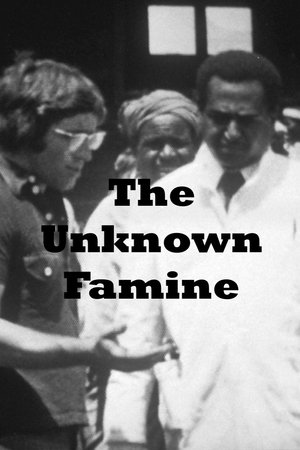
Jonathan Dimbleby’s landmark 1973 documentary “The Unknown Famine” stands as a pivotal moment in Ethiopian history—a journalistic endeavour that not only exposed a humanitarian crisis but inadvertently helped precipitate the end of Africa’s oldest monarchy. The footage was broadcast by ITV for its flagship affairs series named "This Week".
The armies of Fascist Italy conquered Addis Ababa, capital of Abyssinia, in May 1936, thus culminating the African colonial adventure of the ruthless dictator Benito Mussolini, by then lord of Libya, Eritrea and Somalia; a bloody and tragic story told through the naive drawings of Pietro Dall'Igna, an Italian schoolboy born in 1925.
"A Walk to Beautiful" tells the story of five women in Ethiopia suffering from devastating childbirth injuries. Rejected by their husbands and ostracized by their communities, these women are left to spend the rest of their lives in loneliness and shame. The trials they endure and their attempts to rebuild their lives tell a universal story of hope, courage, and transformation.
Haile Gerima and Ryszard Kapuscinski travel around Ethiopia talking to people about their current situations and what needs to be done for a prosperous country.
A short film documenting Ethiopian musician Hailu Mergia's life as the leader of the Walias Band in the 1970, his immigration to the United States and his subsequent re-emergence as a performer in 2014.
Several African immigrants living in Spain speak openly about female genital mutilation.
With stunning views of eruptions and lava flows, Werner Herzog captures the raw power of volcanoes and their ties to indigenous spiritual practices.
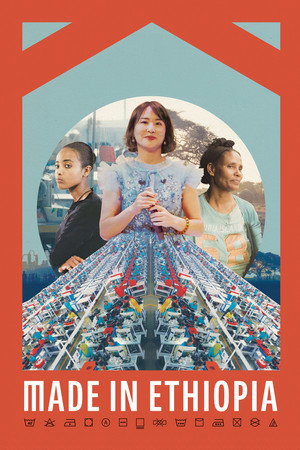
When a massive Chinese factory complex attempts a high-stakes expansion in rural Ethiopia, three women in search of prosperity have their faith in industrialization tested to the limit. Filmed over four years with singular access, Made in Ethiopia lifts the curtain on China’s historic but misunderstood impact on Africa, and explores contemporary Ethiopia at a moment of profound crisis. The film was awarded the Jury Special Mention at Tribeca Festival.
Le royaume des nuages
First aired on TV on the BBC Two on 29 September 1989, this second episode of the documentary series "Under African Skies", a grand project aimed at presenting the rich diversity of contemporary African music of those days and known for its unforgettable memento "A celebration of the new sounds of a continent. " traverses the nostalgic roots and the euphoric contours of Ethiopian music of the '80s.
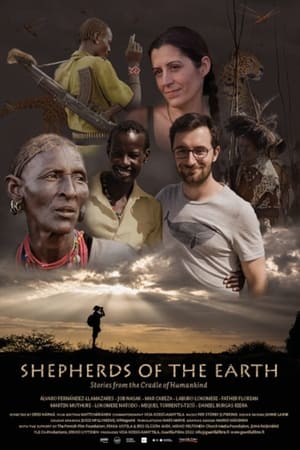
The region of Lake Turkana, located in Kenya and Ethiopia, is considered to be “the Cradle of Humankind”. Among other finds, primate fossils from millions of years ago have been discovered in the region. But what about the region’s modern inhabitants and their relationship to their environment? Iiris Härmä, whose previous work includes the award-winning Leaving Africa, had the chance of joining Helsinki University’s researchers, Álvaro Fernández-Llamazares and Mar Cabeza, on their pre-pandemic trip to study the Daasanach people’s relationship to their environment through traditional animal tales. The researchers hope that storytelling would help to bridge the gap between people’s everyday lives and conservation efforts.
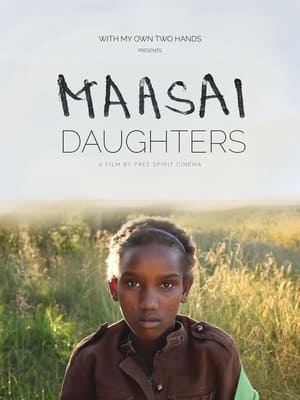
Evokes the personal trajectory of a Tanzanian Massai woman refusing genital mutilation. Directed by two NGO volunteers from Luxemburg working on a development project in Tanzania. Released in 2009, this film has been broadcasted since in various film festivals in Europe, on the occasion of different AR actions in Luxemburg and on national television (RTL).
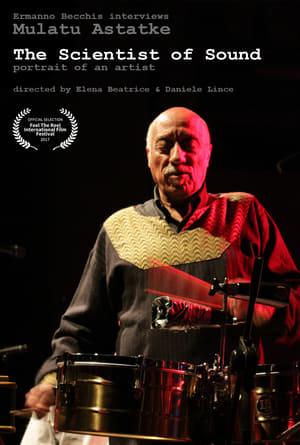
Thursday 27th of October 2016 – Teatro Espace, Turin. Mulatu Astatke is a musician, composer, arranger and Ethiopia’s cultural ambassador. He’s known as the godfather of ethiojazz, a unique blend of jazz, traditional Ethiopian music, latin, caribbean reggae and afrofunk. Born in 1943 in Jimma, Mulatu studied music not only in Ethiopia but also in UK and USA. In 2005 he contributed to the soundtrack of Jim Jarmusch’s film “Broken Flowers”, reaching a new public worldwide.
With candor, humour and courage, a group of African-Canadian women challenge cultural taboos surrounding female sexuality and fight to take back ownership of their bodies. Combining her own journey with personal accounts from some of her radiant, endearing friends, co-director Habibata Ouarme explores the phenomenon of female genital mutilation and the road to individual and collective healing, both in Africa and in Canada.
A travelogue of Ethiopia by plane, automobile and mule, showing the lives, customs, and habits of the people, and the conditions of the country.
Young Alifa looks up at the somali sky. She thinks about her daily life as a shepherdess. She knows that the day that will change her life forever is about to come.
35 Cows and a Kalashnikov is a joyously made triptych about warrior-farmers, colorful dandies and voodoo wrestlers in Ethiopia, Brazzaville and Kinshasa. It paints a loving and attentive portrait of African pride and beauty.
Documentary on the Ethiopian orphanage ‘Toukoul’, filmed in Addis Ababa in December 2003