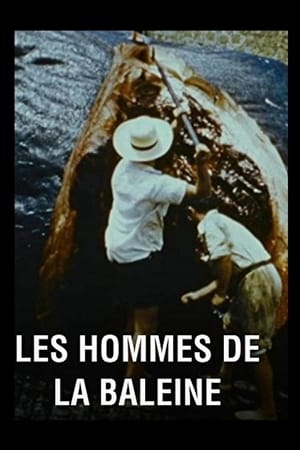
In a small fishermen's village in the Azores, an enormous whale is being jointed, carved and stocked. Once this task is over, the whalers ready themselves for another hunt, a fascinating but trying and dangerous experience...
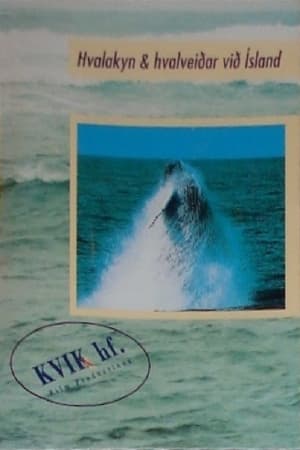
An important and stunning documentary on whales and modern whaling with historical and scientific background. Most of the footage was shot specifically for this film in the North Atlantic and there are some shots of whale behavior that have never been captured on film before. The film is a significant contribution to the debate on the whaling controversy.
At a 2005 Carnival night, something mysterious happens at Porto Formoso bay, leaving the fishing boats wrecked. Fishermen decide to build bigger boats, but at the small village harbor it is impossible to deck them. They demand the construction of a new harbor, but many inhabitants are opposed due to a Castle ruins that lay there. If to some residents ruins look worthless, for others they are the village soul and future, as a lot of tourists would like to visit them...While the landscape transforms, we follow the Director voice through the story of the last seven years of this community.
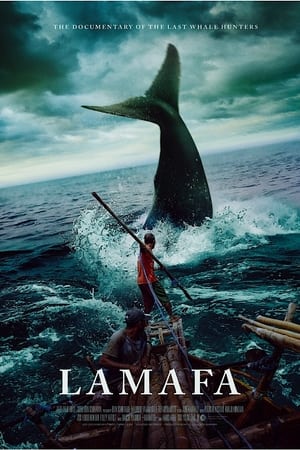
The Lamalera village is located in a small volcanic Island, a poor, barren land, and they catch whales to eat. It is the only way for them to survive. The harpooners are called lamafa in the local language. They are the village's pride because they take the whole responsibility for the very dangerous hunting. In 2018. a tragedy struck the village. Benjamin, a young lamafa, was killed during a spear hunting. His father, Ignatius, was devastated, and Benjamin's brother, Demo, was shocked and unable to go hunting. They blame accidents at sea on a victim's family discord in Lamalera. Ignatius, the master boat-builder, decided to build a new traditional whaleboat to reunite the family bond. The whaling boat is 12 meters long, made entirely of hand-crafted wood, not using a single nail, and is considered an intangible cultural asset.
A documentary that follows a middle-aged Azorean record obsessive who has lost the vinyl collection of his youth, and so seeks to reconnect with it through talking with the fellow island collectors he grew up with about the music scene of their wilder years.
Pictures made from an 1800-foot panorama painted in 1848 and authentic songs of the period sung and played by Peggy Seeger and Ewan MacCall are used in portraying a whaling voyage around the world. Includes views of New Bedford, Mass., the Azores, Hawaii, Tahiti, the Alaskan whaling grounds, the Horn, and the harbors of Typee and Rio.
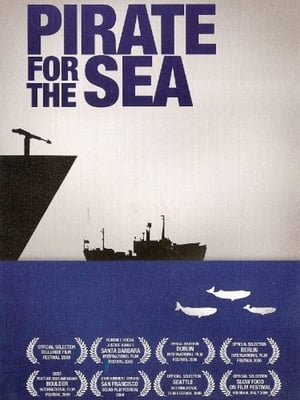
A documentary on Paul Watson, who takes the law into his own hands on the open seas, confronting, by any nonviolent means necessary, the hunters who indiscriminately slaughter whales, seals and sharks, along with complicit governments and environmental organizations. Written by Anonymous "Pirate for the Sea" is a biographical film of Captain Paul Watson, the youngest founding member of Greenpeace Canada. He organized early campaigns protesting the killing of seals, whales, and dolphins. Greenpeace ejected him for being too much of an activist. Starting his own organization, the Sea Shepherd Conservation Society, he went on to sink illegal whaling ships, stopped Canadian seal hunts for ten years, permanently halted sealing in British Isles, killing of dolphins on Iki Island, Japan, etc. This documentary witnesses his latest campaigns and explores the personal and environmental history of this controversial marine conservationist. Written by R.C.
Delve into the world of modern whaling in Norwegian waters. Discover the shocking truth about the demand for whale meat, the associated health risks, and its unexpected use in pet food. Experience thrilling hunts firsthand as the crew confronts Norway's largest whaling operators.
In September 2021, 1500 white-sided dolphins were slaughtered in Skálabotnur. This documentary navigates both waters to paint a complicated picture between those who defend this tradition and those who condemn it.
A youngster begins to understand the wisdom hidden within legendary whaler-man Tall 12's sea shanty songs in the whaling town of Barrouallie, St. Vincent, a place where men still wrestle with the creatures of the deep for survival. Against a backdrop of cruise-ship tourism and economic colonialism, this lyrical documentary discovers a surprising renewal of interest and hunger to preserve local traditions and cultural knowledge through new interpretations.
Za tučňáky, lvouny a velrybami
12,000 feet down, life is erupting. Alvin, a deep-sea mechanized probe, makes a voyage some 12,000 feet underwater to explore the Azores, a constantly-erupting volcanic rift between Europe and North America.
The Cove tells the amazing true story of how an elite team of individuals, films makers and free divers embarked on a covert mission to penetrate the hidden cove in Japan, shining light on a dark and deadly secret. The shocking discoveries were only the tip of the iceberg.
The story of a little loggerhead turtle, as she follows in the path of her ancestors on one of the most extraordinary journeys in the natural world. Born on a beach in Florida, she rides the Gulf Stream up towards the Arctic and ultimately swims around the entire North Atlantic across to Africa and back to the beach where she was born. But the odds are stacked against her; just one in ten thousand turtles survive the journey.
Co-directed by Chris Marker and Mario Ruspoli, Three Cheers for the Whale traces humanity’s complex relationship with whales—from reverence to exploitation—culminating in a stark depiction of industrial whaling. Combining archival imagery, commentary, and documentary footage, the film offers both a historical reflection and a call for ecological awareness.
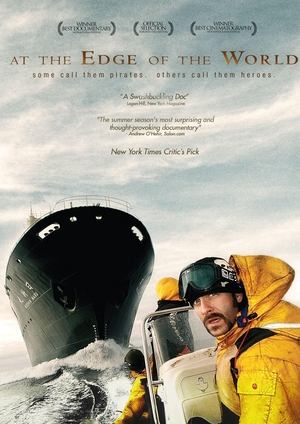
At the Edge of the World chronicles the controversial Sea Shepherd Antarctic Campaign against a Japanese whaling fleet. The international volunteer crew, under-trained and under-equipped, develop a combination of bizarre and brilliant tactics with which to stop the whalers. But first they must find the Japanese ships, a far more difficult challenge than ever imagined - long-time activist Paul Watson and first-time captain Alex Cornelissen employ an array of strategies in the hopes of finding an elusive adversary in the vast expanse of the Ross Sea. With one ship (the Farley Mowat) too slow to chase down the whaling fleet, with their second ship (the Robert Hunter) unsuited for Antarctic ice conditions and with no country supporting their efforts to enforce international law, the situation becomes increasingly desperate. Against all odds, however, a real-life pirate tale unfolds - a modern-day "David vs. Goliath" adventure.
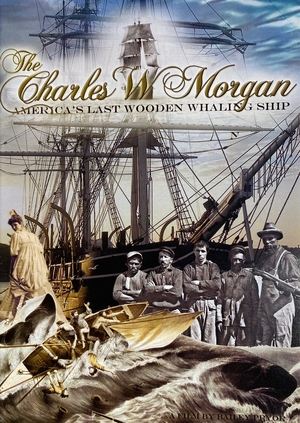
THE CHARLES W. MORGAN tells the extraordinary story of America's last wooden whale ship and the incredible saga of the first global industry dominated by the United States. From her humble beginnings in New Bedford, Massachusetts in the year 1841, the Morgan sailed 37 world voyages - where this "Lucky Ship" survived freeze-ups in the Arctic, attacks by south sea islanders, fire aboard ship and a host of other stories, each of which had the potential to end the vessel's life. Yet 170 years later, the Charles W. Morgan lives on, and after an extensive restoration project, is poised to sail again.
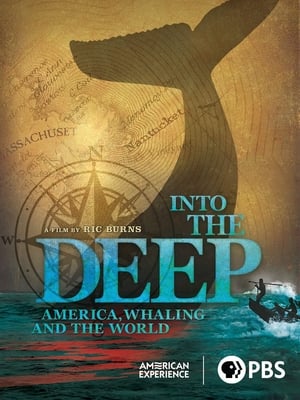
Examine the American whaling industry from its 17th-century origins in drift and shore whaling off the coast of New England and Cape Cod, through the golden age of deep ocean whaling, the tragedy of the Essex, and the career of Moby Dick's Herman Melville, and on to its demise in the decades following the American Civil War.
A small group of people is in a music festival on an island in the middle of the Atlantic Ocean. In "Fear and Loathing and Party in Las Ponta Delgada", we experience the happiness and insanity behind one of the most unique festivals in the world.
A whale is hunted in the southern hemisphere by the crew of a sailing ship: it is harpooned twice, using a cannon, and taken back to the shore. In the second part, the whale is butchered at a whaling station. A lady with a parasol looks on, while in the background are the sailing ships used to hunt whales. These are excerpts from a 1909 film called "La Pêche à Baleine dans les mers du Sud" made by Jean Nédelec and cut down in the 1920's for the Pathé Baby home movie projector.