This feature documentary takes us to the heart of the Jane-Finch "Corridor" in the early 1980s. Covering six square blocks in Toronto's North York, the area readily evokes images of vandalism, high-density subsidized housing, racial tension, despair and crime. By focusing on the lives of several of the residents, many of them black or members of other visible minorities, the film provides a powerful view of a community that, contrary to its popular image, is working towards a more positive future.
Shot by a reported “1,001 Syrians” according to the filmmakers, SILVERED WATER, SYRIA SELF-PORTRAIT impressionistically documents the destruction and atrocities of the civil war through a combination of eye-witness accounts shot on mobile phones and posted to the internet, and footage shot by Bedirxan during the siege of Homs. Bedirxan, an elementary school teacher in Homs, had contacted Mohammed online to ask him what he would film, if he was there. Mohammed, working in forced exile in Paris, is tormented by feelings of cowardice as he witnesses the horrors from afar, and the self-reflexive film also chronicles how he is haunted in his dreams by a Syrian boy once shot to death for snatching his camera on the street.
Scientists visit the remote surface and undersea locations to study various species of whales in their natural habitat.
The film brings us under the skin and into the mind of La Chana, a talented Gypsy flamenco dancer as she returns to the stage to give a final seated performance after a 30-year break. Along the way, La Chana reveals the secret behind her disappearance when she was at the peak of her career.
A chronological look at films by, for, or about gays and lesbians in the United States, from 1947 to 2005, Kenneth Anger's "Fireworks" to "Brokeback Mountain". Talking heads, anchored by critic and scholar B. Ruby Rich, are interspersed with an advancing timeline and with clips from two dozen films. The narrative groups the pictures around various firsts, movements, and triumphs: experimental films, indie films, sex on screen, outlaw culture and bad guys, lesbian lovers, films about AIDS and dying, emergence of romantic comedy, transgender films, films about diversity and various cultures, documentaries and then mainstream Hollywood drama. What might come next?
This documentary from Albert and David Maysles follows the bitter rivalry of four door-to-door salesmen working for the Mid-American Bible Company: Paul "The Badger" Brennan, Charles "The Gipper" McDevitt, James "The Rabbit" Baker and Raymond "The Bull" Martos. Times are tough for this hard-living quartet, who spend their days traveling through small-town America, trying their best to peddle gold-leaf Bibles to an apathetic crowd of lower-middle-class housewives and elderly couples.
Encounter Point is an 85-minute feature documentary film that follows a former Israeli settler, a Palestinian ex-prisoner, a bereaved Israeli mother and a wounded Palestinian bereaved brother who risk their lives and public standing to promote a nonviolent end to the conflict. Their journeys lead them to the unlikeliest places to confront hatred within their communities.
Pretty Bloody: The Women of Horror is a television documentary film that premiered on the Canadian cable network Space on February 25, 2009. The hour-long documentary examines the experiences, motivations and impact of the increasing number of women engaged in horror fiction, with producers Donna Davies and Kimberlee McTaggart of Canada's Sorcery Films interviewing actresses, film directors, writers, critics and academics. The documentary was filmed in Toronto, Canada; and in Los Angeles, California and New York City, New York in the US.
"Michael Moore doesn't like documentaries. That's why he doesn't make them." A documentary that looks to distinguish what's fact, fiction, legend, and otherwise as a camera crew trails Michael Moore as he tours with his film, Fahrenheit 9/11.
Shot on the Great Barrier Reef in Australia and in the Bahamas, Ocean Wonderland brings to you the amazing beauty of the many varieties of coral and the immense diversity of the marine life thriving there.
Monsanto is the world leader in genetically modified organisms (GMOs), as well as one of the most controversial corporations in industrial history. This century-old empire has created some of the most toxic products ever sold, including polychlorinated biphenyls (PCBs) and the herbicide Agent Orange. Based on a painstaking investigation, The World According to Monsanto puts together the pieces of the company’s history, calling on hitherto unpublished documents and numerous first-hand accounts.
The space of the junkyard allows various ‘crash’ narratives to unfold, with the stories of actual crashes and the remnants and afterlife of these machines becoming metaphors for economic decline. This is an investigation of planes as they are parked during the economic downturn, stored and recycled, revealing unexpected connections between economy, violence and spectacle, finding perfect example in the form of the Boeing 4X-JYI, an aircraft first acquired by film director Howard Hughes for TWA, which was subsequently flown by the Israeli Airforce before finding its way to the Californian desert to be blown up for the Hollywood blockbuster Speed. Through intertwined narratives of people, planes and places Steyerl reveals cycles of capitalism incorporating and adapting to the changing status of the commodity, but also points at a horizon beyond this endless repetition.
In 2007 Mobile, Alabama, Mardi Gras is celebrated... and complicated. Following a cast of characters, parades, and parties across an enduring color line, we see that beneath the surface of pageantry lies something else altogether.
After casting painter and video artist Mania Akbari as the central figure of his groundbreaking Ten (2002), and then witnessing her outstanding debut as a feature film director in 20 Fingers (2004), Abbas Kiarostami urged her to direct a sequel to the film. In Dah be alaveh Chahar (10 + 4), though, circumstances are different: Mania is fighting cancer. She has undergone surgery; she has lost her hair following chemotherapy and no longer wears the compulsory headscarf; and sometimes she is too weak to drive. So the camera follows her to record conversations with friends and family in different spaces, from the gondola she had famously used in her first feature to a hospital bed.
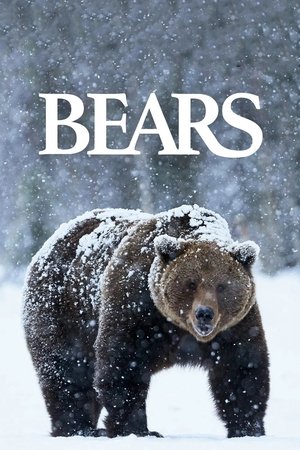
From polar bears in the arctic tundra to black bears in the Northern Rockies, you'll see some of the most spectacular footage ever shot of these enterprising omnivores. Catch salmon with a group of hungry grizzlies on the McNeil River in Alaska. Crawl inside a den with a mother black bear and her cubs. Learn about the challenges facing each of these species as their habitat diminishes.
"Conakry" is a homage to the Guinean-Bissauan and Cape Verdean anti-colonial leader Amílcar Cabral. This poetic film is a single shot 16mm film staged at the Haus der Kulturen der Welt in Berlin and based on the archival images. The film-maker Filipa César, invited the Portuguese writer and artist Grada Kilomba and the American radio activist Diana McCarty to reflect on the images and their history, questioning what these film archive mean in a post-African liberation world.
A Boy Named Sue chronicles the transformation of a transsexual named Theo from a woman to a man over the course of six years. Following Theo's physiological and psychological changes during the process, as well as their effects on his lesbian lover and community of close friends, A Boy Named Sue tells a story about gender identity, relationships, and how even things that seem permanent can change.
This large format film explores the last great wilderness on earth. It takes you to the coldest, driest, windiest continent, Antarctica. The film explores the life in Antarctica, both for the animals that live their and the scientist that work there.
Australia: Land Beyond Time takes viewers on a breathtaking journey back in time to witness the birth and evolution of a mysterious land that harbors remnants of Earth's earliest life and many of it's strangest creatures that exist nowhere else on the planet.
Forget the pie charts, color-coded maps and hyperventilating pundits. What's the street-level experience of voters in today's America? In a triumph of documentary storytelling, ELECTION DAY combines eleven stories--all shot simultaneously on November 2, 2004, from dawn until long past midnight--into one. Factory workers, ex-felons, harried moms, Native American activists and diligent poll watchers, from South Dakota to Florida, take the process of democracy into their own hands. The result: an entertaining, inspiring and sometimes unsettling tapestry of citizens determined on one fateful day to make their votes count.