Materia
Hyun-dong is a hikikomori. He lives off of the joy of assembling and displaying Gundams in his only space, his home. Then one day, he makes a big decision to go out to buy a Gundam plastic model that a delivery man left next to his door. At that moment, the front door slams shut. He is trapped in an unfamiliar world, he can't remember the password and he decides to go on a long journey to find the key house.
La chiocciola
About a police investigation unit made up entirely of hikikomoris.
A battered young girl finds refuge in a mysterious button, with unprecedented consequences....
Nida is a single mother who takes care of her anti-social son who has locked himself in his room for five years. The only way to communicate with her son is to write on a piece of paper and slip it under the door. But, when outsiders start to get curious about what is going on behind the door of her son's room, a series of terrible events starts to happen.
An anime-obsessed young man fantasizes about his favorite voluptuous heroines, but his sex-addled dream quickly transforms into a nightmare which threatens to consume him.
Etsuro Kurosu faills getting into a university and becomes a hikikomori. One day, he tries to hang himself from a hook on the wall in his apartment. He fails, but his attempt leaves a hole in the wall. Through the hole wall, Etsuro Kurosu can now see Rio Miyaichi. He becomes fascinated with the girl that lives next door. Later, while peeping at her through the wall, Etsuro Kurosu sees her in the process of brutally murdering someone. He screams and is caught by her. Etsuro Kurosu confesses that he loves her and they start to date. Etsuro Kurosu feels happiness in his life, but what will happen to him? Will he be murdered by Rio Miyaichi?
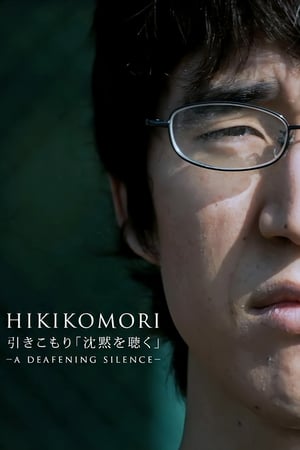
It's estimated over a million Japanese live as "hikikomori," recluses totally withdrawn from society. Some hikikomori may even go for decades without leaving their house. While in the past the phenomenon was most commonly associated with young men, recent data has revealed a much wider demographic of people whose confidence in themselves, and in society, has been shattered. As the parents or relatives hikikomori so often depend on entirely become too old to care for them, many now face a dire situation, left alone and unable to cope.
A calm, empathetic documentary film about hikikomori—mostly young, male social recluses in Japan—and their way back into society through the help of institutions. The film very unobtrusively tries to find out about its protagonists' motives for withdrawing from society and gives an interesting and insightful glimpse into this cultural phenomenon.
Based on the novel by Güzide Sabri Aygün, the film tells the relationship of a mentally-ill woman and the doctor whom she loved in her youth.
In "The Bride with the Black Veil" (1975), director Süreyya Duru continues to focus on social issues, exposing problems of the peasants and feodal relations.
A Russian Police Major is enlisted by the LAPD to help solve a series of gruesome murders perpetrated against young women by a sadistic sociopathic killer on the mean streets of Hollywood.
Based on Yılmaz Güney's script and filmed in semi-documentary style, the movie provides a fresh perspective on the history of labor issues in 1970s.
The film traces the destiny of Kapila, an outcast child who had been deemed by his fellow villagers to have supernatural powers of destruction, because of the timing of his solar eclipse birth.
A brothel disguised as a teahouse is staffed with old ladies long past their prime. However, things begin to change and become chaotic when the owner takes in a young girl.