Egypt's only modernist architect Hassan Fathy (1900-1989) was committed to ecology and sustainability in his architecture. This film takes us with slow steps, in still images, to two villages he created. Fathy's historically grounded, forward-looking designs prompt us to reflect on the past as well as contemplate new solutions for the future.
Mozambique 1974 - the European name of the capital Lourenço Marques was deleted and replaced by Maputo. Between the delicacy and the apocalyptic, Brisa Solar reveals the little secrets of an African city that was born from a modernist dream, which led a revolution and which today sees its cultural heritage and threatened by Chinese capitalism.
Wiener Barock - Der Architekt dreier Kaiser
Île de la Réunion - L'incroyable route qui défie l'Océan
The Gateway Arch: A Reflection of America chronicles for the first time the complete story of this great American symbol… from Thomas Jefferson, Lewis & Clark, and St. Louis’ role in westward expansion; to the eventual construction of the largest stainless steel structure in history.
In this poetic portrayal of Luigi Ghirri (1943–1992), a master of contemporary photography, the director gives voice and, in particular the image, to the protagonist. The photographer takes the audience on a tour of the outskirts of daily life as seen from the corner of his eye, the area in between what is artificial and authentic or grand and small – the meso-scale.
A documentary with and about the legendary Italian Architect Carlo Scarpa.
Explorations in 21st Century American Architecture Series: Ray Kappe has long been a cult figure in the architectural scene in and around Los Angeles. In 1972, he founded the influential, avant garde Southern California Institute of Architecture (SCI-ARC), where many of the younger-generation architects have studied or taught.
No understanding of the modern movement in architecture is possible without knowledge of its master builder, Mies van der Rohe. Together with documentation of his life, this film shows all his major buildings, as well as rare film footage of Mies explaining his philosophy. Phyllis Lambert relates her choice of Mies as the architect for the Seagram building. Mies's achievements and continuing influence are debated by architects Robert A.M. Stern, Robert Venturi, and Philip Johnson, by former students and by architectural historians. Mies is seen in rare documentary footage.
Alan Yentob profiles the most successful female architect there has ever been, the late Zaha Hadid, who designed buildings around the globe from Austria to Azerbaijan.
A poet among architects and an innovator among educators, John Hejduk converses with poet David Shapiro at The Cooper Union about the mystery and spirit of architecture. His own sketches and structures are shown
Brazilian architecture in the 20th century influenced generations of architects worldwide. But there was a time when choosing an architectural style also meant choosing a vision for the country, amidst political power struggles.
Drahý mistře
Bardejov
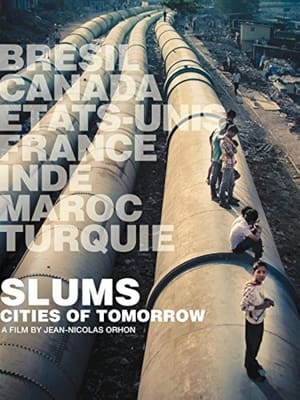
One billion people on our planet—one in six—live in shantytowns, slums or squats. Slums: Cities of Tomorrow challenges conventional thinking to propose that slums are in fact the solution, not the problem, to urban overcrowding caused by the massive migration of people to cities. (Lynne Fernie, HotDocs)
The British architect based in Stockholm looks back on major projects of a long career inspired by European Modernism combined with his personal sensitivity to nature and community. Erskine is especially valued for his vital understanding of social interaction, exemplified in commissions for universities and housing complexes built from Scandinavia to Italy. The architect takes the camera on a tour of his buildings while offering revealing comments and interpretations.
Minimalist documentary by Rax Rinnekangas about the wooden cottage "La Cabanon" designed and built in 1952 by Swiss architect and furniture designer Le Corbusier - a refuge intended for a single person with a living space of only 3.66 x 3.66 meters. The construction followed Corbusier's maxim that architecture must adapt to the human body and not vice versa.
A portrait of the internationally acclaimed Japanese architect who employs Buddhist ideas and western modernism to achieve intercultural architecture.
Kamenná sláva
This film features some of the most important living Postmodern practitioners, Charles Jencks, Robert A M Stern and Sir Terry Farrell among them, and asks them how and why Postmodernism came about, and what it means to be Postmodern. This film was originally made for the V&A exhibition 'Postmodernism: Style and Subversion 1970 - 1990'.