First ever Bangladeshi feature film. The film about a conflict between two family members.
Director: Sheikh Niamat Ali Writers: Sheikh Niamat Ali (dialogue), Sheikh Niamat Ali (screenplay) | Stars: Humayun Faridi, Bobita, Dolly Anowar
Biopic of the Bengali revolutionary nationalist, Pritilata Waddedar, who had a great amount of influence in the Indian Independence Movement. She is known for leading fifteen revolutionaries in the 1932 armed attack on the Pahartali European Club.
John Smith, a middle-aged married man, is made redundant by his employer; at a loss and despairing, his friend Harry Jones suggests applying to the Embankment Fellowship Centre, a charity that provides hostelling, retraining and help finding work for men in his position.
A deadly riot breaks out after unfair labor practices at a garment factory raises tensions between Mexican and Chicano workers.
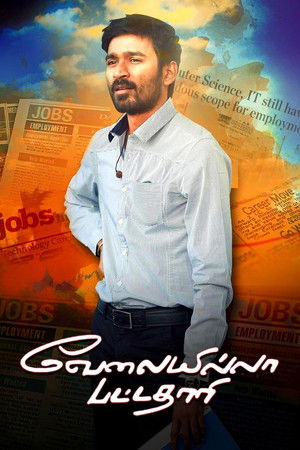
Caught between her middle-class background and her rich university friends, Urbi navigates a world of wealth and privilege. But as she chases her dreams, she falls into a life-changing chaos, paying a high price for her ambitions.
When a promised job for Texan Michael fails to materialize in Wyoming, Mike is mistaken by Wayne to be the hitman he hired to kill his unfaithful wife, Suzanne. Mike takes full advantage of the situation, collects the money, and runs. During his getaway, things go wrong, and soon get worse when he runs into the real hitman, Lyle.
This drama centers on Hank Chinaski, the fictional alter-ego of "Factotum" author Charles Bukowski, who wanders around Los Angeles, CA trying to live off jobs which don't interfere with his primary interest, which is writing. Along the way, he fends off the distractions offered by women, drinking and gambling.
In a working-class quarter of Dublin, 'Bimbo' Reeves gets laid off from his job and, with his redundancy payout, buys a van and sells fish and chips with his buddy, Larry. Due to Ireland's surprising success at the 1990 FIFA World Cup, their business starts off well, but the relationship between the two friends soon becomes strained as Bimbo behaves more like a typical boss.
An advertising man is slowly sliding downhill. When he is fired from his job in Detroit, he signs up for unemployment. One day they find him a job: teaching thinking skills to Army recruits. He arrives on base to find that there is no structure set up for the class.
Shirja Mia is grave digger. He begs from village to village to get death news. Now he has only two things in his life. One is a doll which he bought for his daughter and other is a number which he has got from his ancestors. His ancestors believed that if someone could dig hundred graves he would surely be placed in heaven. But no one could ever reach the target. When shirja was young he came to a Char and got married. They had a lovely daughter named Rahela. He had to go to town for work. Rahela asked for a doll from the town. One day Shirja bought a doll, but he couldn't come back to Char due to bad weather. Next day he heard that the tidal bore had washed out the Char. Later he came back to Char. But he didn't find his daughter and wife anywhere. The Char was full of dead bodies. At that time he started digging graves. When one grave left to reach the hundredth, he falls in big crisis with a girl like his daughter. Will Shirja be able to complete one hundred graves?
When a western Pennsylvania auto plant is acquired by a Japanese company, brokering auto worker Hunt Stevenson faces the tricky challenge of mediating the assimilation of two clashing corporate cultures. At one end is the Japanese plant manager and the sycophant who is angling for his position. At the other, a number of disgruntled long-time union members struggle with the new exigencies of Japanese quality control.
When a man is diagnosed with terminal cancer, he takes custody of his misanthropic teenage son, for whom quality time means getting high, engaging in small-time prostitution, and avoiding his father.
Young, impulsive Rosetta lives a hard and stressful life as she struggles to support herself and her alcoholic mother. Refusing all charity, she is desperate to maintain a dignified job.
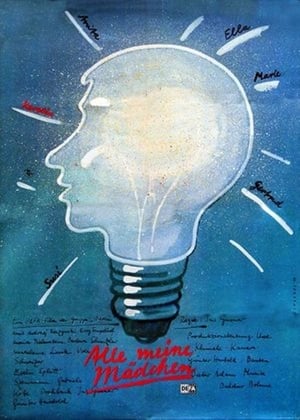
Ralf Paeschke is a film student who has to make a documentary film about a group of women working in a lamp factory. There is brazen Susie, mischievous Kerstin, lonely Anita, single Ella, withdrawn Gertrud and the imposing forewoman. When Kerstin is suspected of stealing, tension among the women mounts. Ralf demands that things be clarified, and his film plays an unexpected role in the matter.
Set in Genoa, the film concerns the financial struggles and emotional strain that occur after Michele loses his job. He and his wife Elsa are forced to give up their affluent lifestyle and cope with the tensions of moving into a smaller home, finding new work, and making sacrifices.
Kuhle Wampe takes place in early-1930s Berlin. The film begins with a montage of newspaper headlines describing steadily-rising unemployment figures. This is followed by scenes of a young man looking for work in the city and the family discussing the unpaid back rent. The young man, brother of the protagonist Anni, removes his wristwatch and throws himself from a window out of despair. Shortly thereafter his family is evicted from their apartment. Now homeless, the family moves into a garden colony of sorts with the name “Kuhle Wampe.”
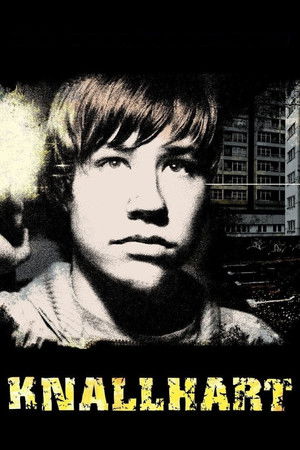
From the youth directed novel of the same name by Greogor Tressnow comes a film by Detlev Buck that is a realistic portrait of life in the section of Berlin called Neukölln. It’s about power and weakness, delinquents and victims, and the difficulties a 15-year-old faces in a poor and criminal environment.
A drama about a Maori family living in Auckland, New Zealand. Lee Tamahori tells the story of Beth Heke’s strong will to keep her family together during times of unemployment and abuse from her violent and alcoholic husband.