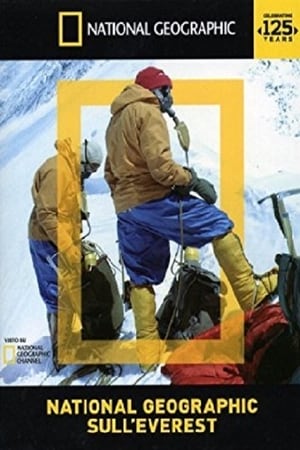
2006 was one of the deadliest Everest seasons on record. Experienced mountaineer Lincoln Hall was invited to join an expedition as a high altitude cameraman. It was his second attempt to summit the mountain, having turned back just short 22 years earlier. Shortly after reaching the summit, Hall began to behave irrationally, suffering from lack of oxygen. Aided by his loyal Sherpas for over 9 hours, he eventually collapsed and they declared him dead. His family were informed and the news hit headlines. But something happened that night that science cannot explain. The next morning Lincoln Hall was found alive by approaching climbers and his dramatic rescue began. Never before has a man been declared dead so high on Everest and survived. This is the remarkable true story of Lincoln Hall’s extraordinary journey back from beyond.
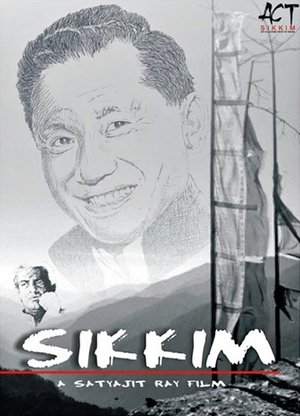
Satyajit Ray's poetic documentary was commissioned by the Chogyal (King) of Sikkim at a time when he felt the sovereignty of Sikkim was under threat from both China and India. Ray's documentary is about the sovereignty of Sikkim. The film was banned by the government of India when Sikkim merged with India in 1975. The ban was finally lifted by the Ministry of External Affairs in September 2010. Preserved by the Academy Film Archive in 2007.
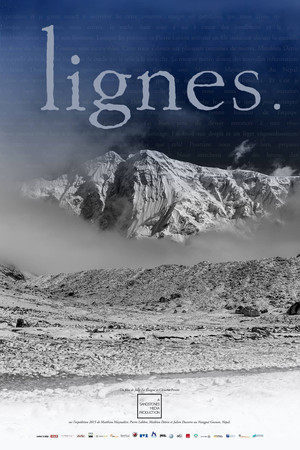
When you embark on an expedition to the other side of the world, things rarely go as planned. In the spring of 2024, mountaineers and friends Charles Dubouloz and Symon Welfringer flew to the Himalayas with the goal of climbing Gyachung Kang, a peak of over 8,000 meters on the Tibetan side. But faced with the conditions they encountered there, they revised their plans and headed towards Hungchi, on the Nepalese border. There, they opened a 1,700-meter route in pure alpine style, named The Headless Rider.
Sven has a dream. Once in his life he wants to walk the Camino de Santiago - the Way of St. James. But that seems impossible, Sven has Usher syndrome, a disease which slowly, inexorably robs him of hearing and vision. Profoundly deaf and completely blind since 2010, he can only communicate using a special hearing aid in the spoken language.
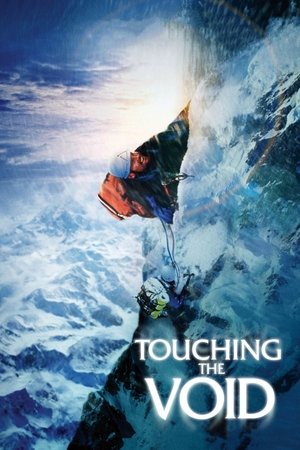
The true story of Joe Simpson and Simon Yates' disastrous and nearly-fatal mountain climb of 6,344m Siula Grande in the Cordillera Huayhuash in the Peruvian Andes in 1985.
Le Dernier Voyage de Patrick Edlinger
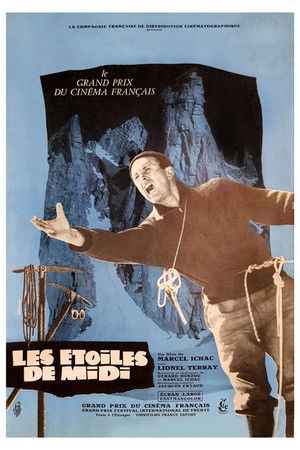
Les Etoiles de Midi is an engaging docudrama about some of the more spectacular exploits of French mountain climbers over the last several decades. In one re-enacted story, there is a wartime escape through the mountains, and in another, a daring rescue of a pair of climbers who had been missing. The actors themselves are adept at the sport of climbing, and they give the scenes an immediacy and real daring that brings the stories alive. A combination of their acrobatics and skill and the outstanding episodes in the history of French climbing creates a winning 78 minutes.
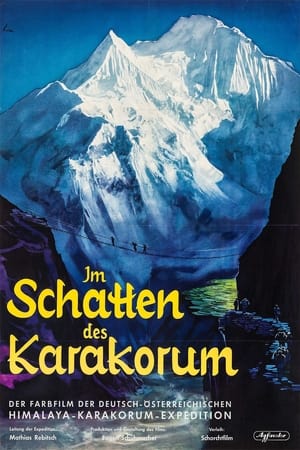
In 1954, a German-Austrian expedition led by Mathias Rebitsch set off for the difficult-to-access Karakoram Mountains, geographically north of the Himalayas. They come across the Hunza, a people who live in the valley of the same name and believe they are descended from the soldiers of Alexander the Great. The documentary conveys impressions of the poor life of the Hunza people, the harvest, a court hearing, festivals and the children's everyday school life. Finally, the expedition sets off again and sets up its main camp on the moraine ridge of a glacier, where they measure the glacier and the earth's magnetic field. Finally, some men from the research community set off for a sub-peak of Batura.
Brian Blessed plays George Mallory in this intrepid recreation of his ill fated 1924 climb to Everest. Meeting Sir Chris Bonington, Rheinhold Messnerhe learns of the pitfalls that await him before setting off for his epic struggle with the mountain. Against all odds he reaches 26000 feet on the North face of Everest, and is a changed man
Un Pic pour Lénine
In October 1984, Pierre Béghin, an engineer from Grenoble, and Jean-Noël Roche, a high-mountain guide, completed the Himalayan ascent of Dhaulagiri (8,172 m). The expedition's context: seven people crossed Nepal to Muri, collected accounts from trekkers—including that of the author Robert Rieffel—and attended Sherpa prayers at base camp. Then, the two of them embarked on a rocky and snowy route without supplemental oxygen. At over 5,000 meters, on the mountain of winds, Jean-Noël Roche made a paragliding flight. The climbers brought back footage with their Super 8 camera from 6,500 meters, but only photographs have been able to confirm their presence on the summit ridge of the seventh highest peak in the world.
On April 29, 1983, three French alpinists reached the summit of Jannu, having climbed its 7,710 meters via the very steep southwest spur. The success of Luc Jourjon, Jean-Noël Roche, and Roger Fillon echoed that of the 1962 national expedition, which had been celebrated by Lionel Terray alongside the leading climbers of the time, Desmaison, Paragot, Magnone… But in 1983, the goal was no longer simply to wave a French flag on a virgin summit. The focus was already on a more "alpine" style, and there was even the idea of descending from the top… by air!
Avoir 16 ans et toutes ses Andes
Annapurna, premier 8000 à ski
Dhaulagiri - 1ère hivernale française 1987
After reading the book "Guide to Hoggar Climbing," guide Pierre Agresti and his wife Isabelle Agresti set off into the Hoggar massif in the Algerian Sahara and tackled the west face of Garet El Djenoun. After a first attempt in 1967, they successfully reached the summit in 1970 and, with an old camera, made a film that remained unused for 25 years. In 1996, they decided to bring the past back to life through the ascent and encounters with the Tuaregs in the rock salt mines of Amadror. The film was shown in competition at the Trento Film Festival in 1997.
“Roche” from father to son… Bertrand Roche, nicknamed Zébulon, the spring-loaded character from The Magic Roundabout, comes from his inability to stay still. At 11, he reached the summit of Mont Blanc, which he has since climbed more than fifteen times. At 12, he took up paragliding and, in the United States, climbed the famous Nose face of El Capitan in Yosemite with his father, Jean-Noël Roche, known as Pap’s, a renowned Himalayan mountaineer and paraglider. He was filmed during this journey by Philippe Lallet and became the central figure in the documentary film Pap’s and Zébulon, as well as in the book written by Jean-Noël Roche and Claude Roche: Pap’s and Zébulon, or, The Extraordinary Adventures of a 12-Year-Old Mountaineer.
The story of Enrique Herreros (1903-1977), cartoonist, advertiser, poster designer, talent manager, actor, producer and filmmaker, and the most daring of mountaineers; the man who, along with his companions from the so-called “other Generation of '27,” brought Hollywood to Madrid's Gran Vía, turning a grey and sinister post-war city into the capital of an incipient and ambitious cultural industry.
NOVA documentary inquiring into the fate of early Everest explorers George Mallory and Sandy Irvine
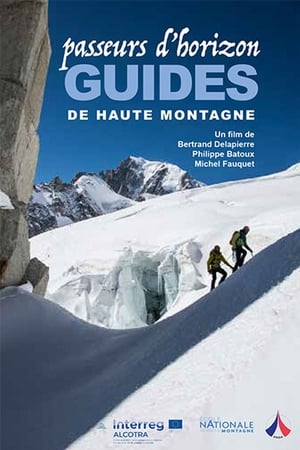
Established in 1821, the Compagnie des Guides de Chamonix is the first and largest guides' company in the world. Wiser for its historical organisation, this diverse community of self-employed professionals operates according to two rock-solid pillars: an in-turn work distribution and an emergency fund to support guides injured from work. Who are these women and men who have sworn allegiance to their passion for the mountains? How do they cope with the hazards that are inherent to their occupation? In other words, what does "being a guide" mean in 21st century, and what makes it so remarkable? Thanks to its numerous moving accounts, this films draws a warm portrait of the guides and takes the audience deep into a very unordinary group of professionals. Undoubtedly a sensitive documentary served with stunning images!