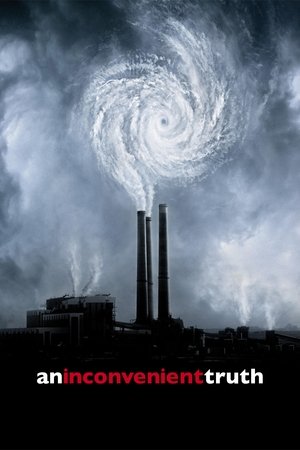
A documentary on Al Gore's campaign to make the issue of global warming a recognized problem worldwide.
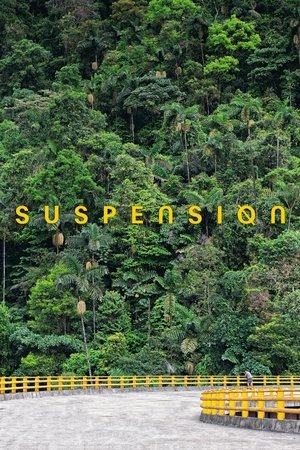
In the depths of the Colombian jungle, the skeleton of an immense abandoned cement bridge is tucked away. It has turned into a delusional tourist attraction.
Three farming families in Hanyuan, China, strive to give their children a good life in the midst of an ecological crisis, as widespread use of pesticides leads to a dramatic decline in bees and other pollinating insects in the valley.
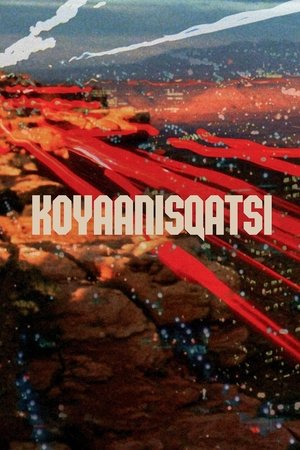
Takes us to locations all around the US and shows us the heavy toll that modern technology is having on humans and the earth. The visual tone poem contains neither dialogue nor a vocalized narration: its tone is set by the juxtaposition of images and the exceptional music by Philip Glass.
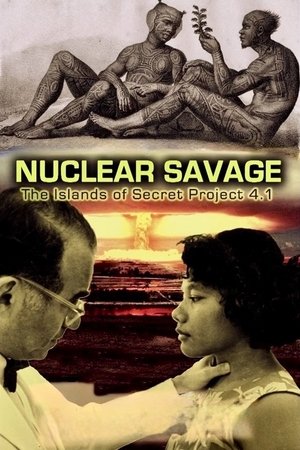
A shocking political exposé, and an intimate ethnographic portrait of Pacific Islanders struggling for survival, dignity, and justice after decades of top-secret human radiation experiments conducted on them by the U.S. government.
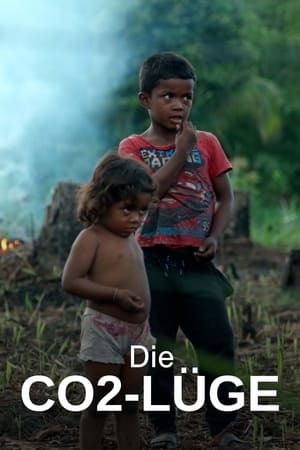
Die CO2-Lüge
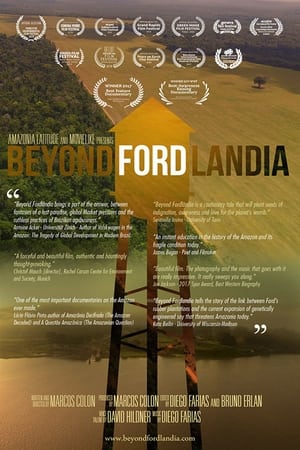
An environmental account of Henry Ford’s Amazon experience decades after its failure. The story addressed by the film begins in 1927, when the Ford Motor Company attempted to establish rubber plantations on the Tapajós River, a primary tributary of the Amazon. This film addresses the recent transition from failed rubber to successful soybean cultivation for export, and its implication for land usage.
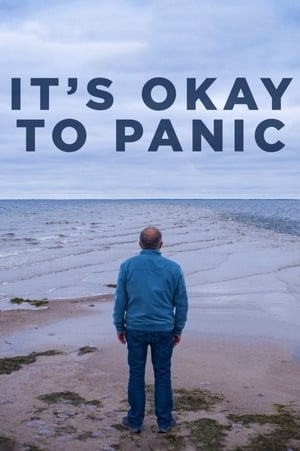
"It's Okay to Panic" is a nostalgic portrait of Professor Szymon Malinowski, a 62-year-old atmospheric physicist at the University of Warsaw who worries that climate change may cause human civilisation to collapse in the coming decades. A career educator, Prof. Malinowski studies phenomena leading to climate changes and for years he has been raising the alarm about the threats we face. The film visits him at a moment when he must deal with a personal tragedy which prompts him to evaluate the way his country has changed during his lifetime, for better and for worse.
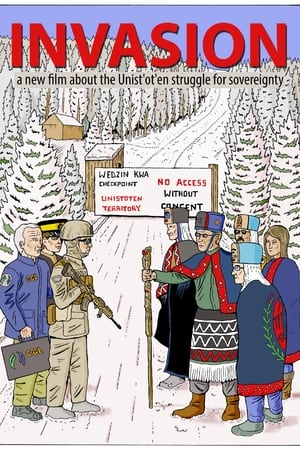
In this era of “reconciliation”, Indigenous land is still being taken at gunpoint. Unist’ot’en Camp, Gidimt’en checkpoint and the larger Wet’suwet’en Nation are standing up to the Canadian government and corporations who continue colonial violence against Indigenous people. The Unist’ot’en Camp has been a beacon of resistance for nearly 10 years. It is a healing space for Indigenous people and settlers alike, and an active example of decolonization. The violence, environmental destruction, and disregard for human rights following TC Energy (formerly TransCanada) / Coastal GasLink’s interim injunction has been devastating to bear, but this fight is far from over.
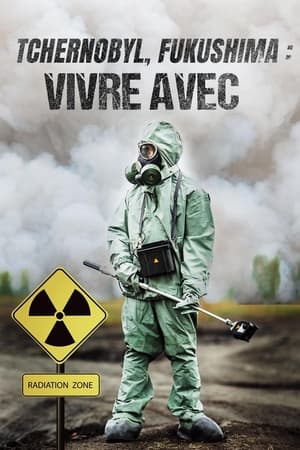
30 years after the Chernobyl catastrophe and 5 years after Fukushima it is time to see what has been happening in the “exclusion zones” where the radioactivity rate is far above normal.
The unprecedented bushfire crisis that struck Australia during the 2019-2020 summer sparked numerous controversies and its abnormality revealed underlying major issues with bush management and Australia’s part in contributing to global warming. Experts in politics, ecology and land management stress the importance of adjusting to the new reality of extreme weather conditions and most importantly adopting methods to reduce global warming. Can our past save our future?
An immersive journey into the world of wild horses, Wild Beauty illuminates both the profound beauty, and desperate plight faced by the wild horses in the Western United States. Filmmaker Ashley Avis and crew go on a multi-year expedition to uncover the truth in hopes to protect them, before wild horses disappear forever.
An account of the last two centuries of the Anthropocene, the Age of Man. How human beings have progressed so much in such a short time through war and the selfish interests of a few, belligerent politicians and captains of industry, damaging the welfare of the majority of mankind, impoverishing the weakest, greedily devouring the limited resources of the Earth.
Kherson, Ukraine's embattled city, has endured invasion, occupation, and liberation. On February 24, 2022, Russian tanks entered Kherson, leading to brutal occupation marked by violence. Despite being outnumbered, local defense forces resisted, and citizens protested under the slogan "Kherson is Ukraine!" An underground resistance formed, led by brave individuals like journalist Valentyna and others who risked arrest and torture to support the cause. After nine months, Ukrainian forces liberated Kherson, but Russian destruction left the city in chaos. Shelling and drone attacks became relentless, and in June 2023, a dam explosion flooded the city, causing further devastation. Despite these challenges, Kherson's spirit remained unbroken, with citizens embracing arts and resilience. By August 2024, drone attacks specifically targeted civilians, yet the city resisted, determined to rebuild and reclaim its identity, refusing to succumb to ruin.
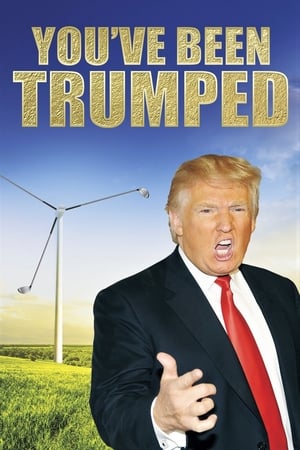
In this David and Goliath story for the 21st century, a group of proud Scottish homeowners take on celebrity tycoon Donald Trump as he buys up one of Scotland's last wilderness areas to build a golf resort.
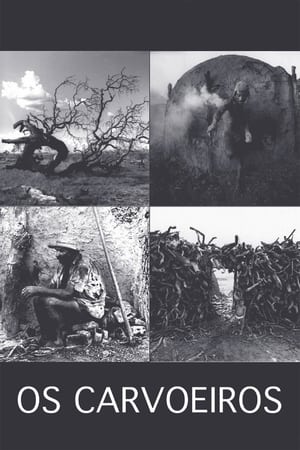
This deeply human documentary examines the subject of environmental destruction, highlighting the impoverished migrant workers who are chopping down the Amazon rainforest to create charcoal for pig iron production used primarily in the automobile industry. The film examines the children and elders and their daily lives and work as they burn timber in igloo-looking huts, their bodies charred gray for $2 a day, struggling to survive.
Climate is changing. Instead of showing all the worst that can happen, this documentary focuses on the people suggesting solutions and their actions.
A magic realist fable about invisible elves, financial collapse and the surprising power of belief, told through the story of an Icelandic woman - a real life Lorax who speaks on behalf of nature under threat.
Ecumenopolis: City Without Limits" tells the story of Istanbul and other Mega-Cities on a neo-liberal course to destruction. It follows the story of a migrant family from the demolition of their neighborhood to their on-going struggle for housing rights. The film takes a look at the city on a macro level and through the eyes of experts, going from the tops of mushrooming skyscrapers to the depths of the railway tunnel under the Bosphorous strait; from the historic neighborhoods in the south to the forests in the north; from isolated islands of poverty to the villas of the rich. It's an Istanbul going from 15 million to 30 million. It's an Istanbul going from 2 million cars to 8 million. It's the Istanbul of the future that will soon engulf the entire region. It's an Istanbul nobody has ever seen before.
In 1980, the eruption of Mount St. Helens leveled 230 square miles, sent 540 million tons of ash and volcanic rock twelve miles into the air, and blasted one cubic mile of earth from the crest of the Cascade Mountain Range. Illustrates the terrifying fury of the most destructive volcanic disaster in American history through aerial photography and survivors' own words. Shows examples of nature's plant and animal recovery seventeen years later.