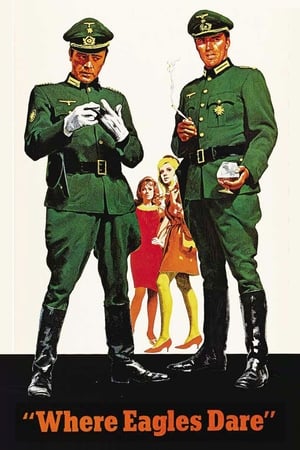
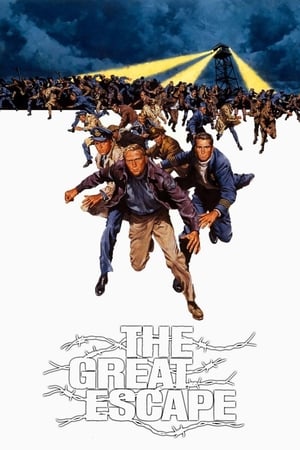
The Nazis, exasperated at the number of escapes from their prison camps by a relatively small number of Allied prisoners, relocate them to a high-security 'escape-proof' camp to sit out the remainder of the war. Undaunted, the prisoners plan one of the most ambitious escape attempts of World War II. Based on a true story.
Der Ruf der Berge - Schatten der Vergangenheit
Movie about David Lama climbing the Patagonian mountain Cerro Torre for the first time free, a mountain that has been dubbed the most difficult to climb in the world.
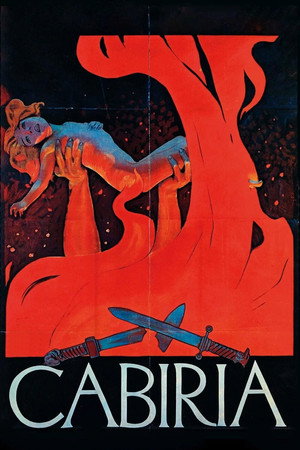
Young Cabiria is kidnapped by pirates and sold as a slave in Carthage. Just as she's to be sacrificed to Moloch, Cabiria is rescued by Fulvius Axilla, a good-hearted Roman spy, and his powerful slave, Maciste. The trio are broken up as Cabiria is entrusted to a woman of noble birth. With Cabiria's fate unknown, Maciste punished for his heroism, and Fulvius sent away to fight for Rome, is there any hope of our heroes reuniting?
After being wrongfully convicted for stealing a pair of shoes, Stanley Yelnats is sent away to Camp Green Lake, a boys detention facility where inmates are forced to dig holes all day in the hot desert sun as a form of character building. As he endures the brutal routine, Stanley begins to uncover a hidden truth behind the camp—one that connects to a dangerous secret and his family’s history.
Climber Patrick Edlinger visits various climbing areas in the American West, including Joshua Tree (routes and bouldering), Yosemite (bouldering), Hueco Tanks (bouldering), and Smith Rock (routes). He is seen climbing alongside Russ Clune, Ron Kauk, Jean-Paul Lemercier, and Todd Skinner in numerous sequences accompanied by Native American-inspired music composed by Benoît Fromanger. Less well-known than his two previous films, "La Vie au bout des doigts" and "Opéra Vertical," it remains a benchmark for all climbing enthusiasts and admirers of Edlinger, the world's most famous climber. His familiar voice provides narration throughout many sequences with iconic phrases that encapsulate the man, such as: "Climbing, this useless thing to which I dedicate my life."
A classical art professor and collector, who doubles as a professional assassin, is coerced out of retirement to avenge the murder of an old friend.
North Face tells the story of two German climbers Toni Kurz and Andreas Hinterstoisser and their attempt to scale the deadly North Face of the Eiger.
They call it the savage mountain. 27 people have perished trying to reach the summit on K2, the world's second highest peak. A U.S. climbing team, funded by millionaire Clairborne is determined to conquer K2.
In 1975, a woman reached the summit of Mount Everest: Junko, the first woman in history to reach the world's highest peak. Junko's unforgettable feat stunned the world, bringing her into the spotlight but casting a huge shadow over her friends and family. Despite being diagnosed with a terminal illness in her final years, Junko continued to challenge the mountains. What was the last thing she saw beyond the summit?
Berhault
“The Conquerors of the Impossible: Group Portrait” is a documentary on free climbing which takes place in the Verdon Gorges and Toulon. It was directed by Bernard Dumont in 1986 and produced by Les Films du Soleil. It is part of the series The Conquerors of the Impossible (3-3). There we find Patrick Berhault, Patrick Edlinger, Eric Escoffier, Christophe Profit, Laurent Chevallier, Jean-Paul Janssen and other pioneers of free climbing.
First film in a series of three with Over-Ice and Oversand and one of the first films on free climbing shot in the cliffs of the Gorges du Verdon in several parishes. We meet a certain Patrick Edlinger, Patrick Bérhault, but also Jean-Marc Troussier, Jacques Perrier, Stéphane Troussier, Hugues Jaillet, Gilbert Thomann, Odette Schoënleb, Bernard Gorgeon, Christian Guyomar. Thanks to the program Les Carnets de l'aventure, then broadcast on Antenne 2, and its producer Pierre-François Degeorges, this film was made. The chain gave its production agreement during the day, while the climbing was very confidential, no one knew Patrick Edlinger and the project itself contained only a few lines on a sheet
A former Fascist takes his son and escapes across the border into France, where he tries to avoid being recognized and having to pay for his wartime crimes.
In the years before World War II, a tomboyish postulant at an Austrian abbey is hired as a governess in the home of a widowed naval captain with seven children and brings a new love of life and music into the home.
When an experimental atomic rocket crashes somewhere off-radar, its three developing scientists are joined by three Air Force men in tracking it down to a small Pacific island, where it apparently has landed on the plateau of the island's steep-walled, taboo mountain...
Two lifelong friends bond whilst vacationing in a luxury Swiss Alps lodge as they ponder retirement. While Fred has no plans to resume his musical career despite the urging of his loving daughter Lena, Mick is intent on finishing the screenplay for what may be his last important film for his muse Brenda. And where will inspiration lead their younger friend Jimmy, an actor grasping to make sense of his next performance?
He climbed solo, without a rope, the north face of the Eigers in 2h47. Below him the rock wall steigen über 1000 Meter ab. Mehr Ueli Steck, the lone wolf, does not lose his temper. For a year, Steck has meticulously prepared this record of less than three hours. The portrait of an extraordinary man who takes us on a journey to the most beautiful and challenging peaks in the world.
Six big north faces of the Alps. The film consists of six films: "Die Wand der Wände" (Eger by Robert Jasper, Roger Schäli), "Das letzte Wort hat der Berg" (Matterhorn by Michael Lerjen, Jorge Ackermann), "Selig, wer in Träumen stirbt" (Grandes Jorasses by Felix Berg, Robert Steiner), "Licht und Schatten" (Piz badile by Hansjörg Auer), "Grenzen der Felskletterei" (Drei Zinnen by Alexander Huber) and "Der zerfallene Berg" (Petit Dru by Steve House, Andy Parkin).
For nearly three years, director Dina Khreino interviewed world-class mountain climbing athletes, listening to what compels them to leave behind families, friends, and everyday comforts to risk everything for a fleeting glimpse into the unknown. What she found was a tribe, a diverse group of professional adventurers and amateur philosophers forged by the ultimate test of body, mind, and spirit. In the face of shifting winds, sheer granite cliffs, and impossible odds, they climb. Each for their own reason, but every one connected by the vertical world. In this rarefied air, these athletes are fundamentally changed, not just as climbers, but as human beings.