The modern history of the Congo, the heart of Africa, is a terrifying tale of appalling brutality: how the greedy and incredibly ruthless King Leopold II of Belgium (1935-1909) turned a vast country into his private estate (1885-1908) and how he plundered the land and raped the bodies and souls of its defenceless inhabitants, causing countless victims; and what exactly is the true impact of this often forgotten story of crime and horror today.
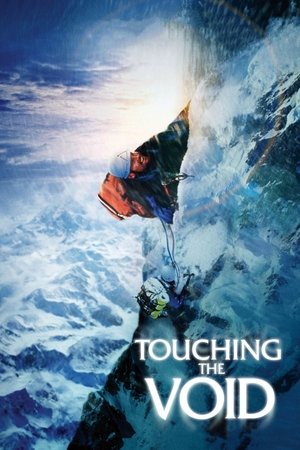
The true story of Joe Simpson and Simon Yates' disastrous and nearly-fatal mountain climb of 6,344m Siula Grande in the Cordillera Huayhuash in the Peruvian Andes in 1985.
This documentary outlines the unique properties and latest studies of "Physarum Polycephalum", also known as Blob.
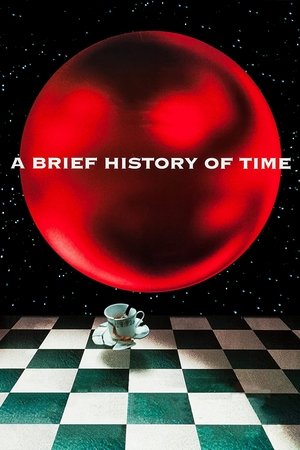
This shows physicist Stephen Hawking's life as he deals with the ALS that renders him immobile and unable to speak without the use of a computer. Hawking's friends, family, classmates, and peers are interviewed not only about his theories but the man himself.
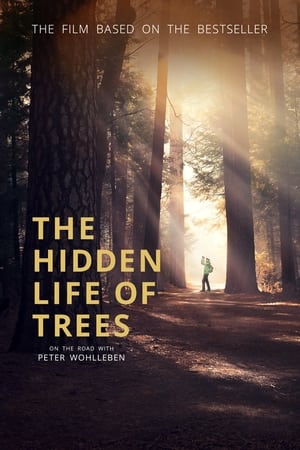
When Peter Wohlleben published his book "The Hidden Life of Trees" in 2015, he quickly entered bestseller lists. The forester wrote vividly about his experience that trees are able to communicate with each other, a thesis explored here.
A short kid from a Canadian army base becomes the international pop culture darling of the 1980s—only to find the course of his life altered by a stunning diagnosis. What happens when an incurable optimist confronts an incurable disease?
A series of images, music and sounds which transport through Mexico's history, without any narrative sequence. The film spins constantly round the question 'Where are the singers from?'
Directors Hetherington and Junger spend a year with the 2nd Battalion of the United States Army located in one of Afghanistan's most dangerous valleys. The documentary provides insight and empathy on how to win the battle through hard work, deadly gunfights and mutual friendships while the unit must push back the Taliban.
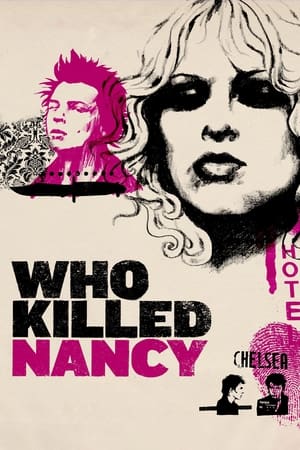
On October 12th, 1978, New York Police discovered the lifeless body of a young woman, slumped under the bathroom sink in a hotel room. She was Nancy Spungen, an ex-prostitute, sometimes stripper, heroin addict, and girlfriend of Sex Pistols' bassist Sid Vicious.
A fresh new look at Lolita, the famous and controversial novel published in 1955 by Russian writer Vladimir Nabokov (1891-1977), a masterpiece of English-language literature that has been constantly misinterpreted by countless readers who have mistakenly turned its young heroine into an erotic icon.
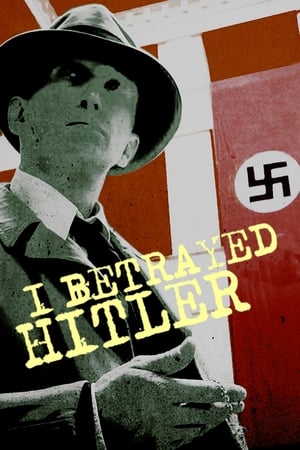
A keen chronicle of the unlikely rise to power of Adolf Hitler (1889-1945) and a dissection of the Third Reich (1933-1945), but also an analysis of mass psychology and how the desperate crowd can be deceived and shepherded to the slaughterhouse.
Speculative historical essay defending the theory, sustained by Spanish historian Celso García de la Riega (1844-1914) and his followers, that the famous explorer Christopher Columbus (1451-1506) was born in a small village near the city of Pontevedra, in the region of Galicia, Spain. (A new version was released in 1930.)
Paris, 1940. German occupation forces create a new film production company, Continental, and put Alfred Greven – producer, cinephile, and opportunistic businessman – in charge. During the occupation, under Joseph Goebbels’s orders, Greven hires the best artists and technicians of French cinema to produce successful, highly entertaining films, which are also strategically devoid of propaganda. Simultaneously, he takes advantage of the confiscation of Jewish property to purchase film theaters, studios and laboratories, in order to control the whole production line. His goal: to create a European Hollywood. Among the thirty feature films thus produced under the auspices of Continental, several are, to this day, considered classics of French cinema.
The film intertwines Roger Federer and Rafael Nadal's lives with their famed 2008 Wimbledon championship - an epic match so close and so reflective of their competitive balance that, in the end, the true winner was the sport itself.
In 1996 Chris Carter followed up THE X-FILES with the darker, arguably more sophisticated series MILLENNIUM, a gothic horror show that pit actor Lance Henriksen against a thousand points of darkness. The series ended abruptly in 1999, but the darkness remains. Fans yearning for Frank Black’s heroic return can revisit past nightmares and see glimpses of a hopeful future in the new feature-length documentary, MILLENNIUM AFTER THE MILLENNIUM.
Humanity’s ascent is often measured by the speed of progress. But what if progress is actually spiraling us downwards, towards collapse? Ronald Wright, whose best-seller, “A Short History Of Progress” inspired “Surviving Progress”, shows how past civilizations were destroyed by “progress traps”—alluring technologies and belief systems that serve immediate needs, but ransom the future. As pressure on the world’s resources accelerates and financial elites bankrupt nations, can our globally-entwined civilization escape a final, catastrophic progress trap? With potent images and illuminating insights from thinkers who have probed our genes, our brains, and our social behaviour, this requiem to progress-as-usual also poses a challenge: to prove that making apes smarter isn’t an evolutionary dead-end.
The epic life story of Alice Guy-Blaché (1873–1968), a French screenwriter, director and producer, true pioneer of cinema, the first person who made a narrative fiction film; author of hundreds of movies, but banished from history books. Ignored and forgotten. At last remembered.
Story Of Cotton Field
During the worst days of World War II, the British government asks the mathematician Alan Turing to unravel the mysteries of the German Enigma encryption machine, an impossible task to accomplish without the invaluable information that Hans-Thilo Schmidt, a disenchanted but greedy German citizen, had been handing over to the French secret services since 1931.
Inspired by the book of the same name, film-maker James Marsh relays a tale of tragedy, murder and mayhem that erupted behind the respectable facade of Black River Falls, Wisconsin in the 19th century.