Wolsong: Vanishing Town
About the question of whether we should proceed in developing and using nuclear power and the breakdown at Three Mile Island, Harrisburg, Pennsylvania, in March 28, 1979.
The focus of this film is on Canada's nuclear research centre at Chalk River, Ontario. Key to atomic progress are the radioactive isotopes. The insertion and handling of these isotopes in the deadly interior of the reactor are shown in detail. Also shown are the applications of radioactive isotopes in various fields of endeavor, particularly medicine, agriculture, and manufacturing industries. Co-produced by the NFB and Crawley Films Ltd. with the assistance of Atomic Energy of Canada Limited.
A narrated account of Atomic Energy of Canada's plan to construct permanent nuclear waste storage facilities in the geological formations of the Canadian Shield. Commissioned to Westminster Films Limited by the National Film Board for Atomic Energy of Canada Limited, Whiteshell Nuclear Research Establishment.
The Canadian program for nuclear fuel waste management is explained through interviews with people working inside and outside the nuclear industry and by a visit to the Whiteshell Nuclear Research Establishment, where a long-range used-fuel disposal program is being developed. Revised version from the film Nuclear Fuel Waste Management (106C 0179 542). Produced for the NFB by Crawley Films Ltd. for Atomic Energy Canada, Whiteshell Nuclear Research Establishment.
An account of the mining and refining of uranium showing how the development of energy from uranium is providing much of the world’s current needs. The film looks at the manufacturing of the uranium fuel used in CANDU lead reactors and explains the fission process, the fueling of reactors and the management of radioactive waste.
In October 2023, a European research team succeeded in generating an enormous amount of energy from very little fuel. A success that fusion research had been working towards for around 70 years. Now the competition for a fusion reactor has been reignited. What role can electricity from nuclear fusion play in the future?
Dr. Helen Caldicott is the most prominent anti-nuclear activist in the world. She's been featured on CNN, 60 Minutes, CBC and Democracy Now. In the 80s, Helen Caldicott campaigned against nuclear weapons testing in the pacific (still responsible today for the majority of tritium we're exposed to), and against the notion of a winnable nuclear war. She was nominated for a Nobel Peace Prize for her efforts. She has always made inaccurate statements regarding civilian nuclear power. But, since the Fukushima-Diachii radiation release has caused (and is projected to cause) zero fatalities... http://www.unis.unvienna.org/unis/en/... ...her tone has changed when speaking to supporters. This has not been acknowledged by prime-time media, as they continue to use her as a source. Any person or media outlet should check Caldicott's history of statements (on any subject) against a domain expert before using her as a source.
In this thrilling documentary, indomitable women fight back against the nuclear industry to expose one of the biggest cover-ups in US history: the 1979 Three Mile Island meltdown and its aftermath. The film reveals the never-before-told stories of four intrepid homemakers who take their case all the way to the Supreme Court, and a young female journalist who's caught in the radioactive crossfire.
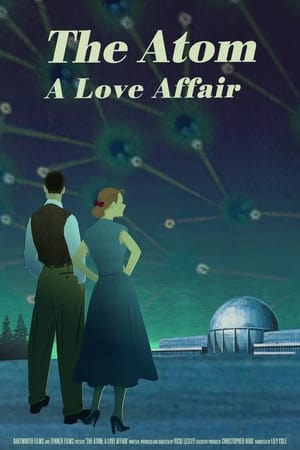
With a wealth of fantastic archive footage and a series of revealing interviews with those who had first-hand experience, filmmaker Vicki Lesley tells the turbulent story of the West’s love-hate relationship with a nuclear power over the past seventy years. Capturing both the tantalising promise and the repeated disappointments of this singular technology, the film reveals how the post-war, romantic fantasy of an Atom-powered future developed into the stormy, on-off relationship still playing out today. A tale of scientific passion and political intrigue all wrapped up in the packaging of a sentimental screen melodrama.
Farmers and parents of young children, who live in the Harrisburg, Pa., area, discuss their fears of radioactive contamination from the Three Mile Island nuclear reactor accident in 1979. Scientists and physicians also expound on the lethal dangers of nuclear power and the risks in containment processes.
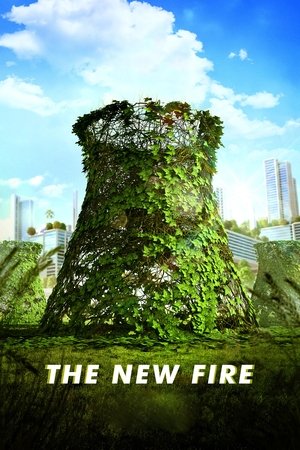
As the effects of climate change become more and more apparent, a new generation of nuclear engineers is on the rise, hoping to help solve this greatest environmental challenge humanity has ever faced. THE NEW FIRE is a documentary by Emmy-winning director David Schumacher, which provides a timely perspective on addressing climate change and global development. Nuclear energy has been vilified in much of the environmental community, yet the next-generation reactors currently in development may actually be the key to avoiding climate catastrophe
Who is Kim Yo-jong? In a context of maximum tensions between North Korea and the United States, Pierre Haski paints an unprecedented portrait of the little sister of Kim Jong-un, whose influence in Pyongyang is growing stronger day by day.
2025, the year of the intensification of a total and deadly war, which nothing and no one seems able to stop, targeting military personnel and civilians, and which has now claimed more than 1.5 million lives or left that many wounded on both sides. But 2025 is also the year of our break with Donald Trump's America, an America with violent and unpredictable reactions, which risks abandoning the old continent, its most loyal ally for 80 years, for Vladimir Putin. How can we stop this bloodshed on our doorstep? How can we contain the master of the Kremlin, a dictator whose predatory logic threatens to spread beyond Ukraine? Sabotage, ghost ships, interference operations, and drone flights: he is already waging a hybrid war against the rest of Europe. Is armed conflict between Europe and Russia now a possibility?
A comprehensive treatment of technical and engineering aspects of Canada's first large nuclear electric power plant at Douglas Point, Ontario. The film shows the design, machining and assembly of component parts, and the special properties of the materials that went into the construction, as well as some of the exhaustive tests that were made before the station went "on power." Produced for the NFB by Crawley Films Ltd. for Atomic Energy of Canada Limited.
An account of the building and bringing into operation of Canada's pioneer nuclear power plant - the Nuclear Power Demonstration Station (NPD), built in northern Ontario as a prototype for larger plants. The film explains the principle of nuclear fission. Produced by Crawley Films Ltd. for Atomic Energy of Canada Limited, Ontario Hydro and Canadian General Electric Company Limited.
Since the first film was made explaining the power of the atom, nuclear technology has made great advances. This film is an up-to-date account of the many areas of nuclear research and recent developments in Canada. It was filmed at the long-functioning atomic reactors at Chalk River and Rolphton, and at the latest and largest atomic power station at Pickering, as well as at laboratories across the land where experimentation is carried out in both pure and applied nuclear science. Produced for the NFB by Crawley Films Ltd. for Atomic Energy of Canada Limited.
The success of this first full-scale nuclear power station on the shores of Lake Huron has shown the way for the economic large-scale production of electricity from uranium. This film describes the plant at Douglas Point, Ontario, and the process by which the uranium atom is split, employing heavy water with a special property, deuterium, giving the name CANDU (Canada Deuterium Uranium) to the Canadian system of atomic energy production. Produced for the NFB by Crawley Films Ltd. for Atomic Energy of Canada Limited.
East of Toronto on the shore of Lake Ontario, is the Pickering Generating Station, one of the world's largest nuclear power stations. Here it is used to explain how a nuclear power station works, showing the fuel bundles, calandria, fuelling machines, boilers, control room, turbine-generator and spent fuel bay. Part of the multimedia kit The Energy Crisis?. Produced by the NFB for Energy, Mines and Resources Canada.
Nuclear power plants are not exactly sold on the same scale as wheat, but that they can be manufactured as an exportable commodity is well illustrated in this film. For those familiar with nuclear power generation, and even for the lay audience, this is a lucid exposition of how a nuclear power plant is put together. The film shows the machining and assembly of principal components, and the "on power" operation of the Canadian plant at Pickering, Ontario. Produced by the NFB for Atomic Energy of Canada Limited.