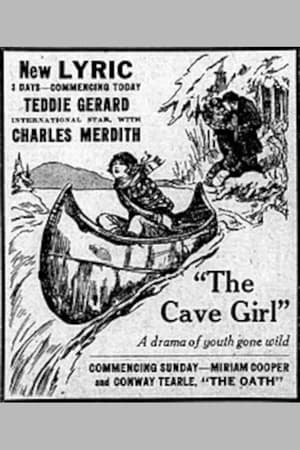
Henry Lamont, a wealthy miner, is mysteriously murdered. Trooper Joe Hammond, in the neighborhood, hears the shot and comes to the aid of Jeanne Lamont, who is at loss to explain the fatal attack on her father. The girl goes to live with her uncle, who has already been visited by a bogus trooper, who imparts the information that one of the Northwest Police is suspected of being 'the lone wolf,' a desperate criminal. Trooper Hammond, too, seeks 'the wolf.' Developments disclose that the bogus trooper was 'the wolf,' but not until the latter tries to file claim on a gold vein he is detected by the girl.
Tenderfoot Chauncey Day arrives in the small Southwestern boom town of Rawhide where Jackson Grade, the recorder of deeds, is accumulating his own fortune through falsifying documents. Authorized to offer miner Joel Brand $100,000 for his claim, Grade attempts to pocket $95,000 by bidding only $5,000. When Brand refuses the offer, Grade attempts extortion by faking his own murder at Brand's hands. Then Grade's accomplice Marsh threatens to have Brand arrested until the White Rider appears with proof of Grade's infamy, thus exposing the crooks. Justice served, the Rider reveals himself to be Tenderfoot Chauncey Day and wins the heart of Brand's daughter Jewel.
Based on the spy novel of the same name by Jacques Futrelle.
A regiment of cavalry surprises the Sioux and puts them to flight. Colonel Graham and others personally attend to the wants of the wounded, and the Colonel finds a wounded squaw in one of the tepees, with a little girl crouched in terror by her side.
A pioneer caravan is attacked by Indians, who greatly outnumber the pale faces. The whole party are massacred, with the exception of a year-and-one-half old baby, who being hidden by its mother, escapes detection. Whitey is a big, bashful cowpuncher, who secretly worships at the shrine of the only eligible woman in camp, a buxom widow.
Black Wolf, a brave, wants Whispering Water to be his squaw. Whispering Water is afraid of this taciturn Indian and refuses. He tries to carry her off but is stopped by another Indian, Brave Heart, and there is a savage light in which Black Wolf is worsted. He appeals to the chief to banish Brave Heart.
Bill Binks sold his ranch and came home in high glee, carrying the currency, for Bill didn't believe in banks. Bill tried to think of an unusual place to hide that currency and finally hit upon an old pair of boots, then Bill betook himself off without saying a word to his faithful helpmate.
John Allen is in love with pretty Mabel Trude and the honor conferred upon Allen by the community, electing him sheriff, aids Allen in pressing his suit. The engagement is announced. Tom Trude, the brother of Mabel, is a sort of shiftless fellow and is exceedingly unlucky at cards. It required but little argument on the part of the acknowledged best man of the community to win Tom over to his gang, as he hopes to make good his losses at cards in some manner other than actual labor. The post office is held up and the sheriff called upon to bring the perpetrators to justice. A lively encounter is followed by the escape and pursuit of one of the men. The sheriff himself takes up the chase and successfully runs down the man. To his consternation, it proves to be Mabel's brother. He passes their home with the prisoner in tow. Mabel argues and pleads, but to no avail, and she finally plays her largest card--her love, against her brother's liberty
At a party thrown by millionaire Max Goldberg, Charles Howard, an aristocratic young artist, succumbs to the charms of chorus girl Lita O'Farrell, Goldberg's erstwhile girl friend. After a whirlwind courtship, the two marry and then their incompatibilities begin to surface.
Jan Saxe and Peter Harlingen, two young men from Holland, arrive in America with little orphan Bertha Kruger whom they have befriended during the trip and whom they both love. Bertha has come to live with her blind Aunt Sophie, and when Jan secretly raises $500 for an operation to restore her aunt's sight, Bertha marries Peter, believing that he was the donor of the "secret gift."
On the day of the meeting which should settle the controversy regarding the Panama Canal, the Japanese Embassy commissioned Olga to obtain a copy of the agreement. The young Secretary to the Secretary of State became her dupe, but the detective succeeded in recovering the stolen treaty by a clever unwinding of threads taking thereby a desperate and thrilling chance.
In this film one is shown the contrast of two fathers. One father refuses to believe his son guiltless, while the other, fully realizing the weakness of his son, struggles to save him from further disgrace. In this attempt he exonerates the innocent youth, but at the same time exposes the guilt of his own son.
Three Who Paid is a 1923 American silent Western melodrama film directed by Colin Campbell, and starring Dustin Farnum, with Bessie Love and Frank Campeau. The film was based on the 1922 short story by George Owen Baxter,
One man squanders a fortune and loses his house and sweetheart to another who strikes it rich.
An orphaned young woman rejects her appointed suitor and falls in love with her guardian.
A little girl and her father are among the settlers in a small western town. The father is very friendly with the neighboring Indian tribe and is presented with a quaint piece of metal representing a dragon's claw, the tribe's good luck omen. Some time later, while traveling with his daughter, he is held up by a band of bandits and shot dead. A bandit takes from him this dragon's claw. Years pass. The little girl has grown into a beautiful young lady. She marries. Their love is very real and their life most happy. He decides to go out west to see a mine that yields the richest gold and his wife expresses a desire to go along with him. The mine is christened "The Dragon's Claw," because of an Indian charm the man owns. While out on a western desert, he shows the dragon's claw to his wife. She then recognizes it as the kind her father possessed when he was killed. She has understood it to be the only one of its kind. She now believes it is her husband who killed her father.
A young girl is a talented violinist, and wins a scholarship in a school of music. In the village is a banker who is a deacon of a church of whom everybody is afraid. He convinces the father of the girl that music is leading her astray, and declares that the only way to save her is to make her his wife. The father falls dead at the wedding. A year later a child is born. The young wife leads a life of sorrow and abuse. The husband takes her violin away from her and refuses her girl friends permission to come and see her. When she rebels, he drives her out of the house. She goes to the city and makes a name for herself as a musician. Her husband, chagrined at her success, tries to worry her. He sends a box of crepe intimating that their baby is dead.
The story opens with Miss Leonard, now a woman past the prime of life, relating the sad, romantic story of her life to her dearest niece, who is engaged to be married. As in a vision, the story shifts back forty years and discloses the interior of an orphan asylum. Three babies are there, two boy babies and one baby girl, awaiting adoption into a good home. Years pass and the orphaned children have grown up in three different homes. Miss Leonard's dearest treasures are a pair of tiny baby shoes and a faded plaid shawl given to her foster parents by the asylum nurse.
Wealthy Joshua Anson expects his son Chadwick to marry a woman of their class, but much to his chagrin Chadwick falls in love with factory girl Mary McClintock. Anson schemes to break up the romance by framing Mary in a compromising situation, but she outsmarts him and marries Chadwick. Not to be defeated, Anson offers his daughter-in-law $100,000 to divorce his son, but Mary outfoxes him once again by accepting the money, getting a divorce, and then remarrying Chadwick. Mary's last trick wins her father-in-law's respect, and he finally offers the couple his blessings.
Cowboy Mark West lives on a ranch with his sister Mary, who suffers from a serious spinal disorder. Flighty East Coast socialite Violet Ridgeway flirts with Mark while vacationing at the ranch but returns to her fiancée, Dr. Welsh, when she leaves. Mark has been working hard to earn money for an operation Mary, which Doctor Welsh and Doctor Boyd agree to perform without telling him how dangerous it is. When Mary dies Mark receives a letter detailing the doctor’s risk-taking, filled with vengeance Mark kills Boyd, but Welsh flees to safety. Mark is imprisoned, but Violet convinces him to marry her, satisfying a stipulation in her late aunt's will. Mark escapes taking Welsh and Violet hostage. They are set upon by a villain and in the confrontation Welsh’s cowardly act shows Violet Mark’s true worth and the pair escapes to freedom across the Canadian border.