Jack Kerouac's life is examined through interviews with his contemporaries and friends including Allen Ginsberg, Lawrence Ferlinghetti and William S. Burroughs. The film also employs dramatic recreations of Kerouac's life beginning with his early childhood.
Exploring the rise and fall of the groundbreaking animated series Ren & Stimpy and its controversial creator, John Kricfalusi, through archival footage, show artwork and interviews with the artists, actors and executives behind the show.
Julien, le marais et la libellule
A visually stunning film on acclaimed author David Adams Richards and his connection to one of Canada’s most overlooked yet breathtaking regions.
This documentary film follows farmers and activists fighting together to stop the Indiana Enterprise Center, a mega-sized industrial park planned west of South Bend, Indiana
A documentary 33 years in the making. A director and friend of Kurt Vonnegut seeks through his archives to create the first film featuring the revolutionary late writer.
The making of Jerzy Kosinski. The BBC documentary on the life and art of enigmatic novelist Jerzy Kosinski. Through interviews with his second wife Kiki von Fraunhofer-Kosinski, friends and fellow authors, and Polish villagers who knew Kosinski when he was a child hiding from the scourge of Nazism, this program attempts to assess the verity of Kosinski's "autobiographical" fiction, the need for him to maintain a nebulous mystique about his early life, and to understand his obsession with S&M sex clubs in Manhattan during the 1970s and 1980s.
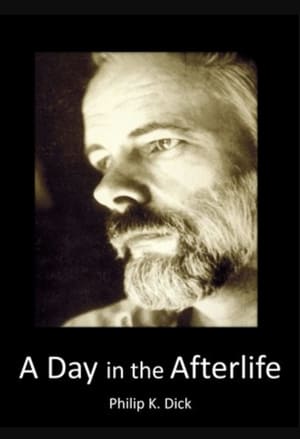
A poetic look at the life and legacy of legendary author Philip K. Dick (1928-1982), who wrote over a hundred short stories and 44 novels of mind-bending sci-fi, exploring themes of authority, drugs, theology, mental illness and much more.
Des Rives
Ted Hughes's 1993 novel The Iron Woman is the springboard for this multi-media project by Mikhail Karikis. The video section of the installation features seven-year-olds from Mayflower Primary School in East London discussing the novel's environmental themes.
From 1945 to 1989, after the capitulation of Nazi Germany, two rival ideologies, communism and capitalism, faced each other in a merciless battle. On one side of the Iron Curtain and on the other, throughout the Cold War, the USSR and the United States sought to shape children’s imaginations through their magazines and films. Never in the history of mankind have so many comic books been published and so many cartoons produced for young people. In November 1989, communism collapsed with the Berlin Wall; capitalism was left to decide the future of the world. What if this victory had been prepared for a long time, and our thinking conditioned, from our early childhood, to ensure this absolute triumph?
Helena is 17 years old and studies in Finland. Her father, a Swede, and her mother, indigenous Kichwa of Sarayaku, live at the heart of the Amazon in Ecuador.
To celebrate her 80th birthday, the Queen is holding a children's party in the grounds of Buckingham Palace. She has invited many classic characters from British children's literature. But when the baddies, led by Cruella de Vil, discover that they have not been invited, they steal the Queen's handbag containing her spectacles and the text of her speech; without it, the Queen will not be able to make a speech at the party. Can the goodies find the handbag in time?
Americans are preoccupied with the news, but need an escape from many of the events reported in the news. These escapes in the past have included dime store novels. The most accessible of these escapes is what are known as the funny papers, the set of serialized comic strips that are included within many newspapers. They appeal to all socio-economic classes, and all ages. Some of the earliest known from the late 19th century include the Yellow Kid, Little Nemo, Happy Hooligan, the Katzenjammer Kids, Mutt & Jeff, and Bringing Up Father. Many cartoonists are seen in action. Some originated their characters, while others have taken over following the passing of the originator. The joy of many comic strips are the absurd and the fantastical, which are limited only by the imagination of the cartoonist. Others are grounded in reality, which add to their poignancy within the public mindset.
The German documentary is dedicated to an influential figure of the 20th century: Petra Kelly spent her life campaigning for feminism, environmental activism, human rights and peace. She was a political co-founder of the Green Party in the 1970s and 80s and protested against nuclear missiles in West Germany at the height of the Cold War. Above all, however, she believed that one person could very well change the world and thus rose to become an icon of the peace movement.
J.R.R.T.: A Study of J.R.R. Tolkien is a 1992 documentary, narrated by Judi Dench, produced to celebrate the centenary of J.R.R. Tolkien's birth. It is sometimes called "J.R.R. Tolkien: A Portrait" and "J.R.R. Tolkien - An Authorized Film Portrait". It features archive footage and audio recordings of J.R.R. Tolkien, and interviews with three of his children Priscilla, John, and Christopher. It also includes interviews with Baillie Tolkien, Robert Murray, Queen Margrethe II of Denmark, Rayner Unwin, Tom Shippey, and Verlyn Flieger.
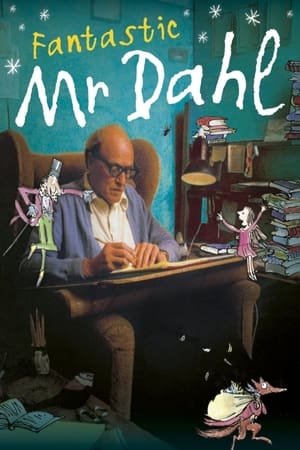
Documentary about author Roald Dahl, produced for the British television series Imagine.
Monumental: Ellie Goulding at Kew Gardens—will premiere on March 31, featuring global superstar Ellie Goulding performing select songs from her upcoming fifth studio album, Higher Than Heaven, for the first time.
Swedish documentary from 2012. "A devilish man who can do many arts". A portrait of August Strindberg (1849-1912), which in addition to his authorship also devoted to alchemy, photography, painting and music.
A documentary about the legendary series of nationally televised debates in 1968 between two great public intellectuals, the liberal Gore Vidal and the conservative William F. Buckley Jr. Intended as commentary on the issues of their day, these vitriolic and explosive encounters came to define the modern era of public discourse in the media, marking the big bang moment of our contemporary media landscape when spectacle trumped content and argument replaced substance. Best of Enemies delves into the entangled biographies of these two great thinkers, and luxuriates in the language and the theater of their debates, begging the question, "What has television done to the way we discuss politics in our democracy today?"