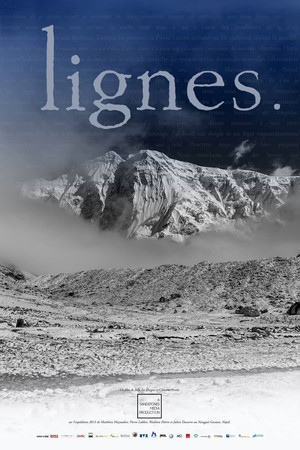
Lignes chronicles the sublime interplay between alpine literature and an expedition seeking the true meaning of mountaineering. Four high-mountain guides—Matthieu Maynadier, Pierre Labbre, Matthieu Détrie, and Julien Dusserre—embark on a project: to summit Nangpai-Gosum, an unclimbed 7,000-meter peak in Nepal, using the "alpine style" adapted to the Himalayas—the toughest and purest approach of all. Through this expedition, Lignes attempts to answer the question: "Why do we climb mountains?" Why, despite the harsh conditions and exhaustion, do these four Alpine guides pursue a perilous dream in a realm that belongs to no one? Lignes finds some answers in the past, drawing on 150 years of alpine literature. Serving as both narrator and seasoned guide, Raymond Renaud takes us on a tour of his books and speaks of the "conquerors of the useless"—from the turn of the century to the present day.
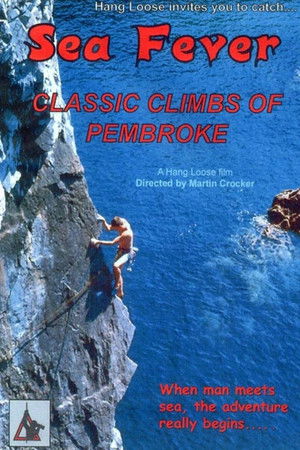
Sea fever is a documentary about rock climbing that takes place in Pembroke. It was directed by Martin Crocker in 2003 and produced by Hang Loose. It features Emma Alsford, Martin Crocker, Stefan Doerr, Paul Donnithorne, Sabine Eggert, Steve Findlay and others.
Tent bound in Devil's Bay is a documentary about rock climbing that takes place in Devil Bay. It was directed by Tim Kemple in 2011 and produced by Camp4 Collective. It features Alex Honnold, Hazel Findlay, James Pearson and Mark Synnott.
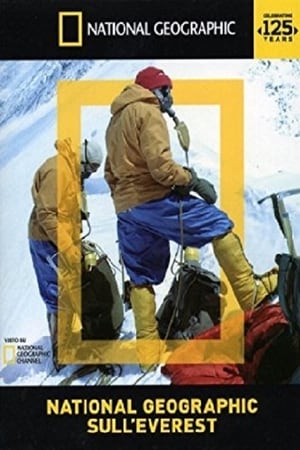
National Geographic sull'Everest
The American mountaineer Gary Hemming marked the era of the 1960s. The story of this "exceptional" character is intimately linked to that of the rescue of the two German mountaineers on the west face of the Drus, in 1966, a rescue which he had took the initiative. While the official emergency services of the EHM try to reach them from above, a pirate rope made up of Gary Hemming, René Desmaison, Lothar Mauch, Gil Bodin, Mike Brurke, François Guillot, the filmmaker Gérard Bauer organizes to join them from below and succeeded after a fierce struggle the rescue. The press seizes the event and elevates Gary Hemming to the rank of national hero. All the newspapers feature this big guy with a cool attitude, mismatched clothes, jovial smile and long blond hair on the front page. From then on, he was nicknamed: "the beatnik of the peaks".
Reinhold Messner - The Fifteenth 8000er
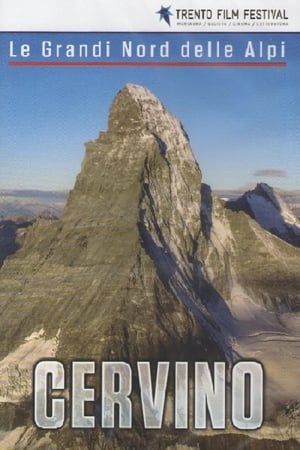
The Great North Faces of the Alps: Matterhorn
EpicTV invited four of the world's best climbers - Emily Harrington, Alex Megos, Hazel Findlay and Tommy Caldwell - to the birthplace of modern mountaineering, Chamonix, France, to test their skills in a challeng like no other: 4 days, 4 different routes in 4 completely different climbing styles. The climbers will try to free an unclimbed multipitch, open a secret boulder garden, climb a classic trad line on top of Aiguille du Midi and send some of the area's hardest sport routes. Tune in for the year's coolest climbing challenge!
In October 2014, Steve Wakeford, a sports broadcast editor, fell 70 metres whilst climbing a mountain known as Les Petites Jorasses in the French Alps. It was a fall that required him to be airlifted out of the mountains suffering from a number of serious injuries and resulted in him being temporarily left in a wheelchair - he is lucky to be alive. At the start of a long journey of rehabilitation, he began to ask himself some serious questions - 'Regardless of injury or trauma, why are we drawn to the mountains in the first place? Is risk an essential part of what we do? Perhaps most importantly, why is it that I am planning to climb the same route from which I fell?'
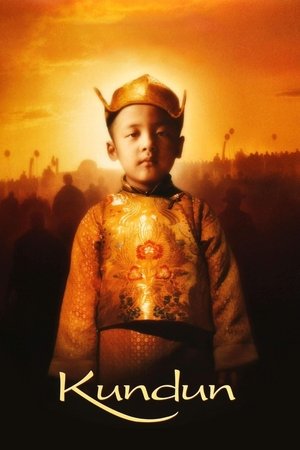
From childhood to adulthood, Tibet's fourteenth Dalai Lama deals with Chinese oppression and other problems.
27-year-old German alpinist Jost Kobusch wants to climb Everest, alone, without oxygen and in Winter, when the roof of the world is deserted.
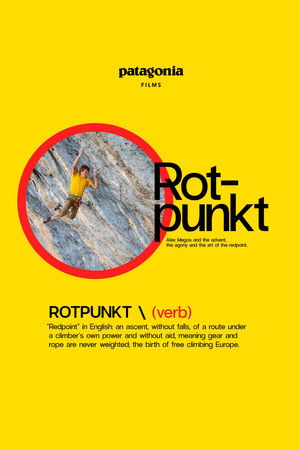
Rotpunkt documents the advent, the agony and the art of the redpoint through Alex Megos’s efforts to redefine the boundaries of the form. The film traces the redpoint—which transformed rock climbing from an engineering problem into a brilliant test of mental and physical strength—from its origins with a ragtag bunch of tights-wearing revolutionaries in rural Bavaria, to its golden era with Wolfgang Güllich, to its new ideal in the German phenom Megos as he battles to unlock new levels of human potential.
In February 1966, Pierre Mazeaud and Lucien Berardini traveled to the Atakor massif, in the Hoggar mountain range of the Sahara in southern Algeria. There, they attempted a challenging first ascent: the Takouba spur, one of the peaks adjacent to Garet El Djenoun, a legendary mountain in the Hoggar massif, first climbed by Roger Frison-Roche and Raymond Coche in 1935. The documentary, superbly filmed by Jacques Ertaud, won the Grand Prize at the Trento International Mountain Film Festival in 1966.
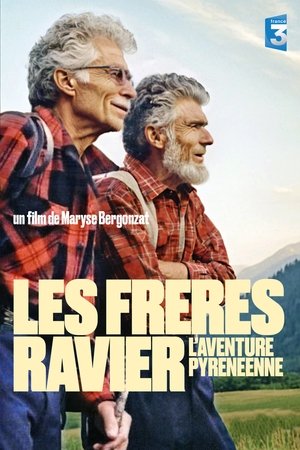
The two brothers Jean and Pierre Ravier have opened almost all the "classic" (difficult) routes in climbing and mountaineering in the Pyrenees. Roped together at the waist using a few flat knots and little equipment, the two twin brothers achieved more than 200 firsts across the entire massif. A unique style and commitment, a state of mind made up of adventure, literature, inventiveness and friendship. Unclassifiable and outgoing, after 60 years of Pyrenees, their desire for the mountains is intact. When does a race start? How does the idea, the desire, come about? What sense does it make to only achieve firsts? And what is the role of the Pyrenees themselves in this reciprocal and endless game of attraction?
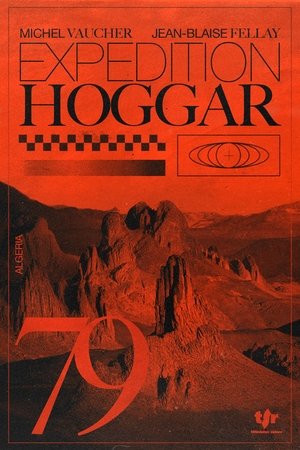
TSR documentary on the 1979 expedition to Algeria in the Atakor massif (Hoggar desert), organized by Geneva mountaineer Michel Vaucher and Jean-Blaise Fellay. The climbers make a dozen ascents including the famous summit of Adaouda (which means "finger" in Tamasheq, the Tuareg dialect), by several routes. Then a new route on the peaks of the southern Tezoulegs. They discover the volcanic geological characteristics of the Atakor massif and meet the nomadic inhabitants of the region, the Tuaregs, who are increasingly settling in the town of Tamanrasset.
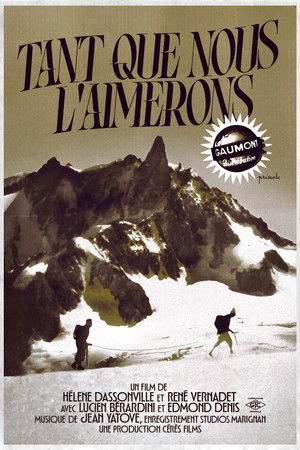
Lucien Berardini and Edmond Denis are two mountaineers who took part in the French expedition to Aconcagua (Andes Mountains) in 1954. Both suffered severe frostbite to their fingers and toes, and three years later, they set out to climb the Aiguille du Géant, a legendary route in the Mont Blanc massif. The camera closely follows the efforts of the roped party, an example of strength and self-sacrifice, until their victorious arrival at the summit.
Come fly with us in OVER ALASKA as we take off on a breathtaking tour of our 49th state. Soar over Mt. McKinley and through the craggy crevasses of electric blue glaciers. Follow the Iditarod and kayakers as they navigate past icebergs. Then touch down to Earth and get as close to bears, whales and wildlife as humanly possible.
The story of the ascent of the Aiguille de la République by mountaineers Jacques Fromentin and Michel Bastien. The Aiguille de la République, in the Mont-Blanc massif, culminates at an altitude of 3,305 meters among the Aiguilles de Chamonix group of summits. In the Fontainebleau forest, children learn mountaineering techniques on the bouldering climbing site. In 1954, rock climbing was also practiced in the Chamonix valley. The Montenvers train crosses the viaduct taking tourists or athletes to the Mer de Glace viewpoint. The two climbers take an approach step and reach the Envers des Aiguilles refuge. They then climb this steep and smooth wall, progressing along the ridge. On the platform, a rope throw allows them to climb up and sit at the top to dominate the panorama. Then the return: abseiling from the summit block.
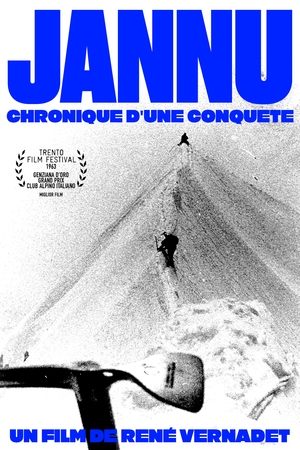
Three years after the 1959 expedition, abandoned 350m from the summit, Lionel Terray leads a new assault on Jannu, one of the most demanding peaks in the Himalayas. At the base camp, equipment and food rations are prepared. The conditions are optimal and the ascent can begin. The camera follows the progress of the mountaineers and Sherpas as closely as possible, from one high-altitude camp to another: installing fixed ropes, progressing over crevasses, in the middle of frozen towers, vertically down immense ice falls or along the edge of sharp ridges. From 7000m, oxygen bottles become essential, as the difficulty of the climb prevents acclimatization. The expedition is a total success: the majority of its members reach the 7710m summit.
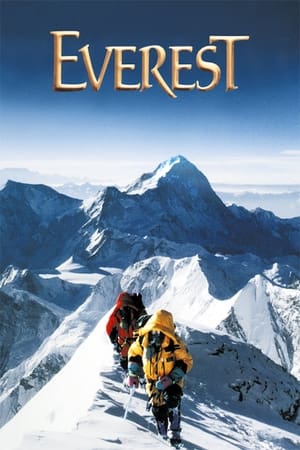
An international team of climbers ascends Mt. Everest in the spring of 1996. The film depicts their lengthy preparations for the climb, their trek to the summit, and their successful return to Base Camp. It also shows many of the challenges the group faced, including avalanches, lack of oxygen, treacherous ice walls, and a deadly blizzard.