In a dystopian America dominated by a tyrannical police state, a stirring revolution clashes with a forbidden romance.
Karnan, an angry young man, fights for the rights of his oppressed people. Can he save them from those who wield power and weapons?
After a chance encounter with a wanted man, a woman is harassed by the police and press until she takes violent action.
In 1987, five young men, using brutally honest rhymes and hardcore beats, put their frustration and anger about life in the most dangerous place in America into the most powerful weapon they had: their music. Taking us back to where it all began, Straight Outta Compton tells the true story of how these cultural rebels—armed only with their lyrics, swagger, bravado and raw talent—stood up to the authorities that meant to keep them down and formed the world’s most dangerous group, N.W.A. And as they spoke the truth that no one had before and exposed life in the hood, their voice ignited a social revolution that is still reverberating today.
Tells the story of one day in the lives of the various people who populate a police detective squad. An embittered cop, Det. Jim McLeod, leads a precinct of characters in their grim daily battle with the city's lowlife. The characters who pass through the precinct over the course of the day include a young petty embezzler, a pair of burglars, and a naive shoplifter.
What will be her last straw? A devastatingly bad day pushes a hardworking single mother to the breaking point — and into a shocking act of desperation.
After two years spent as a student in Boston, a 22-year-old visits his native Moldova. It is April 2009. People gather in the streets of Chisinau, the call having spread through social networking sites. They are demonstrating against the communist authorities who falsified the election results. They seize and plunder the parliament and presidential buildings. The demonstrators carry away documents, furniture and office equipment. Our protagonist is coming from a friend's home carrying his own computer monitor. He is mistaken for a demonstrator, brutally beaten up by the police and taken to the police station. His interrogator is an experienced major. The authorities can do anything. Based on real events, the film asks questions about freedom, justice and the price of human life.
After overthrowing the tyrant who slaughtered his family, a battle-scarred king confronts his defeated enemy in a final war of words that will determine whether vengeance crowns him a liberator or a tyrant.
A young Irish musician arrives in London in 1982 full of optimism and the desire to realise her dreams as an artist. She will have to come up against a reality of violence and oppression, even from the police.
A homeless man living in a encampment in Minneapolis tells his perspective on the ongoing crisis of homelessness.
In the first decades of the 20th century, when life was being transformed by scientific innovations, researchers made a thrilling new claim: they could tell whether someone was lying by using a machine. Popularly known as the “lie detector,” the device transformed police work, seized headlines and was extolled in movies, TV and comics as an infallible crime-fighting tool. Husbands and wives tested each other’s fidelity. Corporations routinely tested employees’ honesty and government workers were tested for loyalty and “morals.” But the promise of the polygraph turned dark, and the lie detector too often became an apparatus of fear and intimidation. Written and directed by Rob Rapley and executive produced by Cameo George, The Lie Detector is a tale of good intentions, twisted morals and unintended consequences.
This film takes us into the harsh realm of BC's early coal mines, canneries, and lumber camps; where primitve conditions and speed-ups often cost lives. Then, the film moves through the unemployed' struggles of the '30s, post WWII equity campaigns, and into more recent public sector strikes over union rights.
With the expansion of mining activities in Jharkhand, indigenous populations are at massive risk in terms of displacement and loss of livelihood. Especially, tribal women have been on the receiving end of economic and political marginalisation and invisible patriarchy. Through this film, we witness that tribal women’s bodies are testimony to their respective labour. These bodies narrate history, anecdotes, and advice for the future. Their identities hold powerful stories, absent in the mainstream.
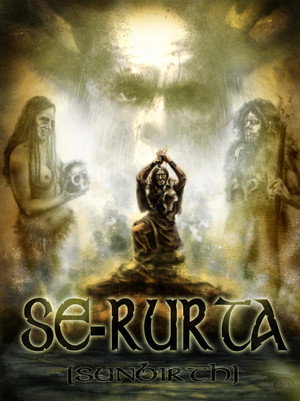
The Friac, one of the ancient tribes of Britain are being driven from their land by the furious onslaught of the Celts, horse warriors arriving from the continent with weapons of iron and a thirst for conquest. The last hope of his tribe Ontahil, is no hero nor warrior nevertheless he must face Serurta the greatest initiation of all. Ontahil travels to the desolate mist-enshrouded island of the dead. Stalked by the Terai, hunters with a taste for human flesh, he must find the immortal Shaman Kalaree, receive the blessing of the earth mother and begin his perilous descent into the underworld.
An anxious passenger fears the worst when a police officer pulls his friend out of the car.
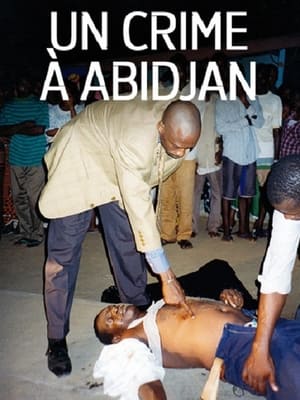
1995. On the outskirts of Abidjan, the largest city in Ivory Coast, a policeman is murdered. Shot outside his vehicle, while his fiancée sits in the car, terrified. Superintendent Kouassi is the detective in charge of the investigation. Tall and lanky, he moves with the tired energy of a man who has seen it all. Drawing on a network of underworld characters with dubious information, Kouassi’s team begins bringing in potential suspects and subjecting them to horrific brutality: beating them with sticks, hanging them upside-down, threatening their lives. Some of the men are left so broken they have to literally drag themselves into Kouassi’s office later, to be interrogated while lying on the floor, their bodies a mess of bruises, broken bones, and lacerations.
The corpse of a debt collector, Sakai, is found in the Dobu River in Tokyo. Kinoshita, a shoe shiner who was in debt to Sakai, was soon apprehended. During interrogation, Kinoshita said that he was the one who killed Sakai. However, after a while, he admitted that he lied, because he thought that in prison he could eat plenty of rice for free. The investigation established that Sakai was a repatriate from Manchuria, and after returning to Japan, he had a wife, Rie Kawai. The investigation begins the search for Rie... The 23rd work from the popular series "Keishicho Monogatari", which documents the activities of the First Investigation Division of the Capital Police Department.
A couple having marital problems gets referred to an unorthodox marriage counselor with an extremely high success rate. He doesn't counsel any couple unless they agree to a mentality switch.
In the middle of summer, five women rehearse a play in an old mill, isolated from the world.