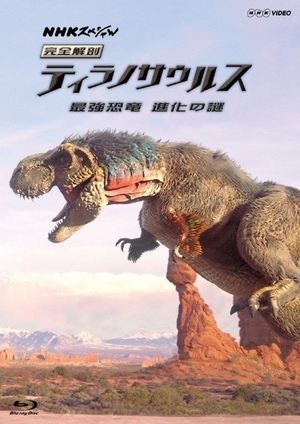
T-rex, le roi des dinosaures
The discovery of a giant crater in the floor of the Gulf of Mexico is a step closer to solving the question if an asteroid ended the age of dinosaurs.
While hunting, the Peregrine Falcon can reach speeds of over 90 miles per hour. During its aerial displays, it holds the all-time speed record of 242 miles per hour. It's not surprising that this powerful bird of prey has conquered the planet and can be found on the five continents. Worshipped, dressed up and trained for prestigious hunts, this powerful and beautiful bird has long fascinated us.
This documentary follows various migratory bird species on their long journeys from their summer homes to the equator and back, covering thousands of miles and navigating by the stars. These arduous treks are crucial for survival, seeking hospitable climates and food sources. Birds face numerous challenges, including crossing oceans and evading predators, illness, and injury. Although migrations are undertaken as a community, birds disperse into family units once they reach their destinations, and every continent is affected by these migrations, hosting migratory bird species at least part of the year.
Bill Nye and Ken Ham debate whether creation is a viable model of origins in today's modern scientific era.
Following the journey of fossils from their discovery in remote corners of the earth to laboratories, museums, auction houses and collectors’ living rooms, the film weaves together interlocking stories of eccentric characters caught between the demands of commerce and the basic human drive to unlock the most profound mysteries of life. THE BONES takes us deep into the Gobi, Sahara, and North American badlands, and through laboratories, museums, high-end auction houses, and grungy hotel rooms at the Tucson gem show. Wrapped in elusive questions about the origins of life on earth, and its potential future demise, THE BONES unearths the deep passions at the heart of the dinosaur world.
In the first half of the 19th century, the French ornithologist Jean-Jacques Audubon travelled to America to depict birdlife along the Mississippi River. Audubon was also a gifted painter. His life’s work in the form of the classic book ‘Birds of America’ is an invaluable documentation of both extinct species and an entire world of imagination. During the same period, early industrialisation and the expulsion of indigenous peoples was in full swing. The gorgeous film traces Audubon’s path around the South today. The displaced people’s descendants welcome us and retell history, while the deserted vistas of heavy industry stretch across the horizon. The magnificent, broad images in Jacques Loeuille’s atmospheric, modern adventure reminds us at the same time how little - and yet how much - is left of the nature that Audubon travelled around in. His paintings of the colourful birdlife of the South still belong to the most beautiful things you can imagine.
Jellyfish blooms are making headlines around the world. This is due to the damage they cause to tourism, fishing and our health. How can these creatures, which are over 98% water and have no shell, skeleton or brain, expand so rapidly? Although this is a normal stage in the life cycle of these gelatinous animals, we have to admit that blooms have become much more frequent and massive in recent decades. We're even witnessing jellyfish populations appearing in more and more regions where fish have been replaced by them, such as off the coast of Namibia, in the Black Sea, in the Sea of Japan and in certain areas of the Baltic Sea. What causes this? Why has the role of jellyfish in the ocean been underestimated, even though they outlived the dinosaurs? Are jellyfish on their way to dominating the oceans as they once did? What if they were to be the only ones left?
The flight and feeding customs of the most important sea bird species of the Galapagos Islands are described. Some characteristic body and wing measurements are used to describe the flight of these species. The species which are able to forage furthest out at sea and deepest in the water are the most successfull on the Galapagos Islands, measured by their abundance. The least abundant bird is the lava-gull, a shore bird and surface-feeder.
Dinosaurs roamed and ruled earth for more than 150-million years, then suddenly vanished leaving only fossils to fascinate and befuddle us. In a feature-length unique approach to historical analysis of these creatures, we don't focus on the latest technology or the most controversial theory. Instead, we look chronologically at what we've gotten wrong about dinosaurs throughout the short history of scientific study of these magnificent, misunderstood creatures, and see where paleontologists are digging today.
A documentary about the 1999 discovery of a Mastodon skeleton in a Hyde Park backyard.
A BBC miniseries about Nigel Marvin's quest to bring the extinct dinosaurs through time to Prehistoric Park.
Z ptačího světa
Nova and National Geographic present exclusive access to an astounding discovery of ancient fossil human ancestors.
"Without leaving his own garden, a man may know the world" - an abstract study of the wildlife found in every garden.
Dinosaurs Vs. Apes: DINOSAUR MOVIES and HOLLYWOOD GOES APE! have been hailed as the definitive documentaries on the prehistoric and anthropoid creatures that have appeared on the silver screen. Filled with rare movie clips, behind-the-scenes footage and interviews.
A homeless musician finds meaning in his life when he starts a friendship with dozens of parrots.
At the far end of the world, there exists a chain of strange islands, steeped in controversy. The Mysterious Islands is the story of one boy and a team of researchers who take an amazing adventure to the heart of the mystery in search of clues that will expose the truth in a centuries-old dispute. This beautiful documentary was shot at “ground zero” of Darwinism. It takes viewers deep beneath the
Journey to far-flung islands off Africa, South America, Australia and Oceania for a look at the bird species that lived alongside our ancestors.
David Attenborough narrates the natural history of hummingbirds.