Zentralasiens Kampf ums Wasser
The war in the Ukraine has changed the way many European countries view Russian politics. Suddenly it became clear how dependent countries had become on Russian gas imports for decades and what Vladimir Putin was up to. However, no country needs more gas than Germany. It was only after Russia's invasion of the Ukraine that the German government realized that Russia had long used gas as a weapon to impose its will on states. The instrument created for this purpose is the natural gas production company GAZPROM. So how did Germany become so dependent on Russian gas? The documentary shows how, over several decades and several changes of government, a broad alliance of politicians and business representatives did everything possible to secure Germany's energy supply with cheap Russian gas, while the Kremlin's foreign policy became increasingly aggressive and the warnings of experts went unheeded.
A new reading of the historical period that began with the reign of the Catholic Monarchs (1479-1516) and the discovery of America (1492), as well as an analysis of its undeniable influence on the subsequent evolution of the history of Spain and the world.
Rodney is an American dreamer. His glass is not only half full, but it's half full of the finest wine you've ever tasted. But when the great recession wipes out his construction business in Central Florida, his family faces a nightmare of debt. One evening around a campfire, Rodney hears a story from an old, bare-footed hippy that just might solve his family's problems. There's an island. There's a map. And there's buried treasure...$2 million dollars just waiting for someone to dig it up. Rodney is hooked. But there's just one slight, itty-bitty problem...he doesn't have a shovel. Oh, and the $2 million dollars just happens to be in cocaine form.
After the end of the Cold War, the Baltic was viewed almost as a quiet backwater. A nice place to visit to see charming Hanseatic cities and sandy beaches. But since the war in Ukraine the Baltic sea, bordered by eight European Union countries as well as Russia, has become a hot spot of world geopolitics. And tensions are high.
A "Chinese" father reflects on the changing relationship of China and US during his trip to Beijing to retrieve his 3-year-old "American" daughter who has been stranded because of the recent "decoupling" of the two countries. Born in China and living in the American Midwest, filmmaker Yinan Wang attempts to unpack his own experience of how a transnational migrant family deals with the distress caused by identity, nationalism, and geopolitics.
As the crucial question arises of the future succession of the Dalai Lama, we take a look back at the tormented history of the "Land of Snows" which lives under Chinese domination and which remains a geopolitical issue of the first order. A valuable documentary that gives voice to a people that China is trying to permanently silence.
Vladimir Putin and Donald Trump — one the President of the United States, the other the President of Russia. Two men at the pinnacle of global power whose relationship keeps the world on edge. One a former businessman, the other a former KGB agent. Both have been active in politics for years. What drives them? The struggle over a possible ceasefire — or even peace — in Ukraine brought the two together last summer in Anchorage. But the question remains: who wants what? And who is succeeding with what agenda?
A courageous pastor uses his underground network to rescue and aid North Korean families as they risk their lives to embrace freedom.
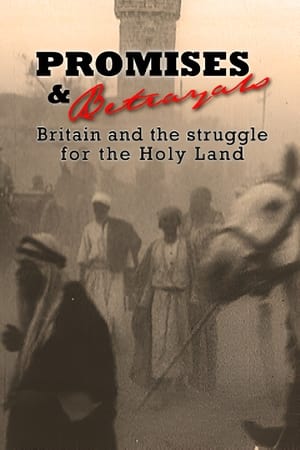
A documentary on how British double-dealing during the First World War ignited the conflict between Arab and Jew in the Middle East. The bitter struggle between Arab and Jew for control of the Holy Land has caused untold suffering in the Middle East for generations. It is often claimed that the crisis originated with Jewish emigration to Palestine and the foundation of the state of Israel. Yet the roots of the conflict are to be found much earlier – in British double-dealing during the First World War. This is a story of intrigue among rival empires; of misguided strategies; and of how conflicting promises to Arab and Jew created a legacy of bloodshed which determined the fate of the Middle East.
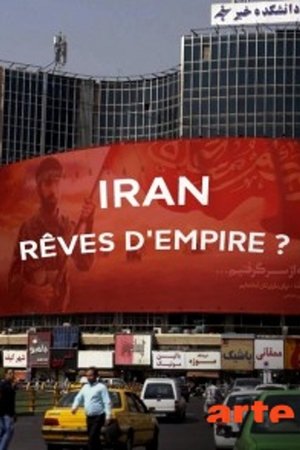
Iran : rêves d'Empire
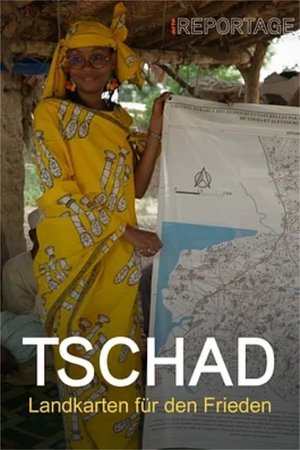
Hindou Oumarou Ibrahim is a cartographer and activist from the Fulbe people in Chad. Land and water are becoming scarce as desertification advances in the Sahel region at a rate of 4km every year. That's why she travels all over the country to draw maps with the people, to prevent conflict linked to depleting resources.
China’s President Xi Jinping is a force to be reckoned with. As leader of the Communist colossus, he commands the world’s attention, but who is China’s strongman and what is his agenda?
Snapshot of map production. It introduces the history of surveying in the Czech Republic, methods of measuring position and different types of maps.
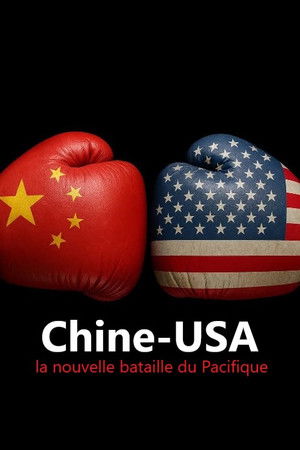
Chine-USA : la nouvelle bataille du Pacifique
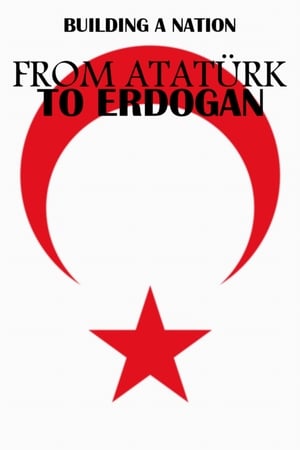
Turkey's history has been shaped by two major political figures: Mustafa Kemal (1881-1934), known as Atatürk, the Father of the Turks, founder of the modern state, and the current president Recep Tayyıp Erdoğan, who apparently wants Turkey to regain the political and military pre-eminence it had as an empire under the Ottoman dynasty.
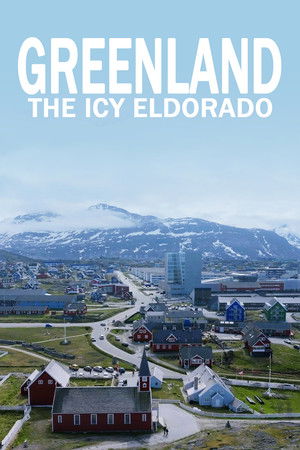
Greenland has become a major geopolitical issue between the United States, Europe, Russia, and China due to its geographical location and mineral resources. Its geopolitical destiny will have significant ecological consequences for the entire planet. What choice will the people of Greenland make? The largest island in the world, with its 2.2 million square kilometers covered 80% by ice, is also one of the least densely populated territories on Earth, with barely 57,000 inhabitants. Mainly living off fishing, tourism, and Danish subsidies, yet sitting on a potential treasure. We are talking about 25% of the world's hydrocarbon reserves, the third-largest uranium reserves, and 20% of rare earths. An icy Eldorado that today sparks all sorts of ambitions, one of the hotspots where the future of our multipolar world is being shaped. This is what the film will explore, addressing both its economic and commercial challenges, as well as its geo-ecological and military implications.
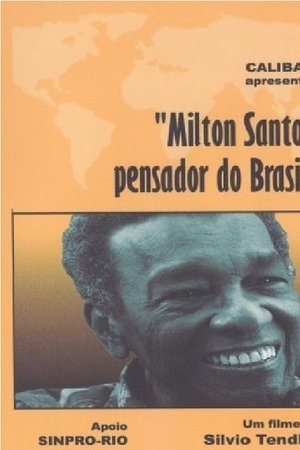
The interview, held on January 4, 2001, was the last given by Professor Milton Santos, who died from cancer on June 24 of the same year. The geographer is gone, but his thoughts remains. Its political and cultural ideals inspire the debate on Brazilian society and the construction of a new world. His statement is a true testimony, a lesson that the world can be better. Based on geography, Milton Santos performs a reading of the contemporary world that reveals the different faces of the phenomenon of globalization. It is in the evidence of contradictions and paradoxes that constitute everyday life that Milton Santos sees the possibilities of building another reality. He innovates when, instead of standing against globalization, proposes and points out ways for another globalization.
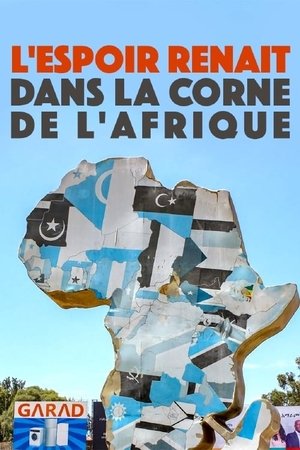
Hoffnungsschimmer am Horn von Afrika
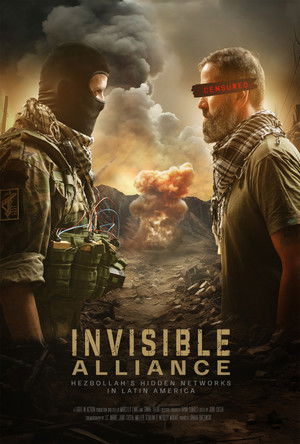
A Hezbollah suicide bomber breaks silence to reveal the inner workings of the organization and his involvement in a narcotrafficking alliance with the FARC. Discover the hidden agendas between Iran, Latin American governments and organized crime.