Amy Lindel, a church choir singer, goes to the city to pursue a singing career, but finds herself only able to get cabaret gigs. She then becomes entangled in a situation involving stolen diamonds, and is saved by the "good guy" whom she later marries.
The Devil's Toy is a 1916 American silent drama film directed by Harley Knoles and starring Adele Blood, Edwin Stevens and Montagu Love.
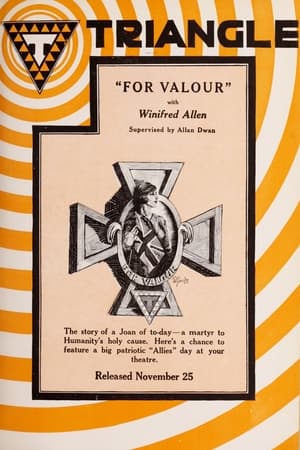
WWI spirit raiser about the title character who enlists and comes back a new man. Final film of stage star Shelly Hull before his death in the Spanish flu epidemic.
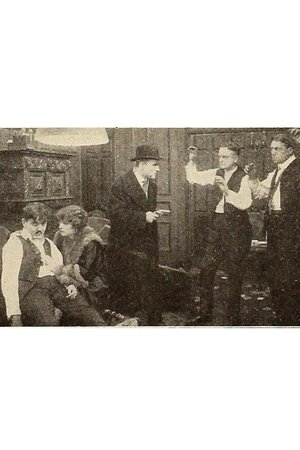
John Lane is a prosperous businessman, a widower, who lives in a large house with his seven-year-old daughter Betty. Lane has an enemy, one Ben Hartley, who, by the aid of some forged papers, threatens to expose Lane and put him in prison. The night of the story opens with Lane receiving a letter from Hartley, who demands $10,000, to be paid at midnight, that night. Lane has not that much ready money in the house, and no way to get it. He thinks it all out and decides to commit suicide. He stands before a mirror and is about to pull the trigger, when Bill, the burglar, steps into the room, stopping him.
On account of his extravagance and dissipation, Col. Ryder disowns his son and casts him off. Guy, resolved to redeem himself, joins an Indian regiment as a private, and leaves England.
Left with the care of his little grandchild through the death of his daughter, old Mr. Blinn tries in every way to give her the cure and attention which she needs.
When doctors fail to cure the young and beautiful Claire Raven, who for inexplicable reasons seems to have fallen under a spell, Professor Mors, an expert in the field of hypnosis, is called in to help.
In the little Italian home the wife feels she is neglected and apparently it seems that her husband's love is growing cold, for he has become decidedly indifferent. She, therefore, plans with her cousin to arouse his love through jealousy. At an Italian picnic, after repeated vain efforts to draw her husband's attentions toward her, she starts off with her cousin, passing in view of her husband. His fiery nature is violently aroused with jealousy, and rushing home in a towering rage, would have wreaked disaster to the entire family, for his terrible suspicion poisons his mind even against his two little children. He learns the truth, however, and realizes now to what extreme the result of his neglect would have driven him.
It is hubby's birthday and the wife wishing to surprise him, surreptitiously interviews the jeweler's clerk to order a gold watch as a present. Her mysterious action arouses suspicion in the husband, who follows her at a distance and witnesses the meeting between her and the clerk. The hour arriving for the delivery of the watch, wifey goes to the door to meet it, and while standing outside, the door closes and locks on her skirt, holding her captive. Having no key, she induces the clerk to climb through the second story window and come down to unlock the door. All would have been well, but the clerk encounters the husband and it looked had for the clerk for a while.
Upon the arrival of a young girl from the city, Zeke and Jake, brothers, each determine to win her. For a time these rival brothers are amusing to her, but when her real sweetheart appears, she is at a loss to know how to get rid of them. Her city beau, however, wants to have some fun with them, so is introduced to the rubes as her brother. He pretends to be interested in the condition of affairs, and decides they must prove their love by chancing fate for her sake. He places three chocolates on the table, stating that one of the candies contains deadly poison. To the amazement of all they take a chance, but for naught.
“Crime film set in Malaya concerning the pursuit of a planter framed for poisoning his partner and suspected of carrying plague.” - BFI.
A widow's husband returns after her second marriage, and dies while assaulting her.
To assuage his grief over the death of his wife during childbirth, newspaper publisher John Briscoe resettles in Paris. Twenty-five years pass, during which time Briscoe's estranged son Jason has taken charge of his dad's newspaper. When Jason refuses to support crooked politician Stange in an upcoming election, he receives a cablegram from Briscoe Sr., who overrides his son's decision.
Lilla Gravert falls into the clutches of a master blackmailer, Eric Helsingor.
William Bryant, a hopeless invalid due to a profligate life and made vicious by the fact, lives to make life a misery for his wife Margaret. One evening Bryant's physician, Dr. Cameron arrives at his patient's house, just in time, to intercept a blow that Bryant has directed at Margaret and knocks him unconscious in the ensuing struggle. Margaret flees with Cameron, observed by the chauffeur who enters the house with the intention of stealing. Meanwhile Bryant has regained consciousness and in his twisted mind determines to kill himself and frame his wife. He’s almost successful until at almost the last moment his butler steps forward and acknowledges that Bryant was shot as they struggle with his pistol which the chauffeur confirms.
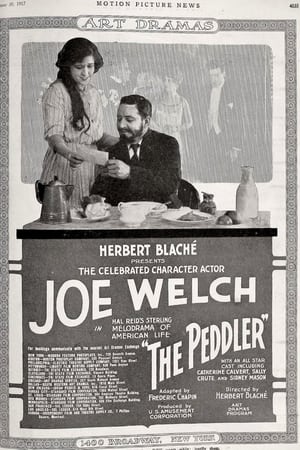
One glance at the poor and disordered home of the Tunisons shows us there is something still lacking. Mrs. Tunison is obliged to provide for her crippled daughter Ethel, her son, who does what he can to help her and her older daughter, who aids in every way possible. Daniel Briton, a young peddler, notices Ethel as he passes by, and gives her one of his wares, a geranium, for which she is very thankful. On successive days as the young peddler passes she waves her hand to him. One day he brings with him a doctor, who takes her to the hospital where she will get good care and attention. After a few weeks, Ethel is carried home in the arms of her generous friend, entirely restored to health. Everybody is made happy, and more so with Daniel, who marries one of Ethel's sisters.
Caravan of Death (German: Die Todeskarawane) is a 1920 silent German film, it was an adaptation of the latter half of the Karl May novel From Baghdad to Stamboul, and is now considered to be lost. The film featured Bela Lugosi playing an Arab Sheik pitted against European travellers in an adventure story set in the Sahara. It was the second of three films released by Ustad based on desert adventure novels by Karl May. Although Karl May’s widow praised the film, critics were unimpressed and it was a commercial failure.
At the urging of his sweetheart, Rosemary Smith, a man (William Fairbanks) leaves his soft job in the east and goes west to settle a dispute over oil lands owned by Rosemary's father. This man evicts the wrong party and later must return west in order to set things right, protecting the honor of a girl from the advances of the crooked foreman.
Lafayette Jordan (Davis), financier, plans to inundate Caribou Canyon and turn it into a reservoir, but the villagers will not sell him their land. Among the resentful villagers is Judson Forrest (Harlan), who wants to be an inventor. Mary Jordan (Bellamy), daughter of the financier, is hurt and spends a night at his home. Learning of his attitude toward her father, she poses as a domestic at the Jordan home. Later, in New York, Judson looks her up. He is trying to sell his invention and, to get funds, he mortgages his home. The village banker, in league with Jordan, sells the financier the mortgage, and a foreclosure threatens when Jordan's business agent Henry Mogridge (Miljan) double-crosses Judson. The youth thinks Mary working against him. Friends come to Judson's aid and he pays off the mortgage in the nick of time. He learns that Jordan knew nothing of the methods employed by his agent and that Mary loves him.
From Wikipedia, the free encyclopedia. A Girl of the Limberlost is a 1924 American silent film, produced by Gene Stratton-Porter and directed by James Leo Meehan. It stars Gloria Grey, Emily Fitzroy, and Arthur Currier, and was released on April 28, 1924. The first adaptation of Stratton-Porter's famous novel, this silent film is considered lost.