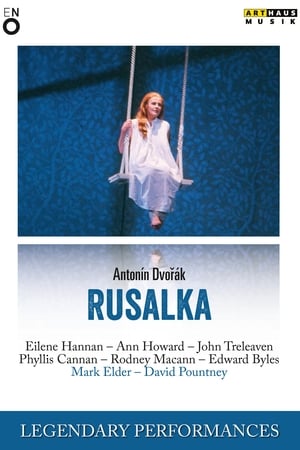
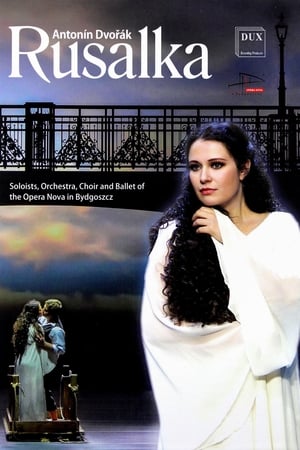
The water fairy Rusalka falls in love with an earthly prince. In vain, Father Aquarius warns her. Her sincere feelings are met with human treachery...
Arabella, Op. 79, is a lyric comedy or opera in three acts by Richard Strauss to a German libretto by Hugo von Hofmannsthal, their sixth and last operatic collaboration. Arabella is determined to marry for love, not wealth - against the wishes of her impoverished aristocratic parents. When she gives her heart to the mysterious Mandryka, a series of misunderstandings puts their love to the test.
Stefan Zucker, the world's highest tenor, visits the opera divas of his childhood. The journey from apartment to apartment, from diva to diva, from Rome to Milan, turns into an opera road movie.
The Marriage of Figaro is a continuation of the plot of The Barber of Seville several years later, and recounts a single "day of madness" in the palace of the Count Almaviva near Seville, Spain. Rosina is now the Countess; Dr. Bartolo is seeking revenge against Figaro for thwarting his plans to marry Rosina himself; and Count Almaviva has degenerated from the romantic youth of Barber into a scheming, bullying, skirt-chasing baritone. This follows the Count trying to obtain favours from Susanna, Figaro's bride to be, under the nose of the Countess.
In a grimy provincial industrial city, a talented but unattractive schoolteacher dreams of an operatic career.
This luminous, visionary opera tells the story of how Mahatma Gandhi developed the philosophy of satyagraha, nonviolent active resistance, as a political revolutionary tool to fight oppression, connecting his lifework to three historical figures who advanced his philosophy: the celebrated Russian writer Leo Tolstoy, the great Indian poet and philosopher Rabindranath Tagore and the heroic American civil rights leader Martin Luther King. The libretto is comprised of passages from “The Bhagavad-Gita,” India’s greatest philosophical epic, and perfectly complements Glass’ ravishing score, mysteriously transporting the audience with a serene power and an all-encompassing sense of peace.
Verdi: Falstaff - Teatro Real
Known as a creator of astonishing images, stage director and visual artist Robert Wilson delivers a magnificent production of Mozart’s adaption of Handel’s Messias. Mozart was commissioned by Gottfried van Swieten to modernise the score fifty years after Handel’s popular composition (1742), mainly by arranging the wind parts and partially re-composing them. With Marc Minkowski a conductor has been engaged who understands perfectly how to combine baroque style with the tonal possibilities of an orchestra of the classical period like the Musiciens du Louvre. The excellent soloist quartet with Elena Tsallagova, Wiebke Lehmkuhl, Richard Croft and José Coca Loza merges perfectly into Wilson’s enormous flood of images.
At the Festspielhaus Baden-Baden, the stage director Nikolaus Lehnhoff signs a remarkable production of Wagner's LOHENGRIN, the third of the German composer's main operas. This production stars an incredible cast, including Hans-Peter König, Klaus Florian Vogt, Solveig Kringelborn, Tom Fox and Waltraud Meier, accompanied by the Deutsches Symphonie-Orchester Berlin under Kent Nagano's baton.
Japan, early twentieth century. U.S. Navy Lieutenant B.F. Pinkerton inspects the house he has leased from a marriage broker. The broker, Goro, has procured him three servants and a geisha wife, Cio-Cio-San, known as Madama Butterfly. He is enchanted with the fragile Cio-Cio-San. Cio-Cio-San is heard in the distance joyously singing of her wedding. In a quiet moment, Cio-Cio-San shows her bridegroom her few earthly treasures and tells him of her intention to embrace his Christian faith. The Imperial Commissioner performs the wedding ceremony, and the guests toast the couple. The celebration is interrupted by Cio-Cio-San's uncle, a Buddhist priest, who bursts in, cursing the girl for having renounced her ancestors' religion. Alone with Cio-Cio-San in the moonlit garden, her husband dries her tears, and she joins him in singing of their love.
An American tourist on a day trip to Sussex from London inadvertently finds himself at Glyndebourne Opera House in Sussex where he learns to appreciate Opera.
A disfigured musical genius, hidden away in the Paris Opera House, terrorises the opera company for the unwitting benefit of a young protégée whom he trains and loves. The 25th anniversary of the first public performance of Phantom of the Opera was celebrated with a grand performance at the Royal Albert Hall in London.
The chamber opera One represents a new kind of music multimedia drama. Michel van der Aa's poetic production of technological virtuosity fuses libretto, video, live music and soundtrack with the soprano voice and stage presence of Barbara Hannigan into One. Projected images and electronic sounds add emphasis to the onstage performance of the protagonist, while the recorded and live voice interact with incredible synchronicity.
There's an uncompromising clarity to Blu-ray audio and video that really does bring the splendour of grand opera right into the living room. So it's all the more frustrating to get a compromised production as the final product. Jules Massenet's 1894 tragedy about a sex goddess humbled by an insistent Cenobite monk isn't produced very often, because of a demanding lead role and some difficult staging issues. But the music is gorgeous from beginning to end. When you have a great diva at centre stage, the three acts go by in a flash.
The painter Lili Elbe was the first person to have gender confirmation surgery in the 1930s. The homonymous opera is a glimpse into the life of Lili Elbe and her wife Gerda Wegener (also a famous painter) through Lili's transition at a time when such surgery was still completely uncharted territory.
Opera singer Prudence Budell, overhears truck driver Johnny Donnetti singing opera, and persuades her opera company to give him a chance in her new opera. They fall in love, but on meeting his colleague Mary while visiting Johnny's work, Prudence becomes convinced Johnny is in love with her.
Dvorak's masterpiece. 1981 telecast conducted by Jan Štych.
The first modern-day world premiere of Lully's last ballet-comedy.
A freedom fighter in Austrian-occupied Switzerland. An oppressive Habsburg governor. The most famous Swiss apple. And a love story that crosses national divides. Rossini’s thrilling epic, his final masterpiece with the world’s most famous overture, is his most ambitious, forward-looking and vocally challenging opera. Having become the rallying cry of the 1830 revolution in France, Rossini’s final opera is nothing short of revolutionary itself. Retelling the legend of the Swiss folk hero based on Schiller’s play, William Tell is a grandiose ode to freedom. Staged for the first time in Ireland since 1875, this production is conducted by Fergus Sheil and directed by Julien Chavaz who takes a mythological approach. For him, ‘the story is not just about a remote Swiss community facing Austrian invaders. It is the story of a society that suddenly has to face a threat to its model of civilisation.’
Violetta, a courtesan much wooed by Parisian society, organizes a grand party that is attended, amongst others, by the young Alfredo Germont. He confesses his feelings to Violetta, who is already suffering from consumption. She vacillates between genuine affection and a realistic assessment of her situation as a "fallen woman", which precludes any lasting relationship with a man. The Franco Zeffirelli production of LA TRAVIATA, recorded live at the Teatro Giuseppe Verdi, Februari 2002.