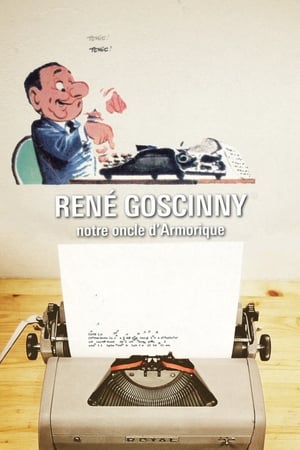
The career of French comic author René Goscinny was a living blend of cultures and an expression of the great importance this artist attached to the production and dissemination of sophisticated popular culture. Goscinny left behind an extremely extensive body of work: "Asterix", "Lucky Luke", "Isnogud", "Little Nick" and many more.
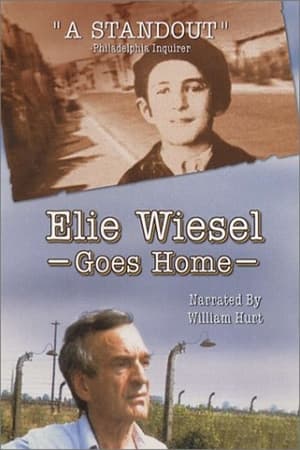
A documentary chronicling the adolescent years of Elie Wiesel and the history of his sufferings. Eliezer was fifteen when Fascism brutally altered his life forever. Fifty years later, he returns to Sighetu Marmatiei, the town where he was born, to walk the painful road of remembrance - but is it possible to speak of the unspeakable? Or does Auschwitz lie beyond the capacity of any human language - the place where words and stories run out?
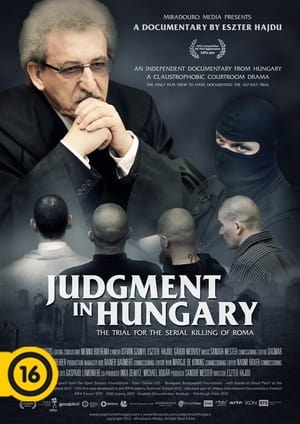
Hungary was the site of serial murders on ethnic basis. Over the course of one year, the murderers killed and seriously injured Roma children and adults. The state charged 4 men with committing the crime with racial motivation. This historical trial started March, 2011, and ended August, 2013 in Budapest. The 167 days of hearings was only documented continuously by our crew. We had exclusive permission to use multiple cameras in the court-room. The film is a classical chamber-drama, taking place in a small, claustrophobic court room, in the middle of Europe. What will be the outcome of the marathon, 3 year-long trial?
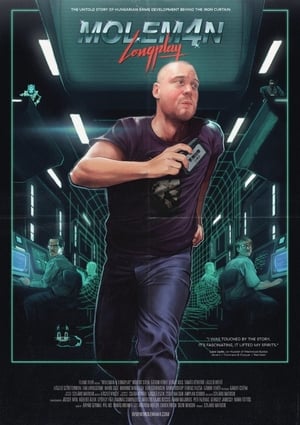
It is the year 2546. Corporations rule the world, and an agent is on a secret mission to explore the untold stories of the past. His journey leads him into a secret virtual reality where one corporation has recreated the 1980s, an era that witnessed the birth of video game development, an event in which a politically and economically restricted small European country, Hungary, had a significant role. He discovers a strange but exciting world, where computers were smuggled through the Iron Curtain and serious engineers started developing games. This small country was still under Soviet pressure when a group of people managed to set up one of the first game development studios in the world, and western computer stores started clearing room on their shelves for Hungarian products.
What if democracy fails citizens by not serving them all equally? What if inequality becomes the norm and the most vulnerable citizens are left behind with no money, no home, no rights, and no country of their own? In Hungary, the government has slashed social benefits and criminalized homelessness, but a group of activists, homeless and middle class, is confronting authorities to defend social justice and their right to be citizens. After the tragic death of two of its founding members, the group feels that Hungary is growing more hostile and their struggle is more important than ever. Despite all odds, their own community keeps them going—a mini-society with democracy and solidarity at its heart, an island of hope, belonging and dignity in a society gradually shifting the other way.
Documentary with animated sequences about that massive Hungarian exodus to the US which went on from the end of 19th century till the outbreak of WW1. The history of the nameless crowds presented in the film submerged under the surface of official history.
The documentary was shot in the prison for juvenile delinquents in Hungary. It does not aim at judging whether the perpetrators were convicted rightly or not but, given the burden they carry, how they can reintegrate into society after they are released.
Aleksandar Zograf, a renowned cartoonist discovers an unusual comic book from World War II. The comic’s hero is Kaktus Kid – a small cactus trapped in his pot. Intrigued, Zograf investigates into the life of Kaktus Kid’s creator – little known artist Veljko Kockar. He soon discovers that Kockar was arrested just after the liberation of Belgrade in 1944. He was charged for being a Gestapo agent and executed. Zograf’s investigation reveals a far more complex story: Kockar’s identity and artistic works were stolen, he possibly has an affair with the girlfriend of a guerilla soldier and he drew anti-communist propaganda for the Nazis. As he explores the story and pieces together the scraps of evidence 70 years after it happened Zograf is faced with his own personal and artistic dilemmas: why do these little drawings have such power to give consolation but also lead to violence?
I Was Your Kid
Budapest, végállomás
Reconstructions of unrealized Hungarian films in cooperation with the greatest Hungarian film directors.
The footage was shot in the writer's room a few days after his death. Everything in the room was untouched. The poet György Petri reads from one of Péter Hajnóczy's works, Miss Embolia. A sacred image of the Eastern European "beaten generation".
The Neiger family was living a peaceful life in the Jewish community in Krakow when the arrival of World War II changed their lives forever. When Nazi soldiers forced the family from their home into the harsh life of the Ghetto, they made a vow to escape as a family. But when circumstances forced the family to separate from older brother Ben, their will to survive was put to the test. They Survived Together" is the incredible, true story of one family as they desperately tried to stay alive... and together as a family with four small children, attempted to escape certain death at the hands of the Nazis. They are believed to be one of the only families to escape and survive as a family.
Viktor & Victoria
Anthology film made as an act of protest against Hungarian government of Viktor Orban.
A portrait of the life and work of the great Hungarian composer Béla Bartók, exploring both his music and his passionate interest in his country's folklore.
This is the story of how superheroes from Tim Burton's prototype blockbuster Batman, Blade, X-Men, Spiderman to Iron Man and the Black Panther brought to life from the pages of comic books, first took over Hollywood and then conquered the world through action films with larger-than-life characters.
Romazsaruk
Spirou, l'aventure humoristique
In the original concept of the film as a computer game, the author presents a personal reportage from Budapest, where she spent a year as a student. The viewer, who takes on the role of a participant in the game, passes through several levels that introduce him to everyday moments touching on sensitive points of contemporary Hungarian society: he sees the capital through the eyes of a tourist, but mostly he is forced to reflect from the subjective perspective of Hungarian citizens on freedom of art, the right to education, the issue of medical care and the complex and controversial political situation in which the name of Hungarian Prime Minister Viktor Orbán is repeatedly invoked.