After their father dies, a family of five children are forced to survive on their own in a Kurdish village on the border of Iran and Iraq.
A docudrama depicting a hypothetical nuclear attack on Britain. After backing the film's development, the BBC refused to air it, publicly stating "the effect of the film has been judged by the BBC to be too horrifying for the medium of broadcasting." It debuted in theaters in 1966 and went on to great acclaim, but remained unseen on British television until 1985.
In this fictional documentary, U.S. prisons are at capacity, and President Nixon declares a state of emergency. All new prisoners, most of whom are connected to the antiwar movement, are now given the choice of jail time or spending three days in Punishment Park, where they will be hunted for sport by federal authorities. The prisoners invariably choose the latter option, but learn that, between the desert heat and the brutal police officers, their chances of survival are slim.
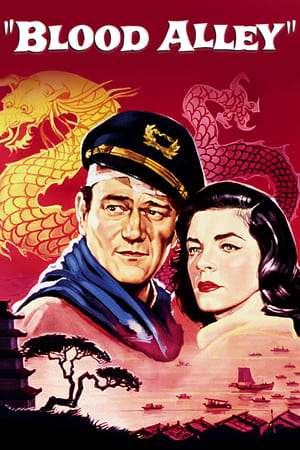
An American Merchant Marine captain, rescued from a Chinese Communist jail by local villagers, is "shanghaied" into transporting the entire village to Hong Kong on an ancient paddle steamer.
Cambodian refugee Ted Ngoy builds a multi-million dollar empire by baking America's favourite pastry: the doughnut.
After her husband is abducted in Kashmir, a traumatised woman flees to the United States with her young son to rebuild their lives.
2010 documentary film on the Armenian Genocide by the Young Turk government of the Ottoman Empire during World War I. It is based on eyewitness reports by European and American personnel stationed in the Near East at the time, Armenian survivors and other contemporary witnesses which are recited by modern German actors.
Jorge, a young Ecuadorian, is unexpectedly in the middle of the jungle as an inexperienced soldier. At first, Jorge is confident that military experience makes you a recognized and respected man. But he finds out that the reality is very different; as the private may face neglect, hunger, death and nature, especially human nature. Captive in an enemy camp, Jorge must discover who he has become as he recovers from his injuries and struggles to escape with his fellow prisoner Hugo or stay there under the care of the Peruvian nurse Dolores. Difficult decisions ... beyond the target and border that divides them are abound.
After an Afghanistan-born woman who lives in Canada receives a letter from her suicidal sister, she takes a perilous journey through Afghanistan to try to find her.
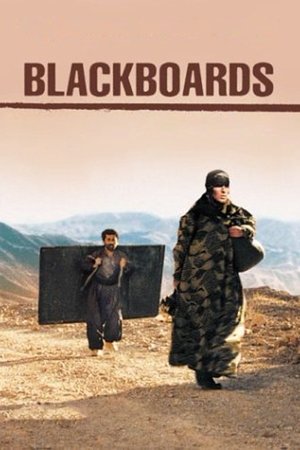
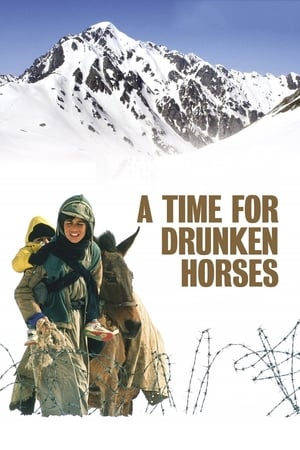
Itinerant Kurdish teachers, carrying blackboards on their backs, look for students in the hills and villages of Iran, near the Iraqi border during the Iran-Iraq war. Said falls in with a group of old men looking for their bombed-out village; he offers to guide them, and takes as his wife Halaleh, the clan's lone woman, a widow with a young son. Reeboir attaches himself to a dozen pre-teen boys weighed down by contraband they carry across the border; they're mules, always on the move. Said and Reeboir try to teach as their potential students keep walking. Danger is close; armed soldiers patrol the skies, the roads, and the border. Is there a role for a teacher? Is there hope?
Marius is a highly successful lawyer based in Vilnius. He becomes obsessed with Ali, a handsome Syrian refugee he first encounters in an online chatroom run out of Belgrade. Marius is rich and enjoys a vibrant social and cultural life. Nevertheless, he feels that something is missing from it. The journey from Lithuania to Serbia is a relatively short one, but can the two navigate their way through the gulf that separates their very different lives? And how do they deal with the precarious obstacles of the physical borders that stand between them? Written and directed by Romas Zabarauskas, The Lawyer questions assumptions about what it means to be an immigrant and the possibilities offered by life in contemporary Europe.
A gay artist flees the repressive laws and war in Russia to go to Berlin, leaving his boyfriend behind. Meanwhile, life in Berlin turns out to be less inclusive he had expected.
July 1972 in Iran. Mohammed is arrested for illegal spreading of flyers. He is put in jail and tortured. After one year he is released and flees to Sweden. He arrives at a refugee camp where he is taught Swedish. He is surrounded by people without hope.
Bahar, the commanding officer of the Daughters of the Sun, a battalion made up entirely of Kurdish female soldiers, is on the cusp of liberating their town, which has been overrun by ISIS extremists.
During the Vietnam War, a recon unit ventures to an isolated jungle valley to uncover the fate of a missing platoon. They soon find themselves in a fight for their lives against an unexpected enemy — prehistoric dinosaurs.
Although he already has searched Iraq unsuccessfully for weapons of mass destruction as a member of a UN mission, German bio-weapons expert Arndt Wolf is still obsessed with the idea that Saddam Hussein is hiding something. Nobody around him is interested in this topic any more. This changes abruptly when an Iraqi asylum seeker claims to have been involved in the manufacture of chemical weapons. The German Federal Intelligence Service summons Dr. Wolf to ascertain the legitimacy of the claims made by the informant, who has been given the code name “Curveball”.
In sixth-century Mecca, Prophet Muhammad receives his first revelation from God as a messenger. Three years later, he's not alone in his quest and publicly declares his prophecy. Muhammad is fought by Abu Sufian and his wife Hind, rulers of Mecca. Muhammad's followers are hunted and tortured but he continues his calling.
A Nigerian refugee struggles to integrate into Australian society after escaping the clutches of Boko Haram, until he meets a woman who opens her home, and ultimately her heart, to him.
Road to the Sky
Angela Su’s fictional artist Rosie Leavers is the last remaining person to upload her consciousness to a video game. Contemplating during a pandemic year which also saw people’s resistance movements in many parts of the world, the work pinpoints the uncanny affinities between gaming and warfare strategies. They have mutually informed the infrastructure of both worlds since time immemorial when diplomatic conflicts played out on the battlefield of the 64 squares of a chess board to flight simulation technologies which were adapted to shape gaming experiences as we know it now. When the conflict is between the state and its people, she speculates that gaming strategies empower civilians in resistance movements to counter imperialism through its own operative logic. But once we upload our consciousness, are we able to return to the sensibilities and political motivation that inspired the revolution to begin with?