In a darkened classroom, the white cracked walls serve as a movie screen. We are in a remote mountain village in Georgia. The light from the projector breaks the darkness: the children's first cinematic experience is about to begin. Among the kids are Iman and Eva, two Muslim girls, for whom the experience becomes a turning point and inspires them to pick up a camera and start filming their daily lives. The girls are growing up in a valley infested by radicalism, where most people live in constant fear that their relatives will sacrifice their lives in the name of God.
In the 1920s, the rivalry between fashion icon Gabrielle Chanel and her stylistic rival Elsa Schiaparelli gave rise to innovations in haute couture.
Dandara: Enquanto Morar for um Privilégio, Ocupar é um Direito
A 3-year-old girl and her family's long journey from a Greek refugee centre to Uppsala.
Documentary about the Lyon sex workers who occupied the church of St. Nizier on June 3, 1975.
Gabriel Drolet-Maguire, a designer living in Montreal, takes us into their artistic world to discuss their HIV diagnosis. This is a timely and hopeful look at past and present day HIV/AIDS activism in Quebec.
The reunion of a childhood friendship. Lis, a current fashion designer, meets with Caterina, a filmmaker, to jointly create the documentary and a costume for the premiere.
This short focuses on the job of the costume designer in the production of motion pictures. The costume designer must design clothing that is correct for the film historically and geographically, and must be appropriate for the mood of the individual scene. We see famed costume designer Edith Head at work on a production. The Costume Designer was part of The Industry Film Project, a twelve-part series produced by the film studios and the Academy. Each series episode was produced to inform the public on a specific facet of the motion picture industry. Preserved by the Academy Film Archive in 2012.
A documentary film depicting five intimate portraits of migrants who fled their country of origin to seek refuge in France and find a space of freedom where they can fully experience their sexuality and their sexual identity: Giovanna, woman transgender of Colombian origin, Roman, Russian transgender man, Cate, Ugandan lesbian mother, Yi Chen, young Chinese gay man…
Madeline Stuart is a fashion celebrity who has walked the runway at the New York Fashion Week, has 700 000+ followers on Facebook and is covered by international media world wide. This documentary follows Madeline on her journey to becoming the world's first professional supermodel with Down syndrome, challenging our perception of identity, beauty and disability.
In 2008, after a show celebrating the 20th anniversary of his fashion house, Maison Margiela, visionary designer Martin Margiela left the fashion world for good. Throughout his career, the Belgian designer remained anonymous, refusing interviews and never being photographed, leading some to call him the fashion world’s answer to Banksy. Now, more than a decade after his departure, Margiela digs into his meticulous and idiosyncratic personal archives to reflect on his revolutionary career and legacy.
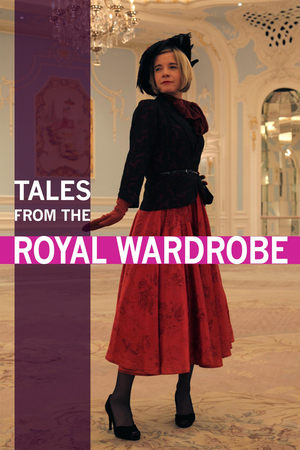
Today, few people's clothes attract as much attention as the royal family, but this is not a modern-day paparazzi-inspired obsession. Historian Dr. Lucy Worsley, Chief Curator at Historic Royal Palaces, reveals that it has always been this way. Exploring the royal wardrobes of our kings and queens over the last four hundred years, Lucy shows this isn't just a public fascination, but an important and powerful message from the monarchs. From Elizabeth I to the present Queen Elizabeth II, Lucy explains how the royal wardrobe's significance goes far beyond the cut and color of the clothing. Royal fashion is, and has always been, regarded as a very personal statement to reflect their power over the reign. Most kings and queens have carefully choreographed every aspect of their wardrobe; for those who have not, there have sometimes been calamitous consequences. As much today as in the past, royal fashion is as much about politics as it is about elegant attire.
2003 documentary film produced by Oliver Stone for the HBO series America Undercover about the conflict in occupied Palestine. He speaks with Ehud Barak and Benjamin Netanyahu, former prime ministers of Israel, Yasser Arafat, late president of the Palestinian National Authority, and various Palestinian activists resisting the oppression of the zionist regime.
The autobiographical account of the tormented life of a witness of the century: Louisa Ighilahriz, activist and leading figure in Algerian independence. A student, she joined the independence struggle at the age of 20, joining the ranks of the FLN on the eve of the Battle of Algiers in late 1956 under the name Lila. She took part in the high school students' strike, then fled into the maquis when she was actively sought after. She was part of the French FLN support network of "suitcase carriers" during the Battle of Algiers. Seriously wounded alongside her network leader, Saïd Bakel, during an ambush in 1957, hospitalized and then imprisoned, she suffered numerous tortures in French prisons. She will be saved from certain death by an anonymous person, she will seek, for forty years, to find him just to show him her gratitude... Emblematic of the painful Franco-Algerian history, Louisa's story is poignant and imbued with humanism.
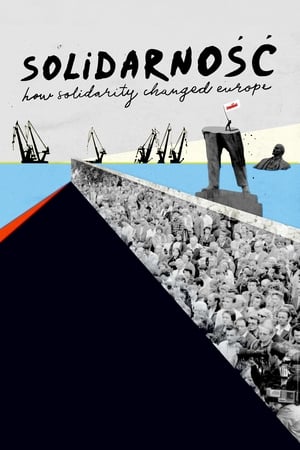
Gdańsk, Poland, September 1980. Lech Wałęsa and other Lenin shipyard workers found Solidarność (Solidarity), the first independent trade union behind the Iron Curtain. The long and hard battle to bring down communist dictatorship has begun.
A film about the Tibetan Freedom Concert in San Francisco in 1996.
For the first time fashion designer Dries Van Noten allows a filmmaker to accompany him in his creative process and rich home life. For an entire year Reiner Holzemer documents the precise steps that Dries takes to conceive of four collections, the rich fabrics, embroidery and prints exclusive to his designs. As well as the emblematic fashion shows that bring his collections to the world and have become cult “must sees” at Paris Fashion Week. This film offers an insight into the life, mind and creative heart of a master fashion designer who, for more than 25 years, has remained independent in a landscape of fashion consolidation and globalization.
Those who do not know the Sahara think there is only sand in the desert. But in the desert there are children who play and draw and make movies, and who would like to not have to think about the war. In the desert there's a European colony, an occupied country called Western Sahara, where there are thousands of Sahrawi refugees living a hard life in exile. "Little Sahara" tells their story, the story of a supportive, resilient people who try to thrive and grow in the Hamada, where everything has a hard time growing.
"Ni Coupables, ni victimes" ("Not Guilty, Not Victims") is a polyphonic conversation gathering the words of some of the protagonists at the European Conference on Sex Work, Human Rights, Labour and Migration, Brussels (2005). They speak of the complexity and nuances of the sex industry and their lives: the challenges and the struggles of being a sex worker in Europe today, the repressive policies affecting their lives, and the strategies of resistance enabling them to do their work, build their desires and plan their futures.
The challenges of the present, expectations for the future, and the dreams of those who experience the reality of public high school in Brazil. Through the voices of students, principals, teachers and experts, "Not Even In a Wildest Dream" offers a reflection on the value of education.